

AI Hiring and Bias in Recruitment: Separating Reality from Hype
Hiring bias has always been one of the hardest problems to solve in recruitment. Even when recruiters are trained to be objective, unconscious preferences—like favoring certain schools, career paths, or even names—can creep into decisions. These biases don’t just hurt candidates; they limit companies from building diverse and high-performing teams.
That’s why many organizations are turning to AI hiring tools. The promise is simple: use artificial intelligence to make recruitment more data-driven, skill-focused, and fair. But seriously, how much of this is genuine progress, and how much is just a lot of noise? Let’s break it down.
How AI is Transforming Recruitment in Practice
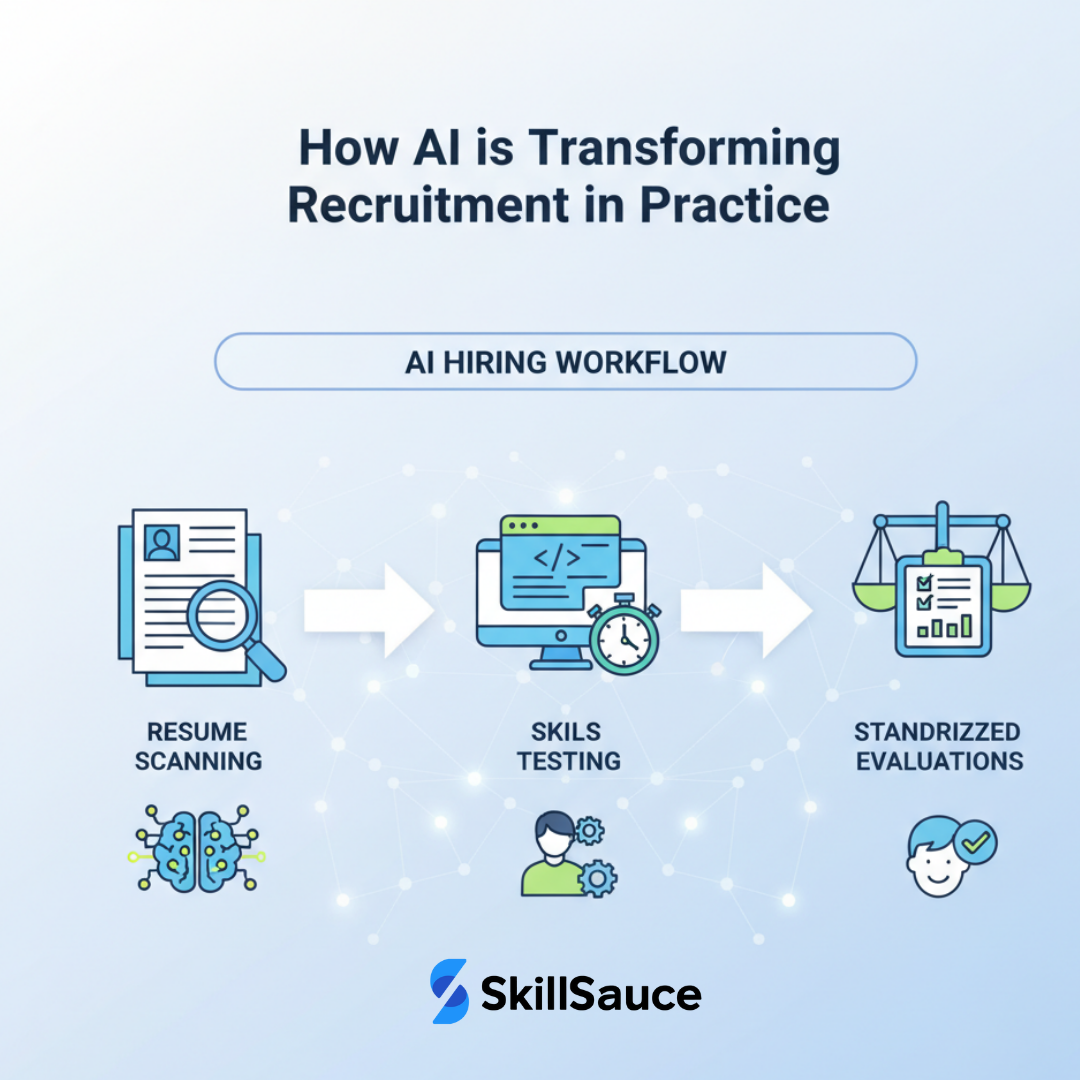
AI is already reshaping how organizations hire. From blind resume screening to skill-based assessments, companies are turning to technology to reduce subjectivity. Major platforms like HireVue, Pymetrics, and Google’s recruitment AI tools have reported measurable improvements in efficiency and diversity.
Real-world examples include:
- Google: Reduced manual screening by 50% and improved diversity by focusing on skill-matching rather than demographics.
- Hilton (via HireVue): Saw a 16% increase in hiring efficiency with AI-analyzed video interviews.
- Pymetrics: Uses neuroscience-based games with embedded bias testing to fairly evaluate soft skills.
These cases show that AI and recruitment can work together to reduce bias — when implemented carefully.
The Real Wins: Where AI is Helping
The strongest case for artificial intelligence in recruitment lies in its ability to make evaluations more consistent and skills-focused.
- Blind Screening – AI removes names, gender, and demographic details from resumes, ensuring that candidates are judged on their qualifications, not personal characteristics.
- Skill-Based Testing –Platforms (like SkillSauce’s AI proctoring and 100k+ test library) allow recruiters to evaluate actual abilities instead of relying on assumptions from a CV.
- Standardized Evaluation – AI hiring systems apply the same scoring methods across candidates, reducing human inconsistency.
- Wider Talent Pools – Automated processes let companies reach and fairly assess candidates from different geographies and non-traditional career paths.
Together, these practices mean companies are getting better hiring accuracy and reduced bias in candidate selection.
The Limitations: What’s Still Hype
While AI hiring has made significant strides, it’s not a magic bullet. Some key concerns include:
- Inherited Data Bias – AI learns from historical data. If those datasets reflect past discrimination (e.g., favoring male candidates), the AI can replicate those patterns.
- Black Box Algorithms – Many tools lack transparency. Recruiters may not fully understand why an AI rejected a candidate, raising fairness concerns.
- Candidate Experience – AI-driven assessments can feel impersonal or inaccessible to candidates with disabilities.
- Overreliance on AI – AI should guide, not replace, human judgment. Without oversight, companies risk overlooking high-potential talent.
Put simply: AI can reduce bias, but it cannot eliminate it entirely.
Regulation and Ethical Oversight
Governments worldwide are now stepping in to regulate artificial intelligence in recruitment.
- EU AI Act (2024-2025): Classifies recruitment AI as “high-risk,” requiring bias audits and transparency.
- US EEOC Guidelines: Demand non-discrimination compliance in AI systems.
- GDPR & AI Bill of Rights: Emphasize privacy and fairness in AI employment practices.
For businesses, this means adopting AI isn’t just about efficiency — it’s about accountability and compliance.
Reality vs. Marketing
So, is AI hiring bias-free?
✅ Reality: The truth is, AI can help cut down on unconscious bias, boost efficiency, and widen the pool of candidates—especially when it’s paired with human oversight.
❌ Hype: Claims that AI can completely eliminate bias are misleading. Without audits, diverse training data, and ethical use, AI can still amplify bias.
The real takeaway: AI + humans = fairer hiring. Technology alone is not enough, but when paired with ethical practices and continuous monitoring, it creates measurable improvements.
What Companies Should Do Next
To get the most out of AI and recruitment, companies need to:
- Audit Regularly: Check AI outcomes for patterns of bias.
- Prioritize Skills: Use AI proctoring and standardized assessments over demographic data.
- Stay Transparent: Clearly explain to candidates how AI is used in the process.
- Combine Human Oversight: Let recruiters make final decisions, supported by AI insights.
This balanced approach ensures that AI works as a tool for fairness, not a replacement for human responsibility.
Conclusion
AI in recruitment is no longer a futuristic idea — it’s already reshaping how companies hire. But separating real impact from marketing hype is critical.
The truth? AI hiring helps reduce bias, but it doesn’t erase it. Organizations that combine AI with transparency, ethical practices, and human judgment will see the biggest benefits: more diverse teams, stronger hires, and fairer outcomes.
Want to see how AI-powered proctoring and unbiased skill assessments can transform your hiring?