

Why AI Interviews Are the Future of Mass Hiring
In today's rapidly changing hiring landscape, mass hiring has become both a necessity and a significant operational challenge for organizations scaling their teams quickly. Traditional recruitment methods—resume screening, manual interviews, and repetitive human evaluations—simply can't keep up with the speed, volume, and consistency that modern global businesses demand.
Enter AI interviews, a truly transformative solution redefining how companies attract, assess, and onboard talent at scale. By embedding intelligence directly into the screening process, AI is removing the bottlenecks that have long plagued high-volume recruitment.
Understanding the Urgent Challenge of Mass Hiring
Mass hiring, also known as volume hiring, refers to the critical process of recruiting a large number of qualified candidates within a concentrated, short period. This is not just a seasonal problem; it’s a constant operational reality for high-growth sectors like retail, logistics, Business Process Outsourcing (BPO), customer service centers, and large-scale technology operations that frequently need to fill hundreds or even thousands of positions simultaneously.
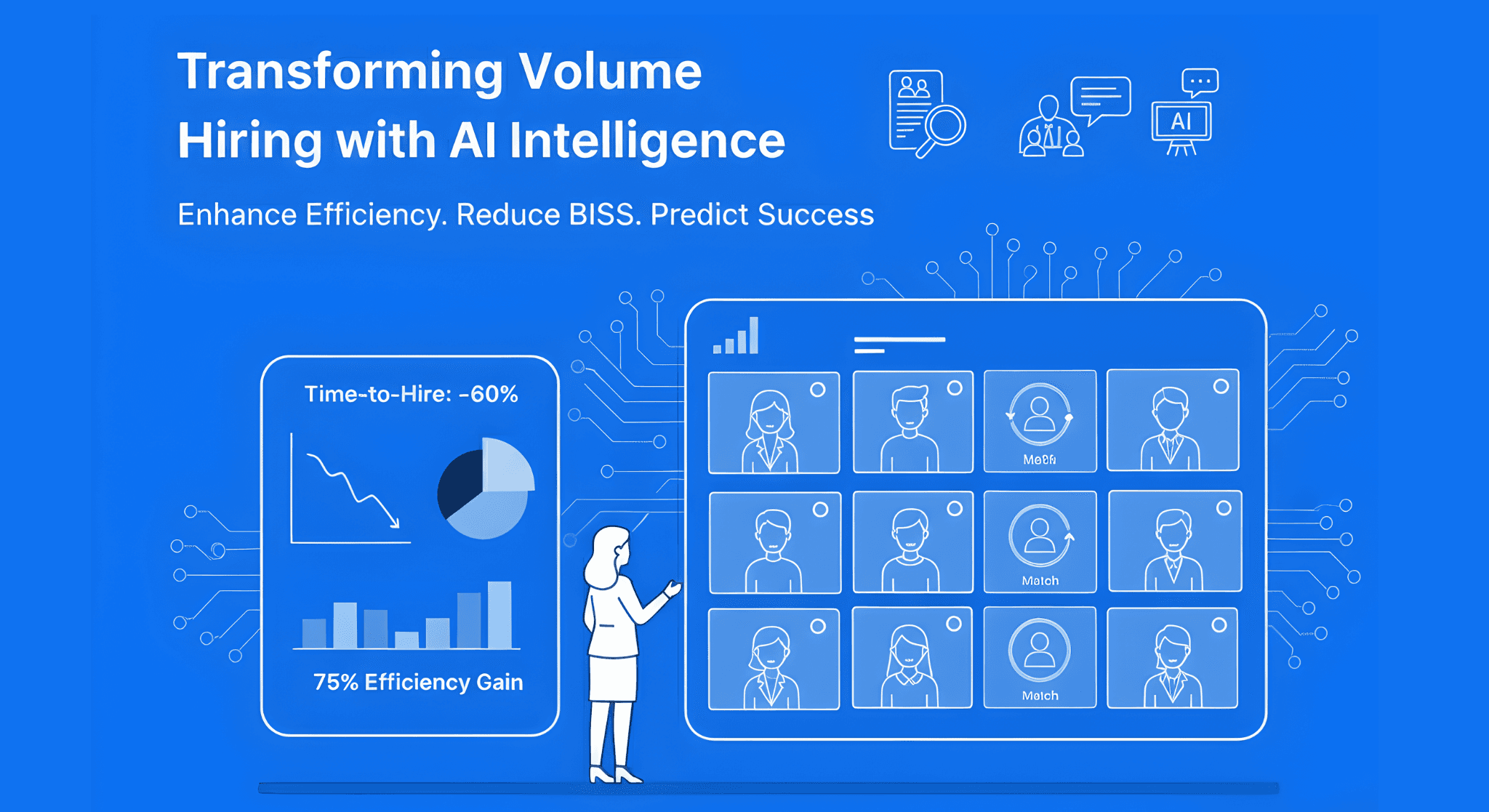
The sheer volume of applications overwhelms traditional HR departments. According to a recent SHRM report, high-volume hiring campaigns can take up to 60% longer when managed manually—leading to critical delays in scaling operations, inconsistent candidate experiences, and exponentially higher recruitment overhead costs.
Key Challenges AI Interviews Must Solve in Mass Hiring:
- Application Overload: Managing and processing thousands of incoming applications quickly without sacrificing the quality of the hire.
- Inconsistent Quality: Reducing interviewer bias and ensuring evaluations are standardized and fair across dozens of different human recruiters and interviewers.
- Logistical Complexity: Scheduling, rescheduling, and communicating with a vast pool of candidates across different time zones and availabilities.
- Maintaining Engagement: Sustaining personalized candidate experience and communication for applicants who often feel like just another number in a long queue.
- High Drop-Off Rates: Minimizing the percentage of qualified candidates who abandon the process due to slow manual progression or poor communication.
This operational reality explains precisely why AI-powered interviews are not just an innovation—they are becoming a necessity that fundamentally transforms the mass hiring landscape.
How AI Interviews Transform the Mass Hiring Process
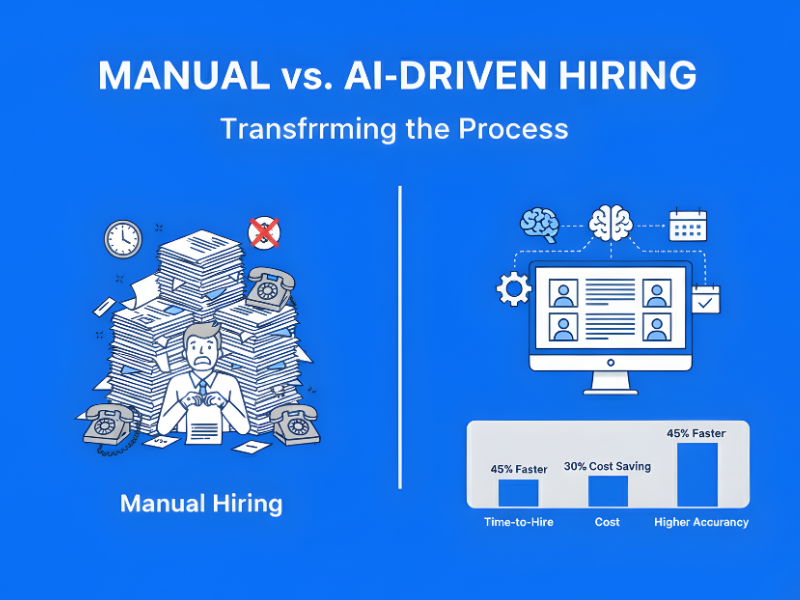
AI interviews leverage advanced machine learning, natural language processing (NLP), and sophisticated video analytics to automate and intellectualize the entire screening and evaluation phase. The technology doesn't merely check boxes; it provides deep, quantifiable analysis of candidates' skills. It analyzes not just what candidates say, but how they say it, interpreting tone, confidence, structure, and sentiment for richer, data-driven insights.
1. Unmatched Speed and Scalability
The most immediate benefit of AI interviews is the ability to handle enormous scale. AI interview platforms can reliably and consistently assess hundreds of candidates simultaneously, drastically cutting the time-to-hire metric from weeks to days.
According to Gartner’s 2024 HR Technology Report, organizations adopting AI-driven hiring strategies saw up to a 45% reduction in their recruitment cycle time. This efficiency is crucial in volume hiring environments where speed to market can directly impact revenue.
2. Deep Objective Evaluation and Fairness
AI minimizes human-centric bias by evaluating candidates based purely on data and a standardized, pre-set scoring rubric. The system focuses on communication clarity, required skills, specific behavioral patterns, and confidence cues—effectively removing subjective human influences such as demographic perceptions, accent preference, or unconscious affinity bias. By standardizing the environment and criteria, AI interviews create a truly level playing field.
3. Consistent and Enhanced Candidate Experience
In mass hiring, maintaining a positive candidate experience is notoriously difficult. AI interviews solve this by ensuring every applicant receives the exact same structured interview format and the same set of targeted, relevant questions. Furthermore, automated, personalized updates and communications can be sent instantly, significantly enhancing engagement and protecting the employer brand, even for those not selected to move forward. Candidates value speed and clear communication, two areas where AI excels.
4. Rich, Data-Driven Insights and Predictive Power
AI interview tools provide recruiters with real-time analytics dashboards that track hiring funnel performance, emerging skill trends, and common drop-off rates across large cohorts. Recruiters can identify quantifiable patterns linking specific interview outcomes—such as problem-solving structure or communication confidence—to long-term job success metrics. This allows HR to continuously optimize their assessment models for maximum predictive accuracy, moving hiring from guesswork to data science.
5. Significant Cost and Resource Efficiency
Automating the initial stages of screening, scoring, and scheduling can slash overall recruitment costs by up to 30% or more. By eliminating the need for human recruiters to spend countless hours on initial screening calls, the process frees up highly skilled HR professionals to focus on strategic, high-value areas like final behavioral interviews, cultural fit assessment, and negotiating final offers.
AI’s Role in Enhancing Fairness and Diversity
Diversity and inclusion remain non-negotiable top priorities for global organizations, yet manual hiring processes often fall short in consistently removing the pernicious effects of unconscious AI hiring bias.
When designed with ethical governance and audited datasets, AI-based interviews become a powerful tool for promoting true fairness and inclusion by:
- Standardizing Evaluation Frameworks: Ensuring the same rubric is applied to every single candidate, regardless of which human is managing their file.
- Masking Personal Identifiers: Allowing for skills and behavioral scores to be viewed during pre-screening stages without revealing potentially biased demographic information.
- Delivering Consistent Question Sets: Eliminating the possibility of illegal, inconsistent, or leading questions being asked by different human interviewers.
- Conducting Audit Trails: Providing a complete record of the assessment process, making it easier to detect and correct algorithmic bias and demonstrate compliance.
According to Deloitte’s 2024 Human Capital Trends Report, a remarkable 72% of organizations using AI in HR reported improved perceptions of fairness among candidates. AI can therefore make mass hiring not only more efficient but fundamentally more equitable.
Key Features of AI Interview Systems for High-Volume Recruitment
Modern AI hiring platforms are sophisticated, integrating seamlessly with Applicant Tracking Systems (ATS) and Human Resource Information Systems (HRIS) to offer end-to-end transparency and automated efficiency.
Core capabilities essential for handling high-volume recruitment include:
- Automated Scheduling & Rescheduling: Instantly syncs interview slots across global time zones and handles rescheduling requests without human intervention.
- Smart Question Generation: Uses Natural Language Processing (NLP) to dynamically tailor follow-up questions based on the content of candidates' answers and specific requirements of the job role.
- Video & Speech Analytics: Goes beyond text to evaluate non-verbal cues, including tone of voice, speaking pace, communication structure, and emotional engagement—all critical for roles in customer service or sales.
- Predictive Scoring & Ranking: Ranks candidates using data derived from the performance profiles of past successful employees in that specific role, providing a predictive probability of success.
- Integrated Skill Mapping: Instantly maps demonstrated skills from the interview (e.g., leadership examples, technical solutions) against the required competencies for the open positions.
Navigating Challenges and Ethical Governance
While AI interviews are revolutionizing mass hiring, successful implementation requires responsible governance and a proactive stance on ethics. The transition from manual to automated assessment is not about replacing human decision-making, but about supporting it ethically.
Key Ethical and Operational Considerations:
- Ethical Governance and Algorithmic Bias: A continuous commitment is required to ensure transparent data use, regular auditing, and proactive elimination of AI hiring bias that may be embedded in training data. This is an ongoing process, not a one-time fix.
- Data Privacy Compliance: Organizations must strictly follow regional and global data privacy laws, including GDPR, CCPA, and India’s DPDP Act, especially concerning the storage, retention, and processing of sensitive video or voice data.
- Human Oversight and Validation: The most successful model is the hybrid approach. AI insights must be treated as guidance and powerful input, not as a final, unchallenged authority. Recruiters must retain the power of final validation and context.
- Building Candidate Trust: To counter skepticism, employers must prioritize communication. Educating applicants about what the AI interview process measures and why it's being used is vital for building confidence and a positive candidate experience.
- Accessibility and Inclusion: Ensure the platform offers robust accommodations, such as screen-reader compatibility, flexible timing, and the option for non-video-based assessments where necessary.
Balancing cutting-edge technology with fundamental human empathy ensures that AI complements—rather than coldly replaces—the vital role of human recruiters.
The Future of AI Interviews in Mass Hiring
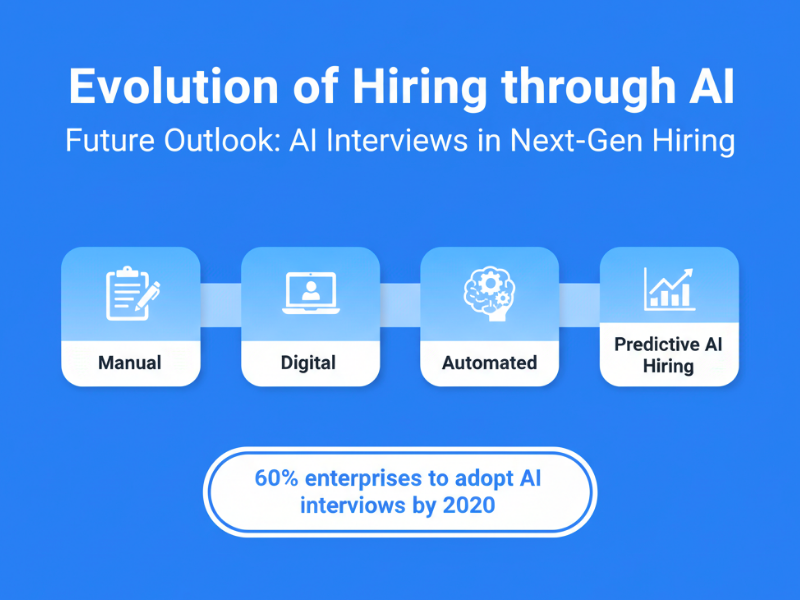
The next phase of recruitment innovation will combine adaptive AI, predictive analytics, and conversational intelligence to create increasingly human-like, yet scalable, candidate interactions.
Emerging Trends Defining the Future:
- Virtual Interview Assistants (VIAs): Sophisticated chatbots and voice assistants that guide candidates through the process, answer FAQs, and even conduct basic structured interviews conversationally
- Emotion-Aware Assessments: Advanced systems that analyse not just what is said, but the emotional cues, confidence levels, and energy demonstrated, which are vital predictors for customer-facing roles.
- Advanced Skill Mapping Engines: Tools that can instantly and accurately map the specific skills demonstrated during the AI interview to the exact competency requirements of every open role across the organization.
- Generative AI Feedback: Providing personalized, constructive performance insights to every applicant post-interview, drastically improving the candidate experience even for rejected candidates.
According to IBM’s Future of Work Report (2025), by 2030, over 60% of global enterprises will integrate AI-driven interviews into their primary hiring workflows—making AI a near-universal standard in modern HR operations.
Conclusion: Speed, Scale, and Ethical Intelligence
AI interviews are not just a temporary trend; they are revolutionizing mass hiring by successfully blending automation, advanced analytics, and principled empathy. They empower recruiters to make decisions that are faster, demonstrably fairer, and backed by comprehensive data while simultaneously elevating the overall candidate experience.
For organizations dealing with high-volume recruitment, the choice is clear: embrace the speed and objective insights of AI interviews or risk falling behind competitors. As this technology continues its rapid evolution, the most successful organizations will be those that commit to an ethical, human-centered approach, ensuring the future of hiring remains intelligent, efficient, and profoundly inclusive.