

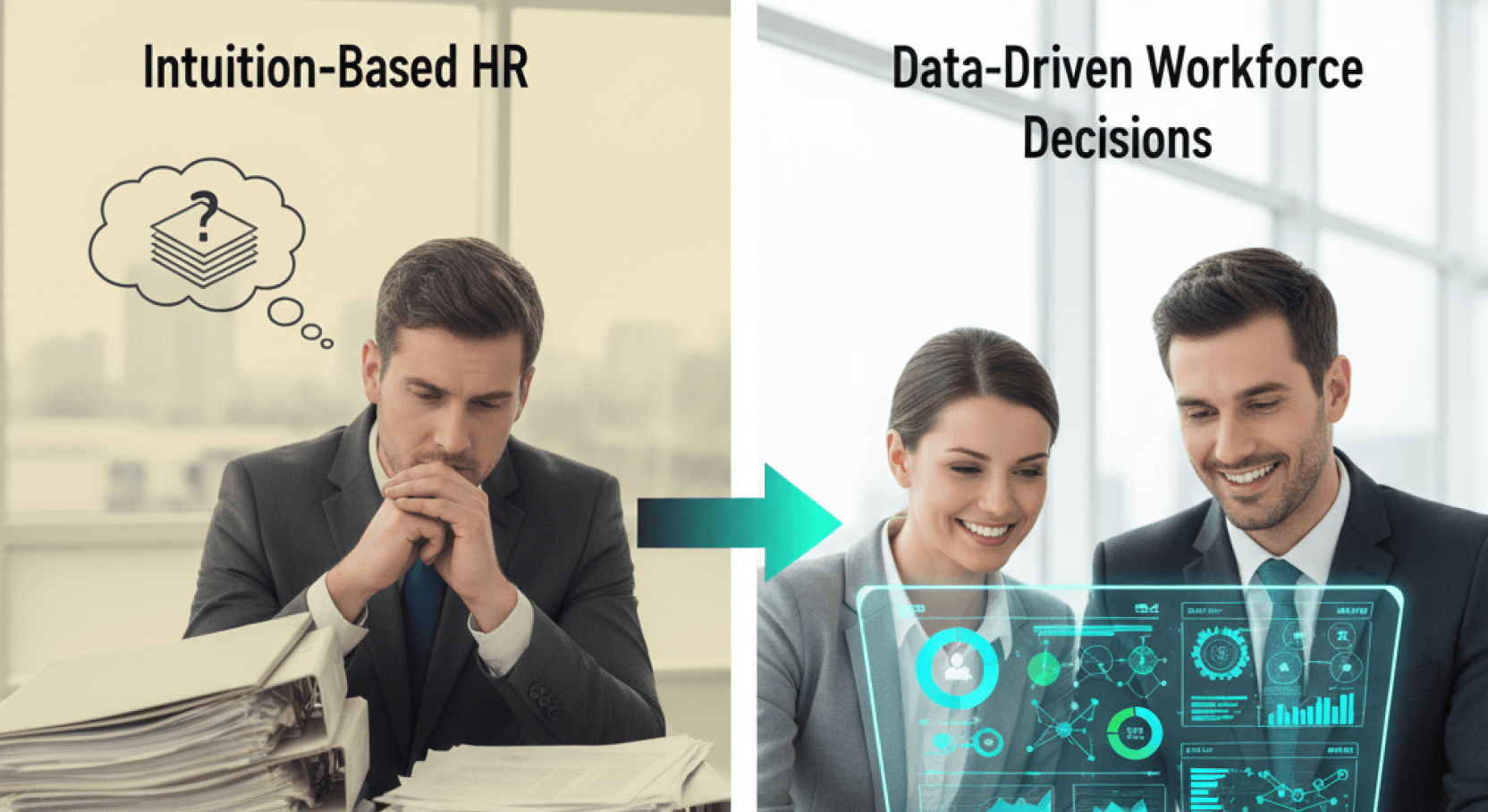
In the dynamic world of work of 2025, benchmarking talent has become the cornerstone of modern workforce analytics. As AI and automation continue to reshape job roles and required skills, HR leaders must possess a deep, data-backed understanding of how their employees perform—both internally and against industry standards.
By leveraging assessment data and benchmark analytics, forward-thinking organizations can accurately identify workforce strengths, uncover critical skill gaps, and strategically align their human capital strategies with evolving business goals.
Why Workforce Insight Matters in 2025
The global workplace is currently undergoing a massive and rapid skills shift.
According to Deloitte's 2026 Global Human Capital Trends report — surveying more than 9,000 business and HR leaders across 89 countries — building the human advantage is now as critical as managing technology itself. Organizations can no longer prepare workers for the future through static training programmes; they need workforce systems that enable continuous learning, adaptation, and reinvention in real time. Talent benchmarking is the diagnostic tool that makes this possible, revealing precisely where workforce capabilities stand today and what needs to develop for tomorrow. This fundamental shift makes accurate talent benchmarking essential for any organization aiming to remain competitive and future-proof its operations.
Unlike traditional performance reviews, which capture snapshots of past performance, talent benchmarking provides a continuous, structured view of workforce capabilities against both internal standards and external industry benchmarks. It involves the systematic analysis of data derived from employee assessments, engagement surveys, and comprehensive competency ratings. The core objective is clear: to understand precisely where your current workforce stands today and what strategic capabilities it needs to develop for tomorrow’s growth.
Ultimately, benchmarking transforms HR decision-making from an intuition-based process to a sophisticated, data-driven one, enabling fairer, faster, and smarter workforce management.
The Strategic Role of Benchmarking in Workforce Analytics
Talent benchmarking functions as a vital, insightful layer within the broader field of workforce analytics, integrating rich employee assessment data to reveal actionable insights. By systematically examining trends in cognitive, technical, and behavioral skills, organizations gain the ability to visualize precisely how their workforce performs across different teams, geographies, and periods.
In 2026, 84.3% of North America's Top Employers consistently applied a skills-based selection framework, up 6.1 points year over year, according to HR Dive's 2026 HR Benchmarks report. This structural shift means talent benchmarking is no longer a differentiator for leading organisations; it is the foundation on which skills-based selection, development, and mobility decisions are built.
Modern benchmark analytics tools are designed to connect seamlessly with existing HRIS (Human Resources Information Systems) and LMS (Learning Management Systems) platforms. This integration allows them to automatically map performance trends, track employee sentiment, and perform sophisticated benchmarking analysis.
As Gartner’s 2024 Workforce Management Guide notes, advanced HR systems have evolved far beyond mere attendance tracking; they now actively capture and analyze employee sentiment, engagement levels, and workforce trends to support more effective leadership decisions.
Leading global companies actively use benchmarking analytics to:
- Measure proficiency in critical, future-focused skills like AI fluency or crucial soft skills like customer empathy.
- Spot hidden skill gaps that may be secretly hindering innovation or delaying project delivery timelines.
- Compare internal performance with robust industry benchmarks for competitive, external insight.
For example, global technology leaders like Salesforce and Infosys run extensive, global benchmarking initiatives that are directly aimed at aligning their reskilling programs with emerging AI skills, thereby ensuring their workforce evolves perfectly in sync with rapid market demands.
Key Methods of Talent Benchmarking
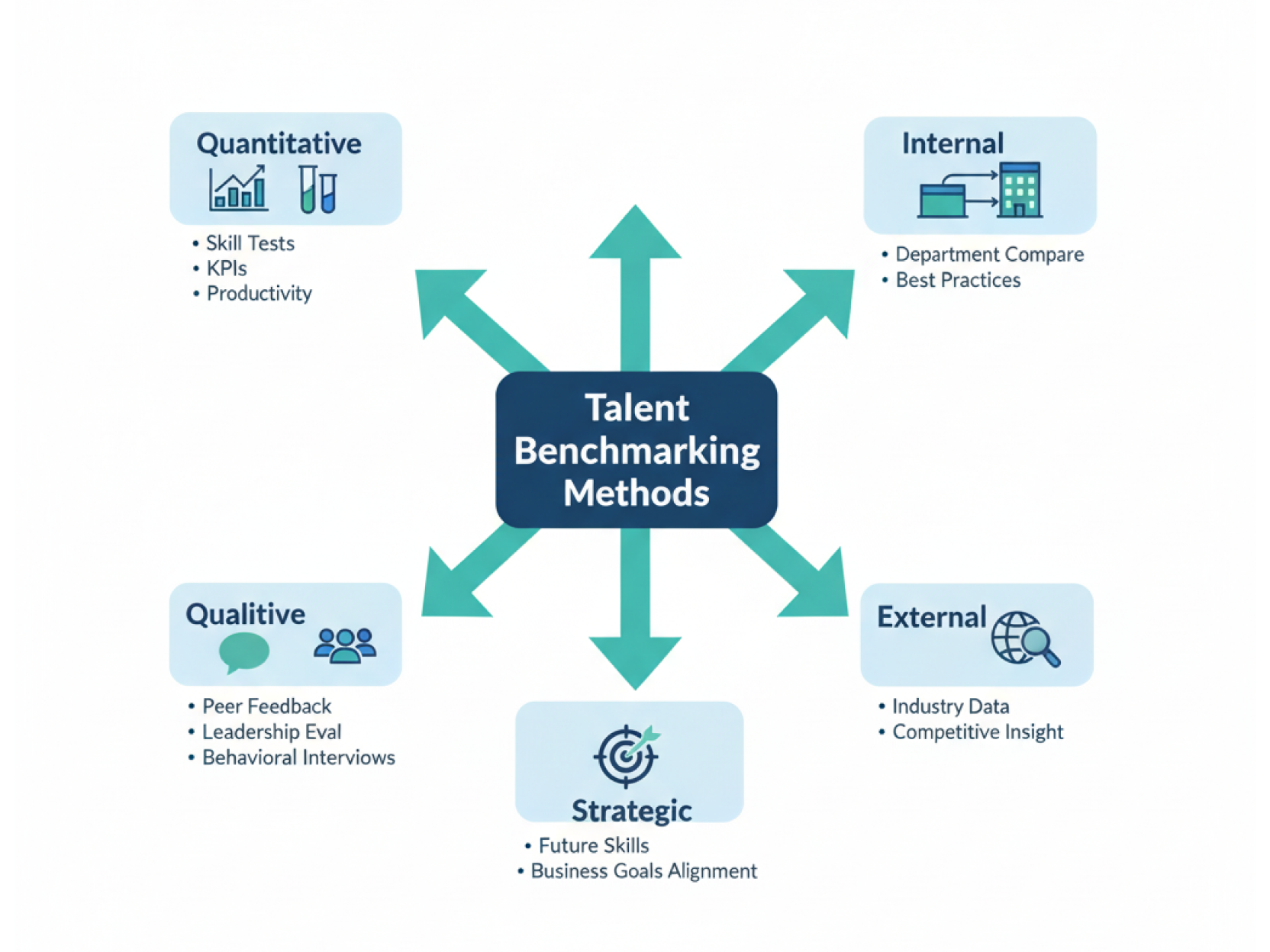
Different organizations adopt talent benchmarking in various ways, primarily depending on their specific goals and the availability of reliable data. The most effective, comprehensive programs generally combine both quantitative and qualitative analysis.
1. Quantitative vs. Qualitative Benchmarking
- Quantitative benchmarking relies on hard, measurable metrics: results from skill tests, clearly defined performance KPIs (Key Performance Indicators), measurable productivity scores, and statistically gathered engagement ratings.
- Qualitative benchmarking focuses on interpreting non-numerical, contextual data. This includes detailed peer feedback, formal leadership evaluations, and insights gathered from behavioral interviews to assess crucial attributes like collaboration, communication, and cultural fit.
The powerful act of blending both approaches creates a truly holistic view of employee performance—a place where objective numbers meet the essential human narrative.
2. Internal vs. External Benchmarking
- Internal benchmarking involves comparing performance metrics within different departments or teams to identify both best practices and high-performing individuals who can effectively mentor others.
- External benchmarking uses extensive industry benchmarking data to provide a clear, competitive perspective on how your organization's talent metrics measure up against direct competitors.
Modern benchmarking companies and platforms, such as JobsPikr and LinkedIn Talent Insights, provide valuable, real-time data on the evolution of necessary skills, compensation trends, and changes in job roles across various industries.
📊 Example: If your organization's average project delivery time is 15% slower than the observed industry benchmarking peers, a thorough benchmarking analysis is essential to determine if the cause is linked to training needs, identifiable workflow inefficiencies, or challenges with leadership bandwidth.
3. Strategic Benchmarking for Workforce Planning
Strategic benchmarking adopts a big-picture, forward-looking view—one that directly aligns key talent metrics with overarching business goals.
It critically evaluates how effectively your current workforce is adapting to major trends like digital transformation, the demands of remote collaboration, or the integration of AI-driven innovation. For instance, if competitors are demonstrably prioritizing skills like AI literacy or emotional intelligence in their hiring, while your internal teams show a lag in these areas, that clear difference highlights a strategic skill gap that must be proactively addressed.
Significant Benefits of Talent Benchmarking for HR and Business Leaders
Mercer's Global Talent Trends 2026 report — drawing on insights from nearly 12,000 executives, HR leaders, employees, and investors — identifies talent intelligence as a top workforce priority. As workforce risks and skill requirements shift more quickly, organisations are placing greater emphasis on using workforce data to strengthen resilience, anticipate risk, and respond to emerging challenges including the AI skills gap.
1. Enhanced Fairness and Operational Efficiency
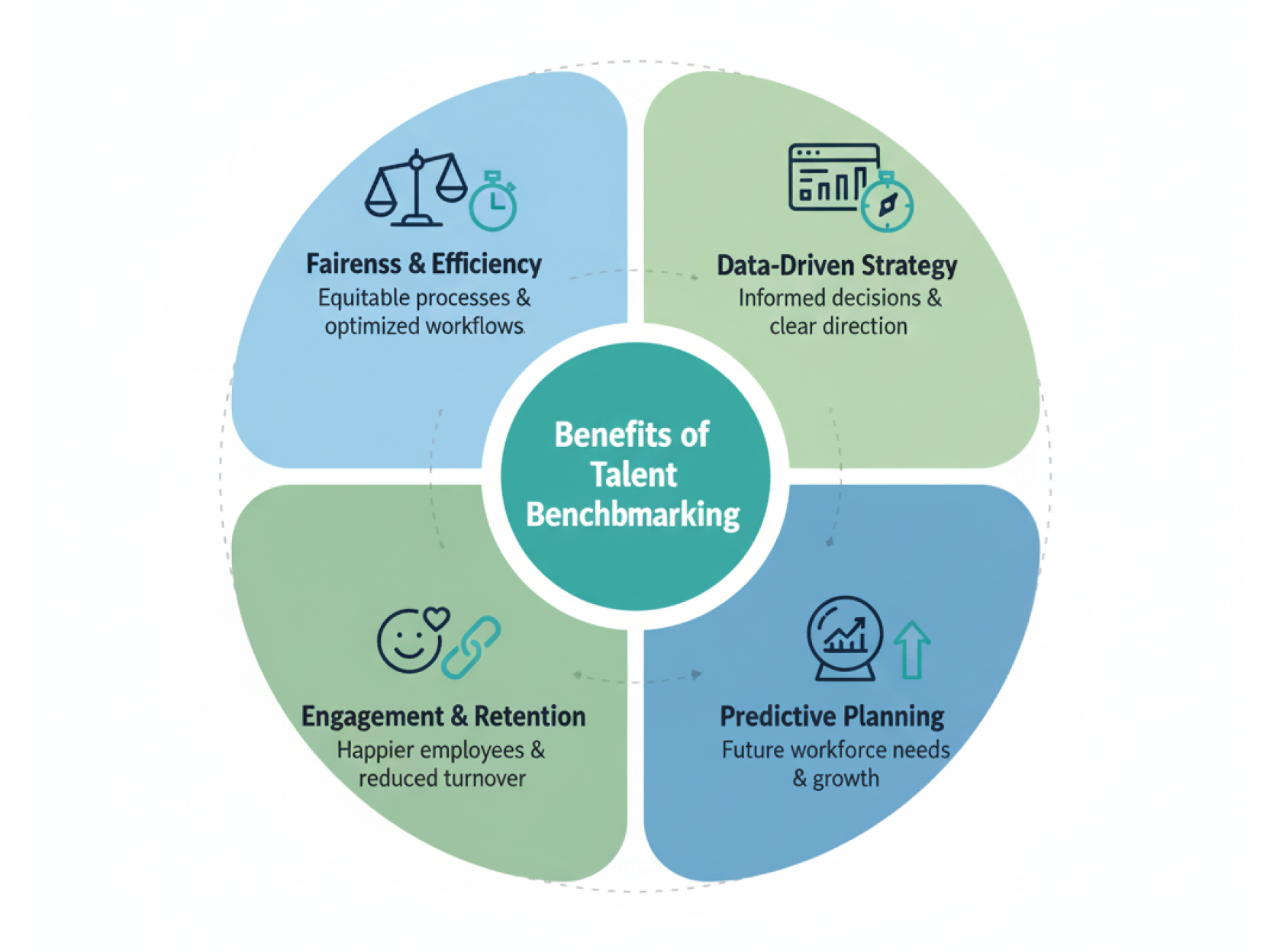
Benchmarking is crucial for ensuring a high degree of consistency and objectivity across performance reviews, promotion decisions, and compensation structures. Gartner (2024) reports that companies implementing competency-based frameworks can reduce perception bias by up to 28%, significantly improving perceived fairness and boosting overall employee trust.
2. Data-Driven Strategy Alignment
Continuous benchmarking directly connects specific workforce outcomes to the broader business performance. The SHRM 2024 Employee Benefits Survey found that companies actively utilizing benchmark analytics are better equipped to align their HR strategies with measurable business value, leading to improvements in innovation, employee retention, and overall job satisfaction.
3. Predictive Workforce Planning and Foresight
When powerfully integrated with AI analytics, benchmarking moves beyond current performance to help accurately forecast future skill gaps, thereby enabling proactive and targeted reskilling initiatives. McKinsey’s 2025 Future of Work report projects that the demand for crucial social, emotional, and technological skills will surge by 11–14% by 2030. Organizations that effectively use predictive benchmarking today will be strategically prepared, rather than scrambling to catch-up later.
4. Improved Engagement and Talent Retention
Transparent and consistent benchmarking fundamentally builds employee trust. When individuals have a clear understanding of what success looks like, and how their performance is objectively evaluated, their engagement levels naturally rise. The LinkedIn Workplace Learning Report (2025) suggests that employees operating in benchmarking-driven cultures are as much as 30% more likely to remain with their current employer.
Key Challenges and Best Practices for Implementation
Even the most meticulous, data-driven strategies face inevitable hurdles. HR teams must proactively address both ethical and operational challenges to ensure successful, sustainable benchmarking implementation.
1. Data Accuracy and Consistency
A core principle is that if your underlying data is inconsistent or of poor quality, your resulting insights will be equally unreliable. Regular data calibration—such as rigorously correlating employee engagement scores with actual retention data—is vital for ensuring the reliability of your benchmarks. It is critical to avoid the use of fragmented or outdated assessment systems.
2. Mitigating Benchmarking Bias
Benchmarks derived from a narrow or undiverse demographic pool have the potential to reinforce existing biases. To actively ensure fairness and ethical integrity, organizations must commit to using anonymized data, maintaining diverse comparison pools, and leveraging bias-detection algorithms in their analytical tools.
3. Privacy and Regulatory Compliance
Effective benchmarking inherently requires the use of sensitive employee data. Organizations are legally obligated to strictly comply with international privacy laws, such as the GDPR in Europe and India’s DPDP Act (2023). It is non-negotiable to maintain transparent communication about how data will be used and to secure informed consent from all candidates and employees.
4. Commitment to Continuous Improvement
It is vital to recognize that benchmarking is not a static, one-time project—it is a continuous, iterative process. The best practice is to start small, meticulously measure initial outcomes, and then refine your approach based on those findings. As PeopleStrong (2025) emphasizes, "benchmarking success is rooted in iterative testing and achieving long-term strategic alignment."
Building a Continuous Benchmarking Culture
The future of work will undoubtedly reward organizations that demonstrate an ability to continuously learn, adapt, and evolve.
Benchmarking talent is about far more than simple comparison; it is fundamentally about deep insight, strategic growth, and continuous improvement.
By effectively combining structured, reliable assessment data with empathetic and strong leadership, organizations are well-positioned to:
- Build agile, future-ready teams capable of navigating market changes.
- Promote true equity and transparency across all HR practices.
- Successfully turn their workforce data into a powerful competitive advantage.
The new HR frontier is definitively powered by data-driven talent intelligence—a place where every skill, every behavioral metric, and every performance score contributes measurably to overall organizational success. Those who embrace continuous benchmarking today will be the ones defining the most resilient and innovative workplaces of tomorrow.
How SkillSauce supports talent benchmarking
Effective talent benchmarking requires structured, comparable assessment data — not scattered notes from inconsistent interviews or subjective manager impressions. SkillSauce generates the standardised candidate and employee assessment data that benchmarking analysis requires: role-specific skill scores across 338 job profiles, cognitive and aptitude test results, and AI-powered interview evaluations through TESSA AI.
For HR teams building assessment-based benchmarking programmes, SkillSauce's Assessment Reports provide candidate-level performance data that can be aggregated across cohorts, compared against internal benchmarks, and tracked over time as the foundation for genuine talent intelligence.