


Introduction
US companies spent $102.8 billion training their employees in 2025. The average cost per learner was $874 — but that number only captures what shows up on invoices.
The real cost of training a new employee runs far higher. New hires typically take 8 to 26 weeks to reach full productivity, depending on role complexity. During that window, you are paying full salary for partial output. When you add peer mentoring time, administrative coordination, and the full replacement cost when someone leaves in their first year — which SHRM estimates at 50% to 200% of annual salary — total per-hire training costs range from $7,500 for entry-level roles to $28,000 or more for senior technical positions.
One-third of new hires begin job hunting within their first six months. When they leave, every dollar spent on training leaves with them.
This article breaks down real training costs examples by role, company size, and industry — explains exactly where the hidden costs come from — and covers the practical strategies that reduce expenses without cutting training quality.
What Makes Up the Cost of Training a New Employee
| Company Size | Avg. Training Spend per Employee (2025) |
|---|---|
| Small (under 100 employees) | $1,100+ |
| Mid-size (100–999 employees) | $874 |
| Large (1,000–9,999 employees) | $722 |
| Enterprise (10,000+ employees) | $481 |
Training costs vary significantly by company size — but they are never as simple as a single line item. According to the Training Magazine 2025 Industry Report, the average US company spends $874 per employee on workplace learning, at an average of $103 per hour of training delivered. Mid-size companies (100–999 employees) spend notably more at around $1,100+ per person due to higher outsourcing dependency, while large enterprises benefit from economies of scale and spend closer to $481–$722 per learner.
These per-employee figures only capture direct spend. A deeper look at what actually drives training budgets reveals three distinct cost layers — each more expensive than the last.
Direct costs: materials, trainers, and tools
Basic training expenses form the foundations of any training budget that organizations quickly spot. These tangible costs typically include:
- Training materials and content - Development of employee handbooks, workbooks, online courses, and proprietary content
- Instructor and trainer fees - Salaries for internal trainers or rates for external consultants
- Learning technology - Learning Management Systems (LMS), e-learning platforms, and software licenses
- Facility and equipment costs - Room rentals, computers, projectors, and training tools
- Travel expenses - Transportation, lodging, meals, and per diems for required travel
Organizations invest in specialized onboarding programs with distinct phases. These phases include pre-boarding (background checks, system access setup), orientation, role-specific training, and mentorship. Each phase brings its own direct cost implications.
Indirect costs: time, admin, and setup
Hidden expenses lie beyond the visible costs that affect overall training expenditures. Companies pay full salary while new hires aren't yet producing value.
Administrative coordination adds another major indirect expense. Legal reviews of employment agreements, compliance documentation, background check coordination, benefits enrollment, and payroll setup are part of these costs. Administrative staff dedicate substantial time to plan sessions and handle logistics.
Technical training needs and equipment setup create extra overhead through IT support. HR, payroll, and benefits administration teams spend dedicated time with each new employee—costs that rarely show up in training calculations.
Hidden costs: lost productivity and ramp-up time
Lost productivity often becomes the biggest overlooked training expense. Value creation stops during training hours. New employees need more investment due to slower ramp-up time and supervision needs.
A simple formula reveals this hidden cost: Employee hourly rate × training duration + supervisor time = total productivity cost. Take a new hire making $50/hour who needs 40 hours of training with 4 hours of supervisor oversight. The productivity cost alone reaches $2,200.
Employees work below full capacity for months while learning systems and workflows. Time to full productivity ranges from 8 to 26 weeks based on role complexity. This extended ramp-up creates major financial effects. An employee earning $60,000 takes six months to reach full productivity. That's $30,000 in salary before seeing any return on investment.
The core team members who manage full workloads often handle training duties. This pulls key contributors from their main tasks and creates ripple effects across the organization. Early employee turnover means these investments are lost.
Training Costs Examples by Company Size, Role, and Industry
Training costs look very different depending on three variables: company size, role type, and industry. Here are real-world examples across each.
By company size
| Company Size | Training Scenario | Estimated Cost | Key Cost Drivers |
|---|---|---|---|
|
Small Business (Under 50 employees) |
30-person retail startup running a 2-day customer service onboarding program |
~$7,525 total (~$250 per employee) |
Direct training costs, manager time, productivity loss during training |
|
Mid-size Company (200–500 employees) |
Technology company onboarding 40 engineers annually with LMS access and custom training | ~$4,200–$6,800 per hire | HR processing time, LMS subscription, custom course creation, ramp-up periods |
|
Enterprise (1,000+ employees) |
Global organization delivering customer service workshops to 5,000 employees |
~$300,000 total (Lower per-person cost at scale) |
Economies of scale, bulk pricing, distributed fixed costs |
By role type
| Role Type | Direct Training Cost | Ramp-Up Period | True Total Cost Estimate |
|---|---|---|---|
| Entry-level / Clerical | $400–$800 | 4–8 weeks | $2,000–$5,000 |
| Mid-level Professional | $800–$1,500 | 8–16 weeks | $8,000–$15,000 |
| Technical / Engineering | $1,500–$3,000 | 16–26 weeks | $15,000–$28,000 |
| Senior Manager / Leadership | $3,000–$8,000 | 20–36 weeks | $25,000–$50,000+ |
For a complete view of what each hire actually costs your team — including recruitment, assessment, and interview time — use the Cost Per Hire Calculator to calculate your baseline.
Custom content development for technical roles runs higher — professional course creation averages $3,000 to $10,000 per hour of finished training content, with external trainers charging $1,000 to $10,000 per day depending on expertise.
By industry
| Industry | Training & Onboarding Requirements | Cost Impact | Key Challenges |
|---|---|---|---|
| Technology | Coding environment setup, security training, product workshops, peer mentoring | Productivity gap alone can exceed ~$11,500 before full ramp-up | Long onboarding periods, high technical complexity, delayed productivity |
| Healthcare | Compliance training, certifications, supervised clinical practice | Often exceeds $10,000 per hire | Regulatory requirements, supervision costs, patient safety standards |
| Retail & Hospitality | Short ramp-up periods with standardized onboarding content | Lower per-hire training cost but repeated spending due to turnover | High employee turnover, recurring onboarding expenses |
Why Training Costs More Than You Think
Training costs blow past budget projections for three critical reasons that go beyond the obvious expenses. Many organizations don't see these hidden financial drains that eat away at their bottom line.
The effect of slow productivity ramp-up
New hires rarely hit the ground running. The average employee needs approximately 28 weeks—a full six months—to reach full productivity. This long ramp-up period creates a big financial drain. An employee making $60,000 a year takes six months to reach full productivity, which means $30,000 in salary before seeing any real return on investment.
The time-to-productivity changes based on role complexity. Research shows it can take anywhere from eight weeks for simple clerical roles to six months for senior managers. Companies pay full salary during this time while getting partial value—and this gap gets bigger with higher-paid positions.
Even seasoned professionals work below their full capacity for months as they learn systems, workflows, and team expectations. Many training budgets miss this productivity gap, which leads to unexpected financial pressure.
Team time spent on support and mentoring
The core team members often train new hires while managing their own full workloads. This peer mentoring pulls valuable contributors away from their main duties. The cost—which rarely shows up in budgets—adds up quickly when spread across multiple new hires.
Team managers spend lots of time helping newcomers understand tasks and fit into the group. This takes away valuable hours from their schedules and creates a ripple effect through departments. Each training hour costs double: once for the trainee and again for the trainer's lost time.
Productivity drops when existing staff covers vacant positions during hiring and training. This hidden cost multiplies in ever-changing environments where deadlines stay firm whatever the staffing situation.
Turnover risks and retraining expenses
The biggest worry comes when employees leave too soon and these training investments become total losses. Right now, 51% of U.S. employees are looking or actively searching for new jobs—the highest since 2015. This creates a huge financial risk for companies that spend heavily on training.
The replacement costs are eye-opening:
- Leaders and managers: 200% of annual salary
- Technical professionals: 80% of annual salary
- Frontline employees: 40% of annual salary
These numbers don't include retraining costs for replacement hires. It gets worse - 42% of employees who quit say their manager or organization could have prevented their departure. Companies often get little warning, as 77% of voluntary departures happen within just three months of job searching.
Gallup's estimates show employee turnover costs U.S. businesses about $1 trillion annually. Without good retention strategies, companies keep reinvesting in training new replacements instead of benefiting from experienced, productive employees.
Calculate your own attrition rate and replacement cost with the SkillSauce Attrition Rate Calculator to see the exact financial impact on your organisation.
The hiring quality connection most training budgets ignore
Training cost and hiring quality are directly linked — but most training budgets treat them as separate problems. They're not.
When a new hire leaves within six months, every training investment is lost. When a mis-hire stays, every additional month of coaching, retraining, and performance management compounds the original cost. The cheapest training investment is one you only have to make once — which only happens when the hire is right.
Structured pre-hire assessments that evaluate role-relevant skills, cognitive ability, and cultural fit before an offer is made reduce early attrition by validating fit before the training investment begins. When hiring decisions are based on verified skills rather than CV impressions, the new hire arrives better matched to what the role actually requires — shortening ramp-up time, reducing peer mentoring hours, and lowering first-year exit rates simultaneously.
How Poor Training Affects Your Bottom Line
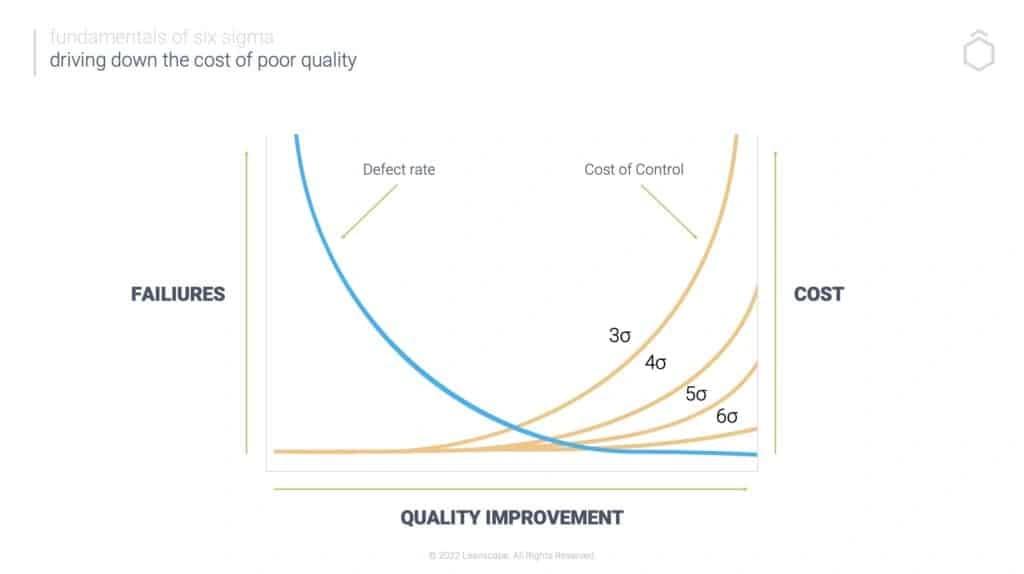
Image Source: LeanScape
Poor employee training hurts your company's financial performance. Knowledge gaps create expensive problems that spread throughout your organization.
Increased employee turnover
Employees feel frustrated when they don't get proper training to succeed at their jobs. Research shows 40% of workers quit within their first year without good training. Replacing these employees gets pricey - it costs between 16% to 213% of their yearly salary based on their role.
Companies see 34% lower turnover rates when they invest in learning and development. Organizations without good training programs don't deal very well with keeping staff who look for better growth opportunities elsewhere. IBM's research reveals that workers are 12 times more likely to leave if they can't achieve their career goals at a company.
Lower engagement and morale
Staff members who lack training feel undervalued and unsupported. Their frustration leads to disengagement as they can't meet expectations. Team stress levels rise and create a negative environment that affects everyone's work.
Top performers get frustrated when they see poor performance go unchecked. They might reduce their effort after realizing no one notices or rewards their extra work. The company's culture takes a hit as 23% of employees lose motivation after getting unexpected feedback about performance issues.
Missed performance targets
Bad training directly reduces your profits through lower productivity and work quality. Companies with complete training programs earn 218% more income per employee and see 24% higher profit margins than those without formal training.
Poor performance costs you through:
- Errors and quality control problems
- Delayed projects and missed deadlines
- Lower customer satisfaction and retention
- Compliance risks and potential fines
Accenture reports that every $1.00 you invest in effective training brings back $4.52. Organizations that spend too little on training end up paying more through poor performance than they save on training costs.
Research suggests that employee underperformance could be costing your business 10-20% more than needed. This hidden drain affects everything from service quality to your ability to innovate.
Smart Ways to Optimize Employee Training Costs

Image Source: Learnit
Many businesses try to cut training costs without compromising quality after they see the real price tag. You can make the most of your training budget with several affordable approaches.
Use microlearning and self-paced modules
Small, focused learning segments create amazing results. Employees can access these 2-5 minute learning bursts whenever they want. This method fits well with today's work life since staff members have roughly 24 minutes each week to learn.
These quick lessons help people remember up to 80% more information. The content takes less time to create - about three times faster. Quick learning works great to teach product details, compliance rules, and urgent updates.
Make use of internal mentors and peer learning
Your best training resource might be right under your nose. Knowledge flows naturally from experienced team members through mentoring programs without extra costs. This helps build both technical skills and company culture.
The numbers tell an interesting story - 81% of millennials stick around five years longer at companies that offer mentoring. People with mentors are much less likely to leave their jobs, no matter their position.
You can spot potential mentors by asking team members who they turn to for help. Top performers from recent reviews also make great mentors.
Automate onboarding with training software
What used to take weeks now takes just days or minutes thanks to automation. An automated system handles multiple tasks on its own. A new hire accepts your tech policy, and the system tells IT to get their equipment ready.
This technology does more than save time. It keeps the experience consistent for all new hires and gives you evidence-based information about your onboarding process. HR teams can build relationships instead of pushing paper.
Group sessions vs. one-on-one training
The cost difference between training styles is huge. You could run monthly group training programs for the same cost as four individual sessions. Group training cuts per-person costs and promotes teamwork and responsibility.
In spite of that, you need the right mix. Individual sessions give personal attention that speeds up learning, while groups add motivation and peer support. Think over your goals and budget as you pick the best format.
How to Measure and Track Training ROI
A systematic analysis helps measure your training investment's results. Leaders who ask about ROI really want to know the benefits of their investment. Several practical methods can measure these returns.
Set clear training goals and KPIs
Your training program needs specific, measurable objectives from the start. Success measurement becomes difficult without defined goals. The metrics should support broader business objectives:
- Operational metrics: Error reduction, sales growth, customer satisfaction scores
- Completion and participation rates: Training attendance and course completion
- Knowledge application: Skills implementation in daily work
- Business impact indicators: Changes in revenue, market share, and retention
SMART (Specific, Measurable, Achievable, Relevant, Time-bound) criteria create meaningful training KPIs. This method ensures training initiatives support organizational goals instead of existing alone.
Track time-to-productivity metrics
Time-to-productivity shows how long new employees take to reach full productivity. This measurement plays a key role in your training ROI calculations. The tracking process needs:
- A clear definition of "fully productive" for each role
- Specific start and end measurement points
- A simple formula: Time to Productivity = End Point - Start Point
Companies with strong onboarding keep 82% more new hires, which saves substantial retraining costs. Tracking these productivity milestones helps you learn about training effectiveness and justify your investments.
Use cost-per-employee training standards
Your cost-per-employee trained comes from dividing total training expenses by participant numbers. This calculation shows how well you manage your learning program's finances. A $50,000 training budget for 200 employees means $250 per person.
Lower costs usually mean better delivery, but very low numbers might indicate poor investment. Most companies spend about $1,280 per employee each year—use this as your standard.
Collect feedback and adjust programs
Training evaluation needs participant feedback. Surveys work best right after training while memories stay fresh. The data should include both scored responses and written answers.
Look for patterns in your results to find areas needing improvement. Modern analytics tools help organize this feedback effectively. The key lies in making changes based on what you learn—this feedback-to-action approach shows your dedication to making programs better.
Conclusion
New employee training costs way more than what most businesses expect. The expenses go beyond just training materials and instructor fees. Hidden costs like productivity ramp-up time, team mentoring, and staff turnover can hit an organization's finances hard.
The numbers tell quite a story. Training costs can range from $7,500 to $28,000 per employee. Staff turnover expenses can reach up to 100-300% of an employee's salary. New hires need about eight months to reach their peak productivity. This means businesses run below capacity during this time.
Smart optimization strategies can turn these expenses into valuable investments. Microlearning modules help people retain more information and take less time to develop. Internal mentoring programs tap into your existing talent pool and boost retention rates by a lot. Process automation saves time and resources. The training budget works better when you mix group and individual sessions.
Your ROI measurement should include clear goals, productivity metrics, and feedback loops. This helps you justify the spending and make your programs better. Companies that invest properly in training see amazing results. They earn 218% more income per employee and their profit margins are 24% higher than companies without formal training.
Quality employee training is more than just a business cost. It's an investment in your company's future. The initial costs might seem high, but good training programs reduce turnover and boost productivity. Your approach to staff training could make the difference between average and exceptional results in today's competitive market.
Key Takeaways
Training new employees costs far more than most businesses realize, with hidden expenses that can significantly impact your bottom line. Here are the essential insights to help you understand and optimize these investments:
• Training costs range from $7,500-$28,000 per employee, with hidden productivity losses during the 8-month ramp-up period often doubling actual expenses.
• Poor training drives 40% of employees to leave within their first year, creating turnover costs of 100-300% of their annual salary plus retraining expenses.
• Microlearning and automation can reduce training costs by 300% while boosting retention rates by 80% compared to traditional methods.
• Companies with strong training programs achieve 218% higher income per employee and 24% higher profit margins than those without formal programs.
• Track time-to-productivity metrics and cost-per-employee benchmarks to measure ROI and justify training investments to leadership.
The key is viewing training not as an expense, but as a strategic investment. Organizations that optimize their training approach through smart delivery methods, internal mentoring, and data-driven measurement see substantial returns while reducing the costly cycle of turnover and retraining.