
Introduction
Hiring a front-end developer without a clear skills benchmark is one of the most expensive mistakes a tech team can make. You end up either overpaying for skills you don't need, or onboarding someone who can't deliver what your product requires.
This guide breaks down the front end developer skills that actually matter — what to look for at each experience level, how to assess them during interviews, and how to build a hiring process that consistently finds the right fit.
Whether you're scaling a startup's web team or backfilling a senior role in an enterprise engineering org, this is the framework that works.
Understanding the Role of a Front-End Developer
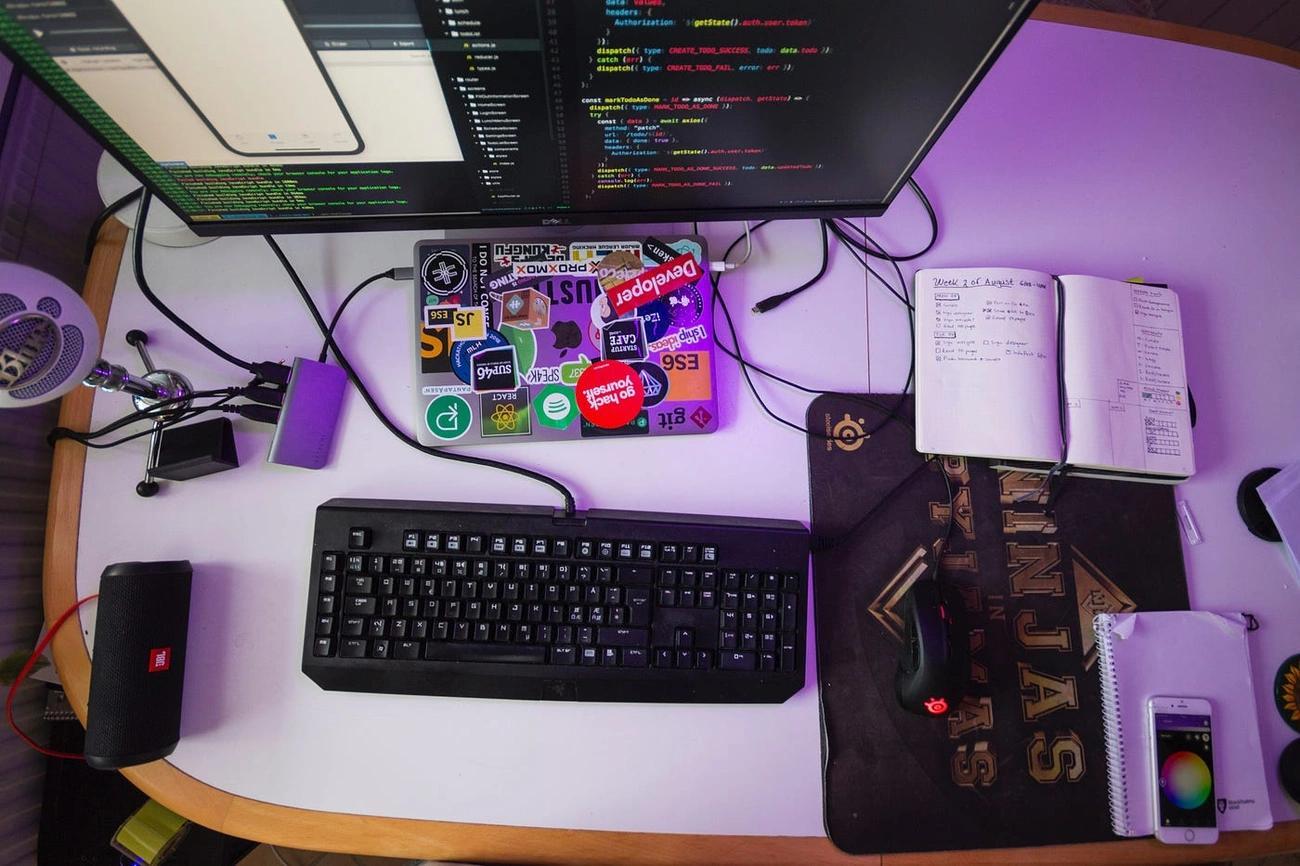
Image Source: Medium
Front-end development acts as your business's digital storefront, bridging users and web applications. Many companies hire developers without really knowing what these professionals do or why they matter so much to business success.
What front-end development has
Front-end development covers everything users see and interact with on websites or applications. This client-side component builds and puts the user interface in place by coding layouts, visuals, and interactive elements. Developers rely on three main technologies: HTML to structure content, CSS to style it, and JavaScript to add dynamic functionality and interactivity.
Beyond these basics, front-end development has these tasks:
- Turning design concepts into working code
- Making sure layouts work on all devices
- Building interactive elements like forms, buttons, and navigation menus
- Making sites load faster
- Building wireframes and prototypes for clients to approve
Most developers work with frameworks and libraries like React, Angular, Vue.js, jQuery, and Bootstrap to make development faster and keep things consistent. They need to understand APIs, data formats like JSON and XML, and version control tools like Git too.
How is front-end different from back-end
The main difference between front-end and back-end is simple: front-end deals with browser and user interfaces, while back-end technologies handle the server side of applications. You can call it client-side versus server-side development.
Front-end builds what users see – the presentation layer. Back-end manages everything behind the scenes: data storage, server operations, security, and business logic. Front-end developers create visual experiences with HTML, CSS, and JavaScript. Back-end developers use server languages, databases, and system architecture.
Picture a restaurant: front-end is like the dining room where customers eat, while back-end is the kitchen where all the cooking happens. Both need to work together to create a great experience. A good example is an online store - front-end developers build product displays and shopping carts that customers use, while back-end developers create systems that process orders and track inventory.
Why front-end matters for user experience
Front-end development shapes how users notice and use your digital presence. It forms the foundation of user experience and affects engagement, retention, and conversion rates by a lot.
Users leave websites that take more than 3 seconds to load. Front-end developers optimize performance to create smooth interactions that build trust and boost sales. They make websites accessible to everyone, including people with disabilities, by using proper semantic HTML, color contrast, and responsive design.
Good front-end development creates experiences where users find what they need naturally. Online shopping becomes easy when users can browse products, add items to their cart, and check out without problems. Poor development might leave users stuck with broken buttons or lost without a way back to the home page.
Search engines rank websites higher when they load quickly and work well on mobile devices. This means front-end development helps determine how visible your site becomes online.
Front-end developers do more than make attractive websites - they create interactive experiences that keep users coming back and turn them into customers.
Types of Front-End Developers Based on Experience
Matching developer experience with project complexity is a vital part of choosing the right talent. Your project's success and budget management depend on understanding what different experience levels bring to the table.
Junior developers: strengths and limitations
Junior front-end developers come with 0-3 years of experience. These budget-friendly team members earn annual salaries between INR 5,401,783 to INR 6,562,183 in the US.
Junior developers need regular guidance and supervision. Their strengths include:
- Building simple website components and interfaces
- Fixing basic bugs and making small adjustments
- Helping with testing and debugging tasks
- Quick adaptation to new technologies and frameworks
Notwithstanding that, they find it hard to create complete products on their own. They tend to prioritize coding speed over quality and lack experience with complex architectural decisions. These developers work best with experienced mentors who can review their work and guide them.
Mid-level developers: when to hire them
Mid-level front-end developers bring 3-6 years of experience and earn between INR 7,326,501 and INR 9,316,614 yearly[121]. These professionals fill the space between entry-level and senior roles with their balanced skill set.
Unlike their junior counterparts, mid-level developers can handle moderately complex projects independently. Their toolkit includes:
- Advanced knowledge of multiple front-end technologies
- Knowing how to solve technical problems with minimal oversight
- Hands-on experience with React, Angular, or Vue
- Deep knowledge of performance optimization and testing
Mid-level developers shine when they work on substantial yet less complex projects. They need little supervision and deliver consistent results. Their experience helps them make sound technical decisions and communicate well with team members at all levels.
Senior developers: ideal for complex projects
Senior front-end developers have 6+ years of experience and earn between INR 9,926,938 and INR 11,753,943 per year[121]. Their higher pay often proves worthwhile for complex projects.
Senior developers excel at:
- Expert command of various frameworks, libraries, and technologies
- Knowing how to build expandable solutions independently
- Rich understanding of business needs and user experience
- Leading and mentoring junior developers
Without doubt, senior developers become essential for innovative, complex projects that need sophisticated architecture decisions. They handle the complete development lifecycle from planning to implementation and optimization. These developers are at their best with advanced technologies, intricate user experiences, or multi-system integrations.
The project's specific requirements, timeline, and budget will help you pick the right developer level.
Key Skills to Look for in a Front-End Developer
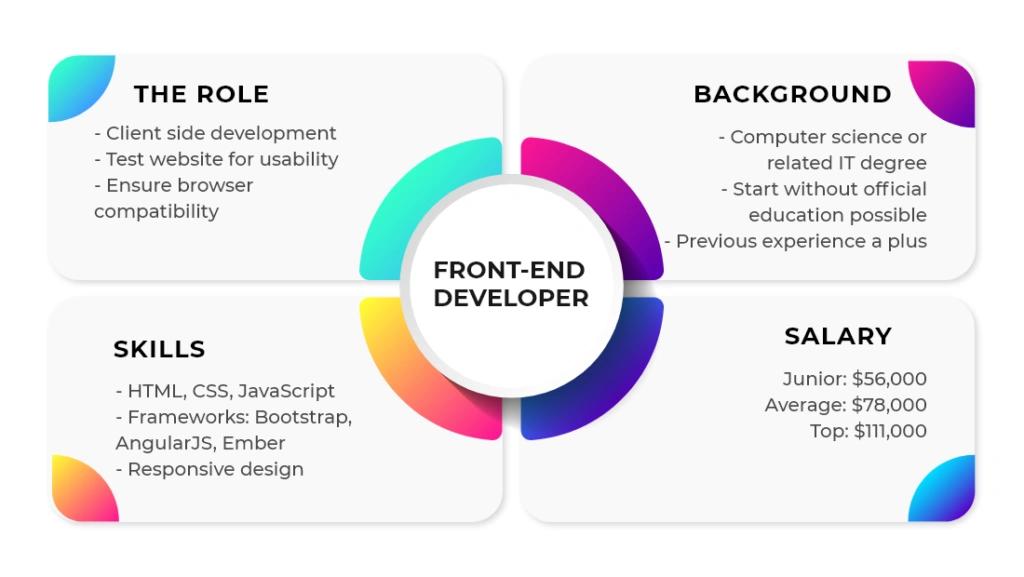
Image Source: Bacancy Technology
"In addition to their technical skills, your front-end developer must have soft skills, including communication skills, attention to detail, attentive listening, problem-solving skills, team player, ability to learn new things, leadership skills, time management skills, and courage to ask questions when something isn't clear." — Guru Editorial Team, Freelance developer platform experts
The life-blood of successful front-end developer recruitment lies in identifying the right skill set. Your hiring outcomes and project delivery will improve dramatically when you know exactly what abilities to look for.
Use this front end developer skills list as your hiring benchmark. Adapt it based on the role's seniority and your tech stack.
Foundation (required for all levels):
- HTML5 semantics and accessibility
- CSS3 — Flexbox, Grid, responsive design
- JavaScript (ES6+) — DOM, async patterns, modules
Framework & Libraries (role-dependent):
- React, Angular, or Vue.js
- Component libraries (Material UI, Shadcn, Ant Design)
- State management (Redux, Zustand, Pinia, Vuex)
Tooling & Workflow:
- Git and version control (branching strategies, PR reviews)
- Package managers (npm, yarn)
- Build tools (Webpack, Vite)
- Browser DevTools for debugging
Quality & Testing:
- Unit testing (Jest, Vitest)
- Component testing (React Testing Library)
- Cross-browser and cross-device testing
Performance & Accessibility:
- Core Web Vitals optimization (LCP, CLS, FID)
- WCAG accessibility standards
- Lazy loading, code splitting, image optimization
Integration:
- REST API consumption
- GraphQL basics (for teams using it)
- WebSockets (for real-time features)
Frameworks and libraries: React, Vue, Angular
Pure HTML, CSS, and JavaScript are enough in theory. However, frameworks and libraries help speed up development and create cleaner, more maintainable code. Popular frameworks include:
React emphasizes component-based architecture and uses a Virtual DOM to boost performance. Solutions and integrations become remarkably straightforward thanks to its vast ecosystem.
Angular comes as a complete framework with built-in tools for routing, state management, and form handling. This reduces the need for third-party libraries.
Vue.js lets developers add features gradually as needed through progressive adoption. Newcomers find it user-friendly, while complex applications benefit from its flexibility.
Soft skills: communication, time management, problem-solving
Technical screening is the easier half of the hiring process. The front end developer skills needed to succeed on an actual team go beyond code.
Communication: Front-end developers sit at the intersection of design, product, and engineering. They need to translate ambiguous design specs into working code, push back clearly when something is technically problematic, and explain tradeoffs to non-technical stakeholders.
Problem-solving: The ability to debug an unfamiliar issue — whether it's a CSS rendering quirk in Safari, a race condition in async code, or a performance regression after a deployment — is a core skill. Look for candidates who walk you through their debugging process, not just the solution.
Attention to detail: The front end is the user's reality. A 2px misalignment or a broken focus state on a form might seem minor, but it signals how much ownership a developer takes over the quality of their work.
Adaptability: Frameworks, build tools, and browser APIs change fast. The best front-end developers have a learning habit — they follow release notes, experiment with new APIs, and can ramp up on new tools without needing hand-holding.
Testing and debugging capabilities
Code needs thorough testing to ensure it works without errors. Developers should know how to use testing frameworks like Jest and browser DevTools for effective debugging.
Modern debugging requires setting breakpoints, analyzing variables, and walking through code to find issues. These skills help reduce development time and improve code quality significantly.
Cross-browser and responsive design knowledge
Websites must adapt to different devices - from smartphones to desktops. This makes responsive design increasingly important as users browse websites on platforms of all types.
Cross-browser testing makes sure everything works the same way in Chrome, Firefox, Safari and other browsers. This consistency prevents interface problems that could frustrate users and harm your brand's reputation.
Where and How to Find the Right Developer
A strategic approach through multiple channels helps you find talented front-end developers. The first step is to determine what skills your project needs, and then you can start looking for candidates who match those requirements.
Using job boards and freelance platforms
Job boards are the most direct way to connect with potential developers. Tech-focused platforms like Stack Overflow Jobs and GitHub Jobs attract developers with specialized front-end technical skills. LinkedIn and Indeed give you a wider reach, with 72% of recruiters using LinkedIn to find candidates.
Freelance platforms let you hire flexibly for projects. Upwork has a huge selection of developers for hourly and long-term front-end work. Fiverr uses a gig system where developers package their services with clear scope and pricing. These platforms are a great way to get budget-friendly options, especially when you have startup constraints.
Tapping into referrals and social media
Employee referrals bring in top-quality candidates consistently. LinkedIn data shows companies can save up to INR 632,853 per hire and reduce time-to-hire by up to 7 days. Your team members likely know qualified professionals who have the front-end skills you're looking for.
Social media platforms work well too. X (formerly Twitter) helps you find developers who might not be on traditional networks. Developer communities on Discord and Slack host discussions where you can spot potential talent before they start looking for new positions.
Working with staffing agencies or nearshore teams
Staffing agencies take care of everything from finding candidates to handling paperwork. You can review a developer's work habits and key skills before making a long-term commitment. The agencies handle workers' compensation insurance, payroll taxes, and liability insurance.
Nearshore teams give you economical solutions without compromising quality. Countries like India can provide up to 2.5x cost efficiency compared to domestic hiring. This opens up access to a global pool of front-end developers with the skills your projects need.

Hire Front-End Developers Faster with SkillSauce
Get pre-vetted candidates, AI-powered screening, and smarter interviews—all in one platform.
Request a DemoSteps to Hire a Front-End Developer Successfully
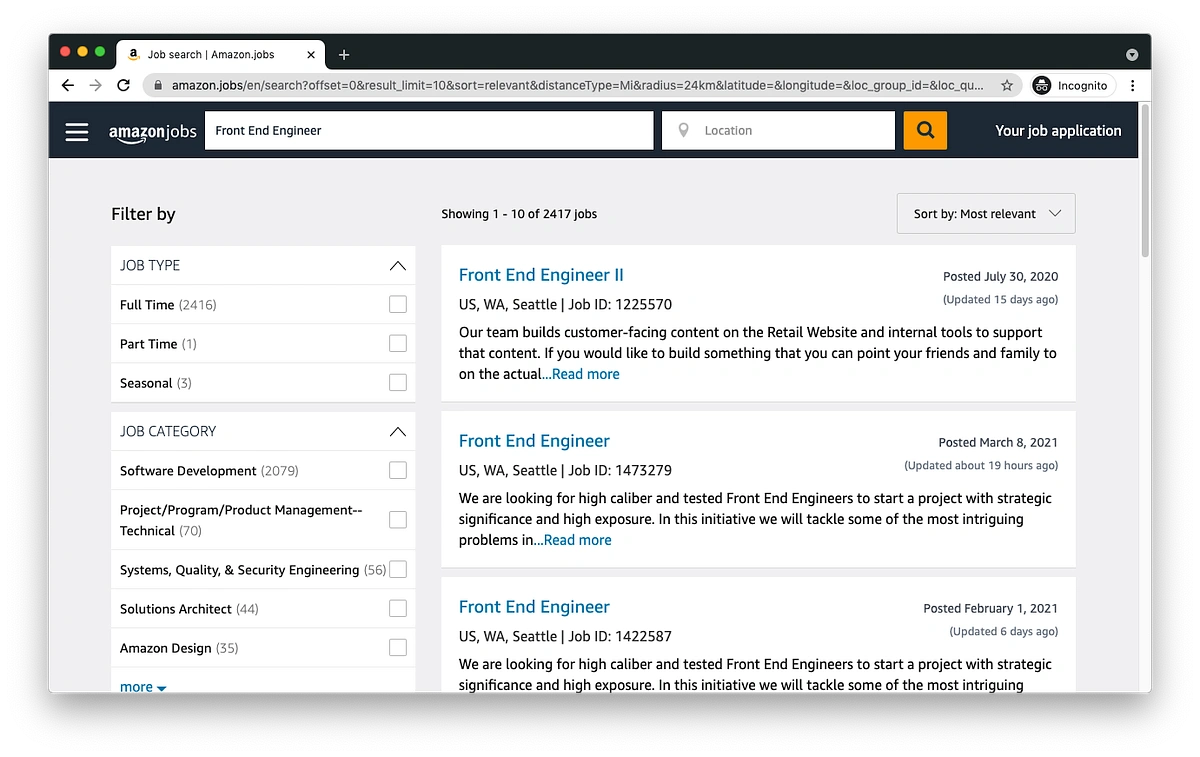
Image Source: Jamund Ferguson - Medium
"A strong portfolio is a great start, but don't stop there. Ask candidates to complete a short coding task relevant to your project." — Devico.io Editorial Team, Front-end hiring specialists
A systematic approach will help you find the perfect front-end talent. Your team needs a structured hiring process to spot candidates with the right front end developer skills for your project.
Define your project requirements
Start by gathering detailed business requirements. Your project's goals, target audience, and specific use cases need documentation. The tech stack compatibility matters - a React project needs developers with React expertise. This clarity will give a perfect match between your developer's front end technical skills and specific technologies.
Shortlist candidates based on skills and experience
A well-laid-out skills assessment strategy makes all the difference. Your candidates' skills in JavaScript, React, AngularJS, Git, HTML/CSS, TypeScript, and CSS3 need review through structured MCQ tests. The next step filters applications based on experience levels matching your project's complexity.
Review portfolios and past work
Project relevance and technical ability need a deep dive. The visual appeal matters, but you should break down code structure, performance optimization, and problem-solving approaches. Their GitHub repositories show code quality and how well they follow best practices.
Conduct technical and behavioral interviews
Pair programming sessions tell you more than standalone coding tests. Real-life problems work better than textbook questions. The behavioral interviews help assess communication skills, knowing how to resolve conflicts, and team collaboration.
Sign contracts and set expectations
A 30-60-90 day plan should outline milestones and expected outcomes. Clear onboarding processes help new developers understand simplified processes, project context, and performance expectations.
Conclusion
Your project's needs, budget limits, and timelines should guide you when hiring a front-end developer. This piece gets into the key parts of front-end development and shows why these pros bridge the gap between users and your digital products.
The perfect candidate search starts when you know which skills matter most in your case. HTML, CSS, and JavaScript are without doubt the foundations, and framework expertise becomes just as vital depending on your tech stack. On top of that, soft skills like communication and problem-solving can make or break a project's success just as much as technical skills.
Experience levels make a substantial difference. Junior developers cost less but they'll need guidance, while mid-level pros strike a good balance for most projects. Senior developers charge more but are a great way to get expertise for complex projects that make their pay worth it.
Your company's specific needs should shape how you hire. Job boards and freelance platforms give you wide access to talent, while referrals often bring better candidates. Teams that want specialized skills without long hiring processes might find agencies and nearshore options work well.
The best hiring goes beyond finding people with great portfolios. A well-laid-out process with skills testing, detailed interviews, and clear expectations builds productive working relationships. Your chosen front-end developers will create the digital experience that shapes how people notice your brand.
We hope this approach gives you the ability to make confident hiring choices that match your business goals. The right front-end talent can revolutionize your digital presence by creating interfaces that make users happy while driving real business results.
Ready to Hire Your Next Front-End Developer?
Let SkillSauce help you assess, interview, and hire the right talent—faster and with better accuracy.
Talk to Our TeamKey Takeaways
Here are the essential insights for tech leaders looking to hire front-end developers effectively:
• Match developer experience to project complexity: Junior developers (0-3 years) need supervision but cost less, mid-level (3-6 years) work independently on moderate projects, while senior developers (6+ years) excel at complex architectures.
• Focus on core technical foundations first: HTML, CSS, and JavaScript mastery is non-negotiable, followed by framework expertise in React, Vue, or Angular based on your specific tech stack requirements.
• Prioritize soft skills alongside technical abilities: Communication, problem-solving, and time management often determine project success as much as coding proficiency.
• Use a structured hiring process: Define clear requirements, assess portfolios thoroughly, conduct both technical and behavioral interviews, and establish 30-60-90 day performance milestones.
• Leverage multiple sourcing channels strategically: Employee referrals yield highest-quality candidates, while job boards offer broad reach and nearshore teams provide cost-effective solutions.
The right front-end developer creates the digital experience that shapes user perception of your brand. By following this proven framework, you'll make confident hiring decisions that align technical expertise with your business objectives and project requirements.
FAQs
Q1. What are the essential skills to look for when hiring a front-end developer?
The core skills to look for include proficiency in HTML, CSS, and JavaScript. Additionally, experience with popular frameworks like React, Vue, or Angular is valuable. Soft skills such as communication, problem-solving, and time management are equally important for project success.
Q2. How do junior, mid-level, and senior front-end developers differ?
Junior developers (0–3 years experience) require supervision but are cost-effective. Mid-level developers (3–6 years) work independently on moderate projects. Senior developers (6+ years) excel at complex architectures and can lead teams, justifying their higher salaries with expertise.
Q3. Where are the best places to find qualified front-end developers?
Effective channels include tech-specific job boards like Stack Overflow Jobs, general platforms like LinkedIn, freelance websites such as Upwork, and employee referrals. Social media and developer communities can also be valuable for discovering talent.
Q4. How important is a portfolio when hiring a front-end developer?
A portfolio is crucial as it demonstrates a candidate's practical skills and problem-solving approach. Look beyond visual appeal to examine code structure, performance optimization, and adherence to best practices in their past projects.
Q5. What steps should be included in the hiring process for front-end developers?
The hiring process should include defining project requirements, shortlisting candidates based on skills and experience, reviewing portfolios, conducting technical and behavioral interviews, and setting clear expectations through a 30–60–90 day plan.