


Introduction
Only 10.6% of job applications reach completion due to complex application processes. Moving candidates from application to hire takes two to three months.
These recruiting funnel challenges substantially affect your talent acquisition efforts. Your employer brand matters - 75% of job seekers review it before submitting applications. The good news? 94% of recruiters agree that a well-implemented Applicant Tracking System (ATS) makes a real difference.
A properly configured recruiting funnel reshapes how you attract and convert candidates. Your team can spot bottlenecks and improve key areas by analyzing each recruitment stage to attract top talent. The right hiring funnel strategy helps your team fill positions faster, deliver better candidate experiences, and recruit efficiently from day one.
This piece walks you through building and optimizing your recruiting funnel with an ATS. We cover everything from setting clear metrics to implementing custom workflows. These practical strategies will speed up your hiring process and enable your recruiters to achieve more with less.
Supercharge Your Hiring Funnel with SkillSauce ATS 🚀
Automate resume screening, schedule interviews, and track candidates — all in one smart, AI-powered system built for modern hiring teams.
Try SkillSauce ATS NowDefine Your Funnel Goals and Metrics
A successful recruiting funnel needs clear objectives and measurements. You can't build an effective talent acquisition strategy without defined goals. It's like trying to navigate without a map - you'll waste resources and miss your target.
Set SMART goals for your hiring funnel
SMART goals are the foundations of an effective recruitment funnel. These goals should be Specific, Measurable, Achievable, Relevant, and Time-bound. Don't use vague statements like "improve hiring." Your targets should be precise, such as "increase representation of women in technical roles from 22% to 30% by Q4". Your goals should support hiring priorities across departments while factoring in available resources and market conditions.
To cite an instance, see how "reduce hiring costs" becomes a SMART goal: "decrease cost-per-hire for sales positions by 18% within six months by optimizing job board spending". This approach turns abstract ideas into concrete targets that you can measure.
Identify key recruiting funnel metrics
The right metrics help you learn about what makes your hiring successful. Here are the essential recruiting funnel metrics:
- Time-to-hire: Shows days between application and offer acceptance, with 20-30 days as the industry average
- Cost-per-hire: SHRM research shows an average of ₹373,383, varying by company size and industry
- Quality-of-hire: Shows how new employees contribute to company success
- Application completion rate: Only 10.6% of candidates complete applications, dropping to 5.7% when applications have more than 50 questions
- Offer acceptance rate: You should aim for 80% or higher
You should also track candidate experience, diversity metrics, and source effectiveness to get detailed insights into your recruitment funnel's performance.
Line up goals with business outcomes
Recruitment experts say hiring objectives should tie directly to broader organizational strategies. Track metrics that show how your recruitment process helps business outcomes, like revenue per employee or time-to-productivity of new hires.
Of course, good alignment needs systems that track both recruitment efficiency and long-term value. Review your recruitment funnel metrics quarterly to see how hiring drives progress and where you need adjustments. This feedback loop keeps your hiring strategy in sync with changing business priorities.
Map and Optimize Your Current Hiring Funnel
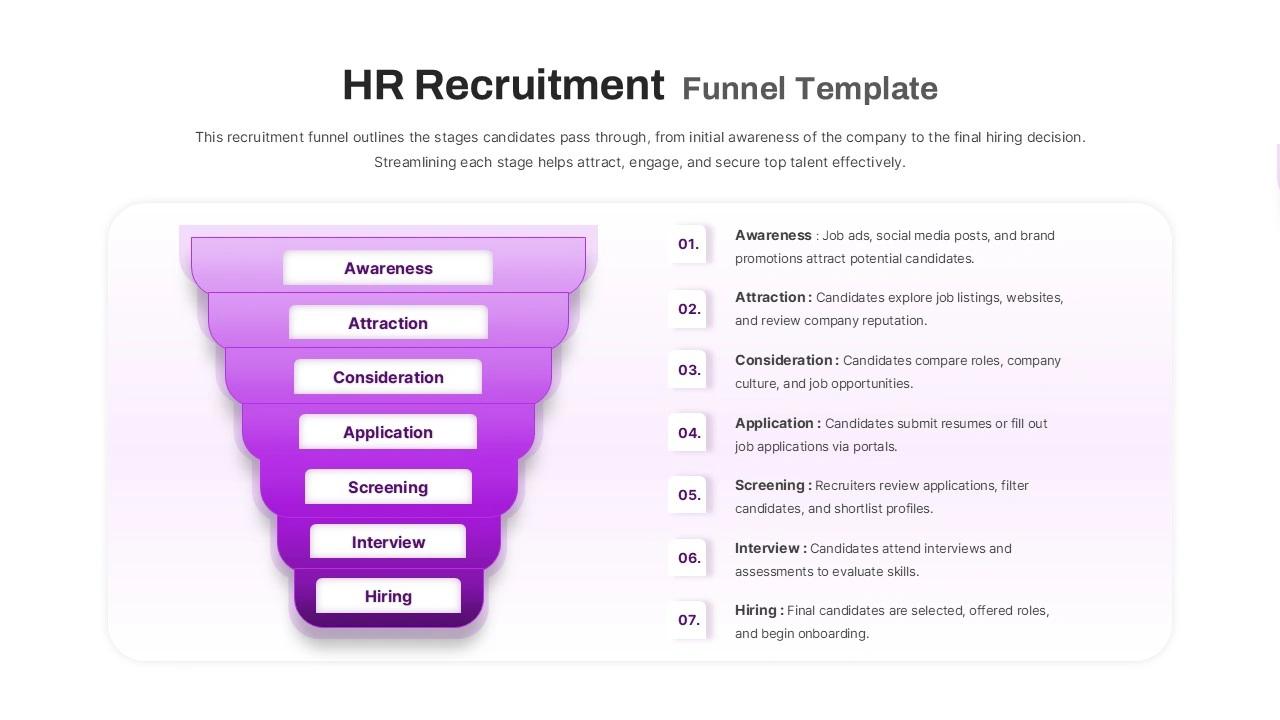
Image Source: SlideKit
You've set your goals, and now it's time to get into what's happening in your current recruiting process. A clear picture of where your funnel succeeds or fails will guide you toward meaningful improvements.
Audit your existing recruitment funnel
Start by tracking your recruitment process step-by-step. Document each touchpoint from job posting to onboarding. Map out standard stages like creating job descriptions, posting ads, screening applicants, interviewing, making offers, and onboarding. Each stage needs details about activities, systems, and time investment. This complete view shows inefficiencies that might stay hidden otherwise.
From resume parsing to automated interviews—our ATS helps recruiters save time and hire smarter.
Identify bottlenecks and drop-off points
The data reveals interesting patterns after mapping your process. Here's what candidates do:
- 92% who click "Apply" never finish applications
- 40% leave applications that don't work well on mobile
- 25% quit during the interview stage
Time-in-stage metrics help spot delays effectively. Slow feedback between interviews often points to team coordination problems. Watch for stages where things slow down. These bottlenecks stretch your time-to-fill and hurt candidate experience.
Use a recruiting funnel template to visualize stages
A visual representation makes your recruitment funnel easier to understand and improve. Create a flowchart that shows how candidates move through each stage with conversion rates. You can adapt this template to match your company's specific needs. Add assessment or reference check steps where they matter.
A well-laid-out template becomes your guide to manage the hiring process. The visual funnel helps team members understand their role in moving candidates forward and guides better hiring decisions.
Implement and Customize Your ATS
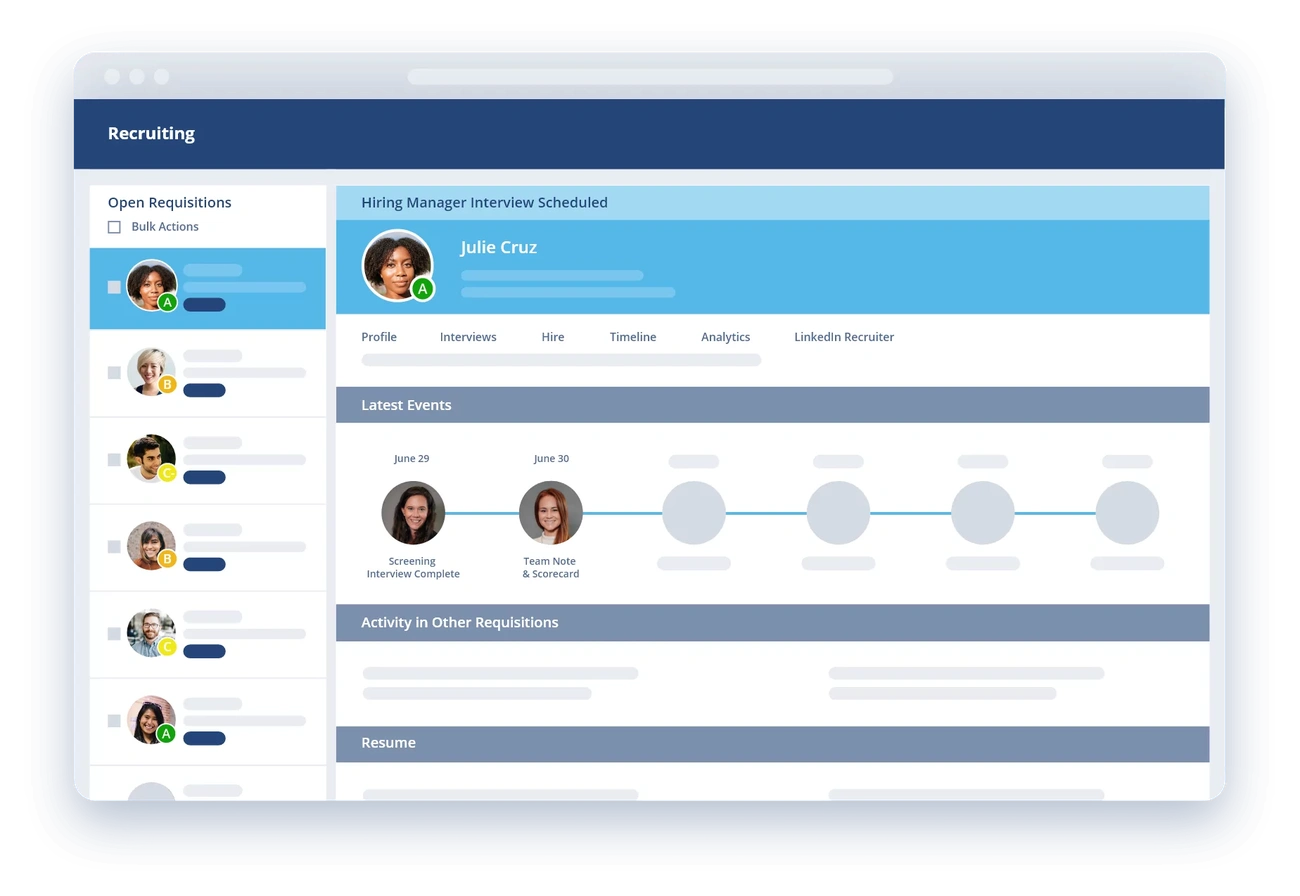
Image Source: ClearCompany
A successful recruiting funnel depends on how well you implement and customize your ATS. The right system configuration creates the foundation for a simplified recruiting process.
Configure workflows and permissions
Role-based access control should match your organizational structure. Higher-level roles need broader access compared to junior positions through established permission hierarchies. A recruiter needs complete access to candidate profiles, while hiring managers might only need to provide interview feedback. Each role's responsibilities and specific permissions should be documented to maintain clarity.
Set up integrations with HR tools
A properly integrated ATS acts as your central recruitment hub. Calendar tools simplify scheduling, background check providers improve screening, and communication platforms help with candidate interaction. The ATS helps recruiters save time and hire smarter through resume parsing and automated interviews. These integrations create unified workflows that reduce manual tasks and speed up the recruiting funnel.
Import and clean historical data
You should inventory existing recruitment data before migration. The process involves closing stale jobs, updating candidate dispositions, and removing unwanted sources. Get a detailed export from your previous ATS and work with your implementation specialist. They will help map legacy stages, rejection reasons, and sources to matching fields in the new system.
Create templates for job posts and emails
Standardized templates ensure consistent communication throughout the recruiting funnel. Different recruitment stages need specific templates - from introduction emails to interview scheduling, feedback, and offers. This approach saves time and helps maintain the employer brand voice at every candidate touchpoint.
Train, Launch, and Monitor Your Funnel
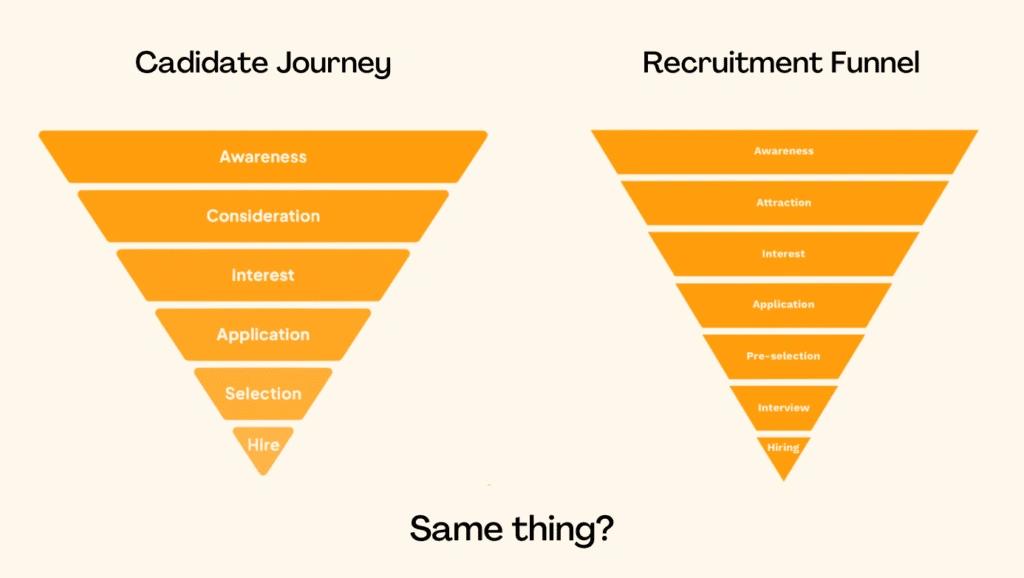
Image Source: WeCP
The execution phase starts right after you configure your ATS. Your recruiting funnel will deliver results only when you launch it properly and refine it continuously.
Provide role-based training for users
Your team's adoption of the new system determines its success. You should create training materials that match specific user roles—recruiters need different skills than hiring managers or administrators. The most frequently used features deserve special attention. Your team needs hands-on practice sessions to build confidence. A resource library with how-to guides and video tutorials helps provide support beyond the original training. Your internal system champions can guide adoption in departments or regions.
Test the full hiring funnel before launch
A thorough test prevents issues that could hurt your candidate experience. You should test your entire recruiting funnel before going live—from job posting to offer making. Your key stakeholders can help identify potential problems. A small group of beta testers can provide extra feedback. This approach helps you spot workflow gaps that might surface during actual recruitment campaigns.
Track adoption and performance post-launch
Your recruiting funnel needs constant monitoring, even after careful implementation. Analytics help you track key metrics like time-to-fill, candidate satisfaction, and recruiter productivity. Regular reviews reveal areas that need improvement while measuring ROI. You should watch system adoption rates among different user groups to spot where more training might help.
Adjust workflows based on feedback
You need systematic feedback collection to improve continuously. Each recruitment round should include feedback from candidates and hiring teams. This information shows which sources bring the strongest talent and which steps need refinement. The feedback should serve as an active guide—not just collected data that gets forgotten. Your data-driven adjustments to workflows, integrations, and training will boost your recruiting funnel's effectiveness.
Conclusion
A well-implemented ATS changes your talent acquisition process. This piece outlines key steps to optimize recruitment operations and enhance candidate experiences.
SMART goals are the foundations of measurable success in recruiting efforts. Tracking metrics like time-to-hire, cost-per-hire, and application completion rates becomes vital to understand your funnel's effectiveness. These data points highlight areas that need quick attention or improvement.
Your process mapping shows hidden bottlenecks. This visibility helps you tackle specific pain points instead of making random changes. A clear funnel visualization works as a roadmap for your hiring team.
ATS customization powers an efficient recruiting system. The right configuration of workflows, strategic collaborations, and clean data migration build a strong foundation. Standardized templates also ensure clear communication throughout the candidate's experience.
The best-designed recruiting funnel needs proper launch and regular monitoring. Role-specific training, testing, and informed adjustments based on user feedback maintain peak performance over time.
Your recruiting funnel is more than a process—it reflects your candidate experience and employer brand. Being organized and refining your approach creates a recruitment ecosystem that attracts top talent, reduces time-to-fill, and leads to better hiring outcomes. The effort you put into optimizing your recruiting funnel today will reward you with quality hires and efficient processes tomorrow.
Key Takeaways
Building an effective recruiting funnel with a well-implemented ATS can dramatically improve your hiring outcomes and candidate experience.
• Set SMART goals and track key metrics like time-to-hire, cost-per-hire, and application completion rates to measure funnel effectiveness and identify improvement areas.
• Map your current process to identify bottlenecks - 92% of candidates abandon incomplete applications, often due to complex processes or poor mobile optimization.
• Configure your ATS with proper workflows and integrations to create a centralized recruitment hub that reduces manual tasks and accelerates hiring.
• Provide role-based training and continuous monitoring to ensure successful adoption and make data-driven adjustments based on user feedback.
• Focus on candidate experience throughout the funnel - 75% of job seekers evaluate your employer brand before applying, making every touchpoint crucial.
A well-optimized recruiting funnel isn't just about efficiency—it's your competitive advantage in attracting top talent. By following these systematic steps and continuously refining your approach based on data and feedback, you'll create a recruitment process that delivers better hires faster while strengthening your employer brand.
Ready to Transform Your Hiring Process? 🚀
Discover how SkillSauce’s AI-powered tools can help you streamline hiring, improve candidate experience, and make smarter talent decisions. Book your personalized demo today and see SkillSauce in action.
Request a Free Demo