

Introduction
Talent acquisition strategy is being rebuilt from the ground up. Gartner's October 2025 analysis identified two forces reshaping recruitment faster than any previous cycle: AI innovation and mounting cost pressure. Together, they are eliminating the transactional recruiter role and replacing it with something fundamentally different — a talent strategist who advises on workforce design, uses predictive analytics, and operates as a business partner rather than a hiring administrator.
By 2030, Gartner warns, half of enterprises will face irreversible skill shortages in critical job roles due to AI accuracy decline, skills erosion, and uncompetitive pay. Organisations that treat recruitment as a cost centre will not recover from that gap. Those that build strategic talent acquisition functions now will. HireHive
This guide covers what that transition looks like, what it requires from recruiters, and how modern tools are accelerating the shift. Now, that world has changed.
Modern recruiters have evolved into talent strategists—professionals who think beyond immediate hires and help shape long-term business success. This shift isn’t just a trend—it’s a reflection of how deeply technology, data, and competitive needs have reshaped the hiring landscape.
Today, the question is no longer “Can we fill this role?” but “How does this hire strengthen our future?”
The Old Model: Recruitment as Transaction
For decades, recruitment followed a reactive, transactional approach. A vacancy appeared, resumes were screened, interviews conducted, and an offer rolled out—often based on intuition.
Challenges with the Old Approach
- Bias-prone decisions: Recruiters relied on gut feeling rather than data.
- Time-heavy processes: Manual screening and coordination took days.
- No visibility: Limited analytics meant unclear hiring outcomes.
- Reactive mindset: Recruiters filled openings as they came, not proactively.
- Inconsistent results: Hiring quality depended too much on individuals.
Recruitment was seen as a cost center, not a growth driver—leading to high turnover, mis-hires, and missed opportunities.
The Modern Transformation: Recruitment as Strategy
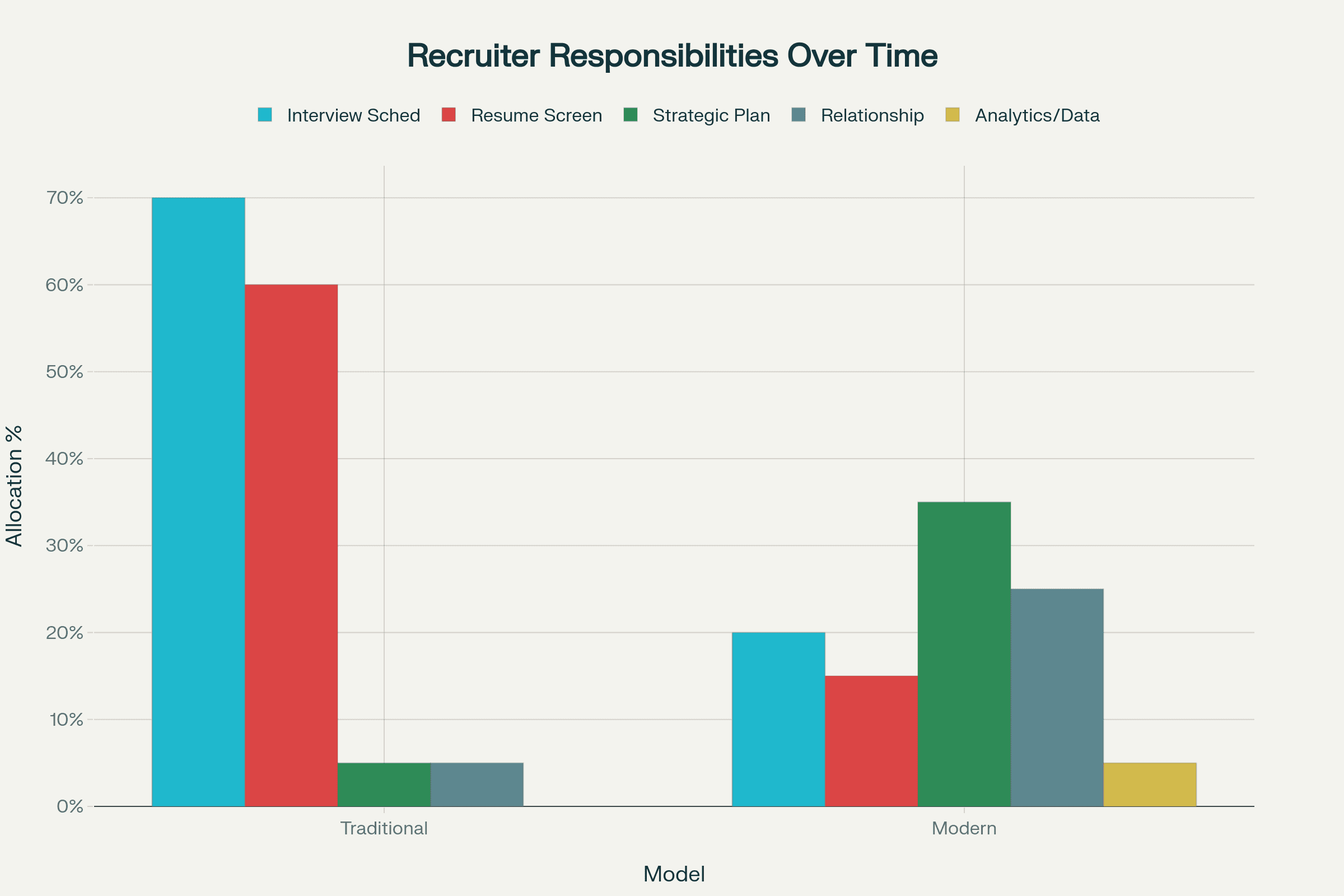
Today’s approach—strategic talent acquisition—is data-informed, proactive, and aligned with business objectives.
1. Proactive over Reactive
Modern recruiters forecast workforce needs. They ask:
“What skills will we need next year?” “Where are the gaps we must fill before they open?”
2. Data-Driven Decision Making
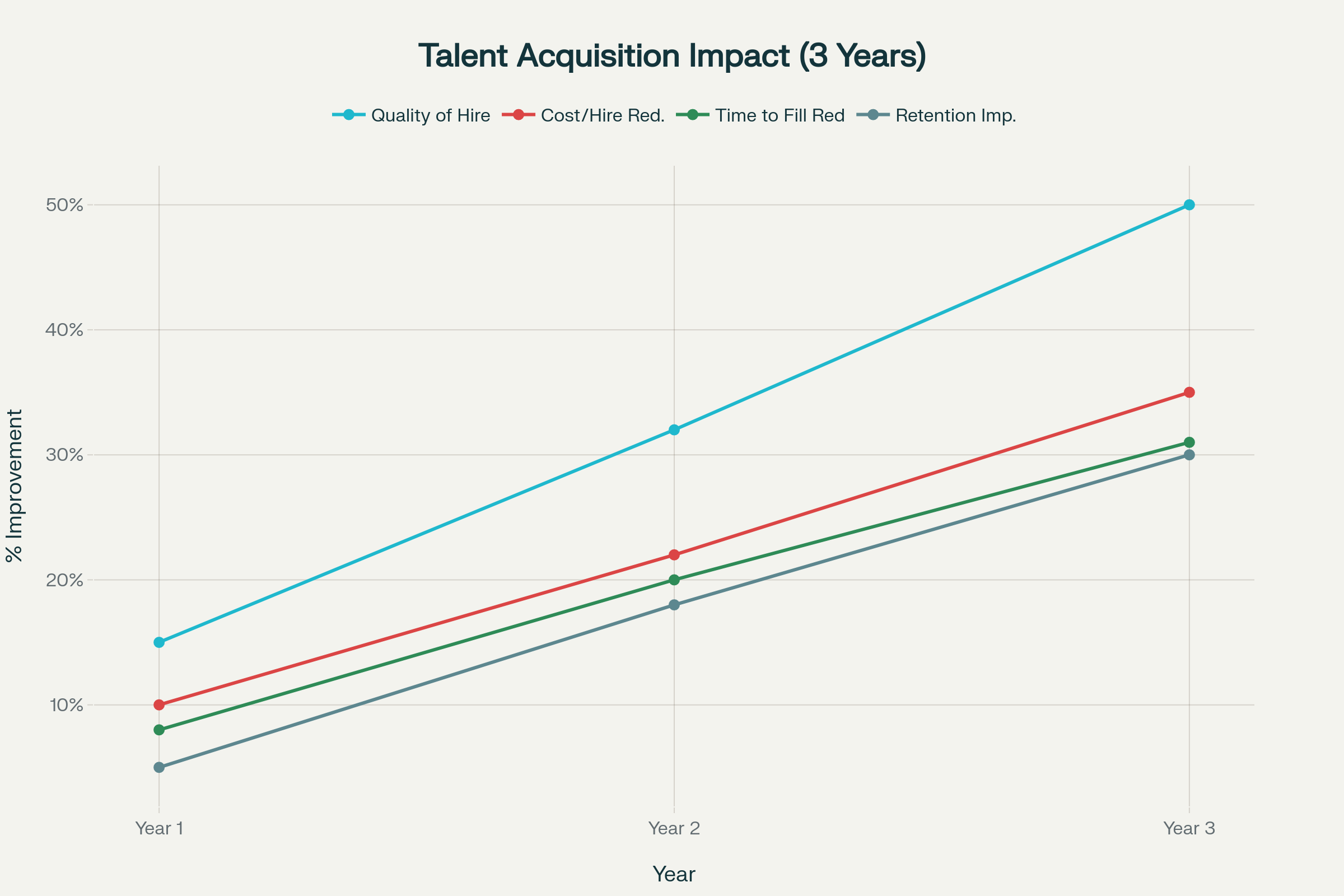
Companies using predictive analytics in hiring report 31% faster hiring cycles and 50% improvement in quality of hire, according to LinkedIn's 2025 Global Talent Trends Report. Recruiters now track key metrics—cost-per-hire, time-to-fill, retention, and quality—to improve continuously.
3. Focus on Relationships and Culture
With AI taking over admin work, recruiters invest more in human connection—understanding people’s values, assessing fit, and building long-term candidate relationships.
Gartner's Four Talent Acquisition Trends Defining 2026
Gartner has identified four trends that will shape talent acquisition in 2026, driven by AI capabilities and cost reduction pressure: HireHive
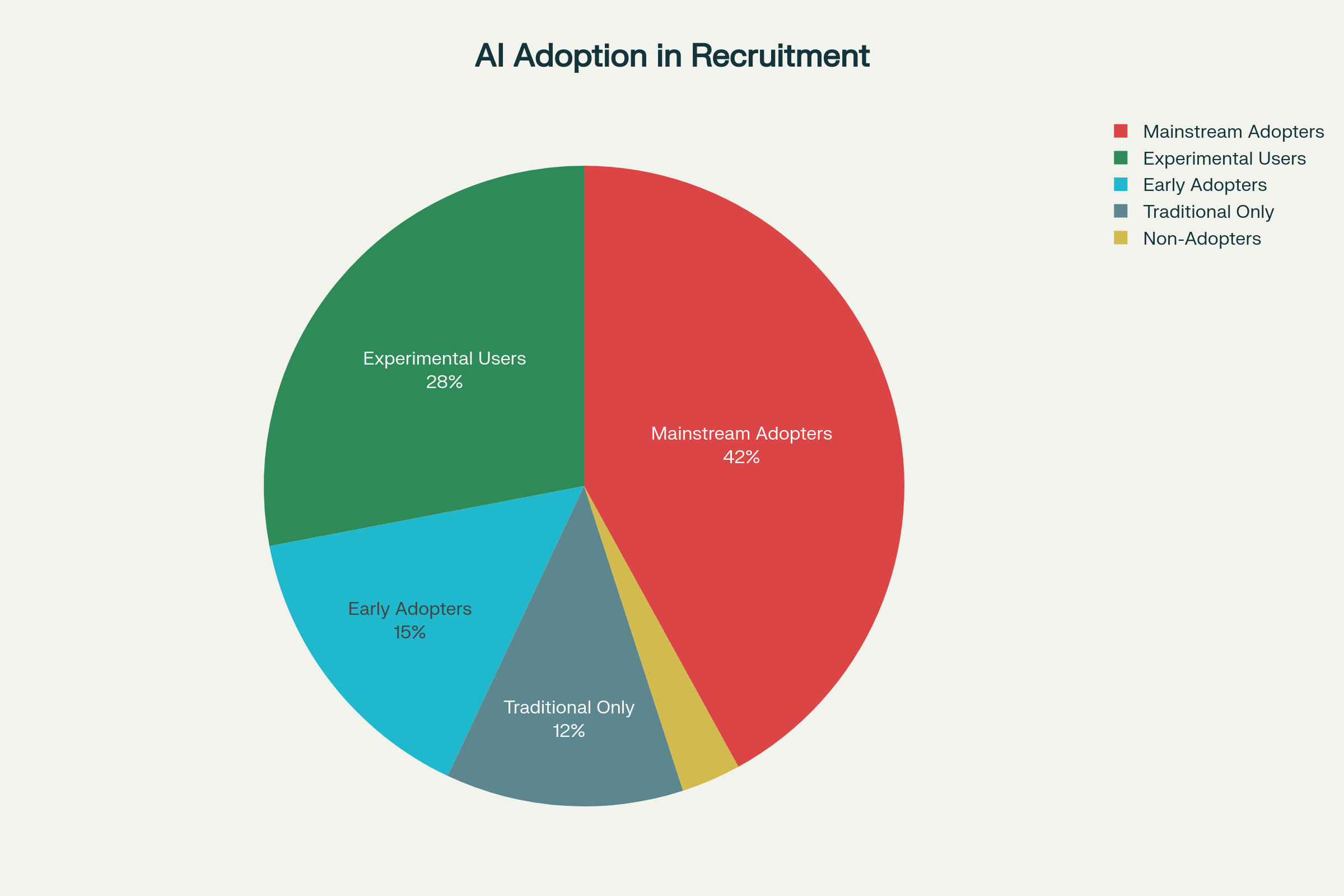
Trend 1 — AI-powered recruiter augmentation. Generative AI, interview intelligence tools, and recruiter AI agents are moving beyond automation of low-complexity tasks into strategic decision support. High-volume, low-complexity roles — frontline retail, customer service, logistics — are now largely AI-managed end-to-end. Recruiters are being redeployed to high-complexity, high-value hiring where human judgment and relationship skills cannot be replicated.
Trend 2 — Skills-based hiring as the default. Degree requirements are falling rapidly. 78% of companies report good results from skills-based hiring, reflecting a clear industry shift toward evaluating practical abilities over credentials alone. Recruiters who understand how to design and interpret skills assessments are more valuable than those who rely on CV screening.
Trend 3 — Internal mobility replacing reactive external hiring. Predictive internal mobility is replacing reactive hiring strategies — organisations are using talent intelligence to identify internal candidates before roles open rather than defaulting to external sourcing first. This requires recruiters who understand skills mapping and career pathing, not just sourcing.
Trend 4 — Recruiting operating model transformation. Recruiting must adapt to changing budgets, needs, and technology — adapting assessment strategies to maintain quality talent through business transformation and emerging risks like candidate fraud. The recruiter who can advise on operating model design is a strategic asset. The one who only fills requisitions is at risk of displacement.
How AI Is Reshaping the Recruiter’s Role
AI isn’t replacing recruiters—it’s empowering them.
The Automation Revolution
AI now handles:
- Resume screening: 100s of resumes filtered in seconds
- Candidate sourcing: Algorithms find qualified profiles automatically
- Interview scheduling: Smart bots coordinate calendars
- Preliminary outreach: Chatbots engage candidates instantly
As a result, companies implementing AI-driven hiring workflows report 33% lower time-to-hire, with some organisations achieving 340% ROI within 18 months of full deployment, according to Phenom's 2025 AI in Talent Acquisition benchmark study.
The Strategic Shift
AI frees recruiters to focus on:
- Building authentic candidate relationships
- Analyzing data for better decisions
- Advising leadership on workforce strategy
- Improving employer branding
Recruiters now operate like business partners, not task managers.
The Four Pillars of Modern Talent Strategists
1. Predictive Workforce Planning
Recruiters now use predictive analytics to forecast future hiring needs, identify skill gaps, and plan succession.
Benefits include:
- Reduced mis-hiring costs
- Stronger talent pipelines
- Better internal mobility
- A clear competitive edge
2. Data-Driven Decision Making
Modern talent strategists use analytics to answer questions like:
- Which sourcing channel yields top talent?
- What’s the link between compensation and retention?
- What predicts long-term success?
Companies using such insights enjoy:
- 50% improvement in hire quality
- 60% reduction in bias
- 35% lower hiring costs
3. Skills-Based Hiring
Recruiters now focus on skills over degrees. This approach:
- Expands candidate pools 8x
- Reduces bias
- Boosts diversity
- Improves retention
By valuing what candidates can do rather than where they come from, organizations find stronger, more adaptable talent.
4. Employer Branding and Candidate Experience
Every candidate touchpoint shapes your reputation.
Strategic recruiters ensure:
- Transparent communication
- Personalized outreach
- Authentic storytelling
- Balance between automation and human warmth
Companies with strong employer brands see 40% higher offer acceptance rates and hire 2x faster.
The Skills Recession Isn’t About What You Think
Even as AI rises, human skills are more valuable than ever.
The most in-demand recruiter capabilities today include:
- Active listening
- Empathy and communication
- Analytical reasoning
- Adaptability
These skills turn recruiters into trusted advisors—people who understand both data and human motivation.
Real-World Impact: The Metrics That Matter
Organizations that embrace strategic talent acquisition report:
Speed & Cost
- 31% faster hiring cycles
- 30–40% lower cost-per-hire
- 40% reduction in time-to-hire
Quality & Retention
- 50% better quality hires
- 30% lower turnover
- 83% accuracy in retention prediction
Financial ROI
- 340% ROI within 18 months
- $300K annual savings for mid-sized firms
- 5–15% higher revenue through engaged employees
These outcomes prove that strategic recruitment directly drives business success.
The Future of Talent Acquisition
The evolution is far from over. The next phase will bring:
- AI-powered predictive matching for perfect candidate-role alignment
- Internal mobility programs to nurture in-house talent
- Data-led diversity hiring for innovation and profitability
- Candidate experience as a customer journey
- Continuous recruiter learning in analytics, AI, and psychology
As AI and automation handle low-complexity work, recruiters' ability to deliver on high-complexity hiring becomes more critical. Recruiters must advise on talent strategy, role design, and hard-to-find skill needs — while building long-term relationships with hard-to-access candidates.
Practical Steps for Modern Recruiters
Here’s how to transition from interviewer to strategist:
Develop Data Literacy Track cost-per-hire, quality-of-hire, and retention—then act on the insights.
Invest in Relationship Skills Master emotional intelligence and active listening.
Learn Strategic Thinking Understand how talent decisions tie to business outcomes.
Use AI Smartly Automate admin tasks to focus on strategic initiatives.
Build Long-Term Pipelines Plan for future roles, not just today’s vacancies.
Frequently Asked Questions
What is the difference between talent acquisition and recruitment?
How is AI changing talent acquisition strategy in 2026?
What skills do modern talent strategists need?
What is skills-based hiring and why is it important for talent acquisition strategy?
What metrics should talent acquisition teams track in 2026?
Conclusion: The Future Belongs to Strategic Recruiters
Recruiters have moved from reactive hiring to shaping company futures. In today’s competitive market, talent acquisition is business strategy.
Those who master analytics, empathy, and strategy will define the next generation of recruitment. The rest risk being left behind.
Talent acquisition teams that build strategic capability now — in predictive analytics, skills assessment, and AI-augmented workflows — will be positioned to deliver competitive advantage. Those that don't will find their function increasingly automated, reduced, or outsourced.
Ready to Transform Your Talent Acquisition Strategy?
Modern recruitment needs modern tools. Platforms like SkillSauce helps recruiters automate admin work, leverage analytics, and focus on strategy.
Explore:
- TESSA AI – AI-powered Talent Evaluation & Selection System Assistant
- AI Proctoring – Smart, secure assessment monitoring
- AI Interview - Conduct efficient, unbiased candidate screenings
- HR Glossary – Explore modern HR and hiring terms
Start building your talent strategy today.
Request a demo of SkillSauce’s AI-driven recruitment platform.
Request a Demo