

Introduction
Hiring is undergoing a massive transformation. Traditional degree-based filters are giving way to skills-first hiring, powered by AI recruitment tools that promise faster, fairer, and more effective outcomes. By 2025, more than 80% of employers report adopting skills-based practices, signaling a shift that is here to stay.
So, what does this mean for employers, HR leaders, and recruiters navigating the age of AI hiring? Let’s break down the trends, benefits, challenges, and future predictions.
Current Trends in Skills-Based Hiring (2024–2025)
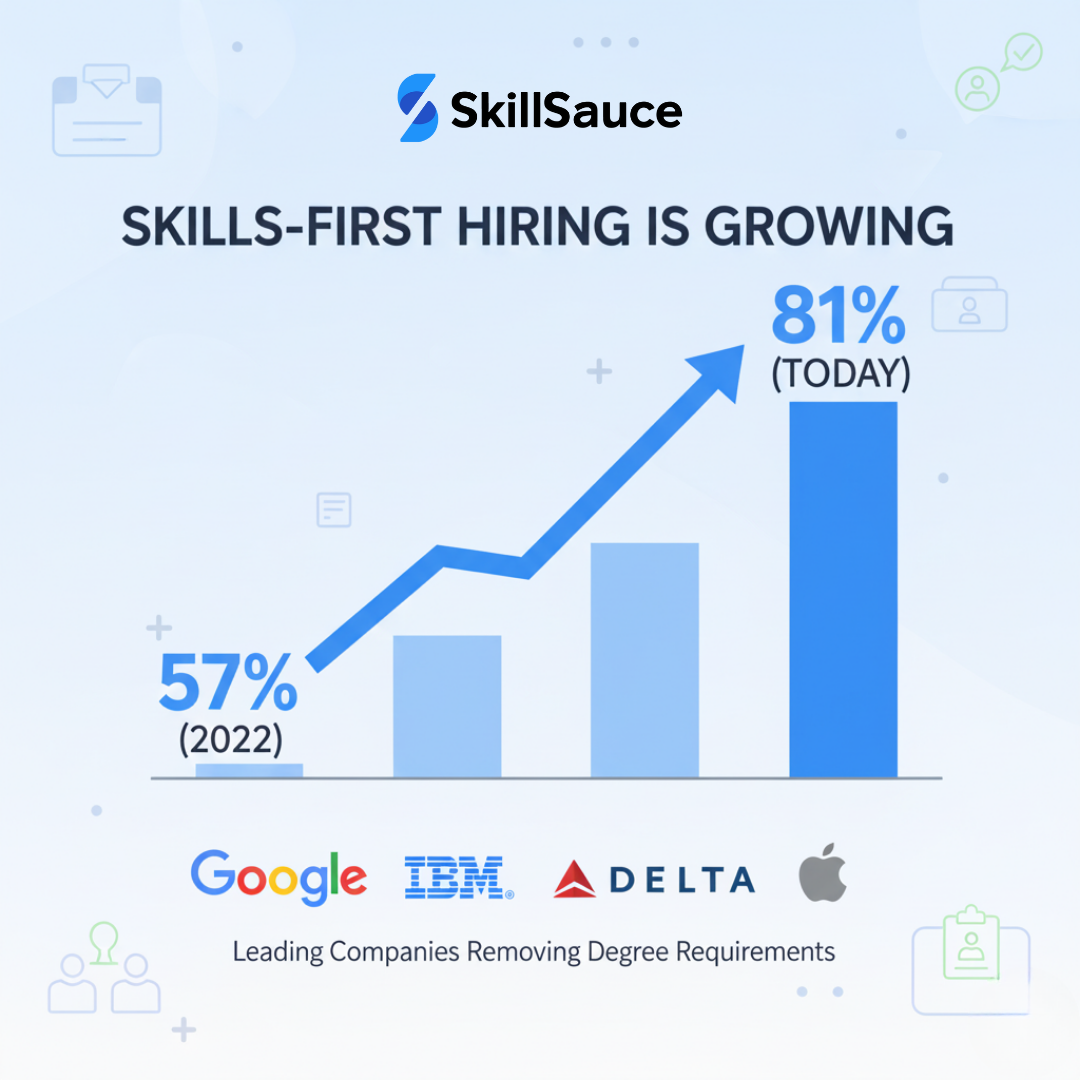
- 81% of employers worldwide now use some form of skills-first hiring (up from 57% in 2022).
- Global enterprises like Google, Apple, IBM, Delta, and Bank of America have removed degree requirements from many roles.
- Public sector momentum: Over 70% of U.S. federal workforce positions no longer require a degree, accelerated by the Chance to Compete Act (2023).
- India: Recruiters have shifted nearly 70% of budgets to AI recruitment tools, prioritizing speed and quality of hire.
How AI is Reshaping Skills-Based Hiring
Modern recruitment platforms powered by AI are changing the game:
- AI-powered resume screening and candidate matching reduce manual workload.
- Skills assessments & proctoring tools verify both technical and soft skills at scale.
- Fairness tests & explainable AI help reduce hiring bias.
- Skills taxonomies map micro-credentials and technical portfolios for better matches.
Example: In India, AI-enabled tools are now central to hiring, with measurable improvements in both speed and diversity.
Benefits of Skills-Based Hiring
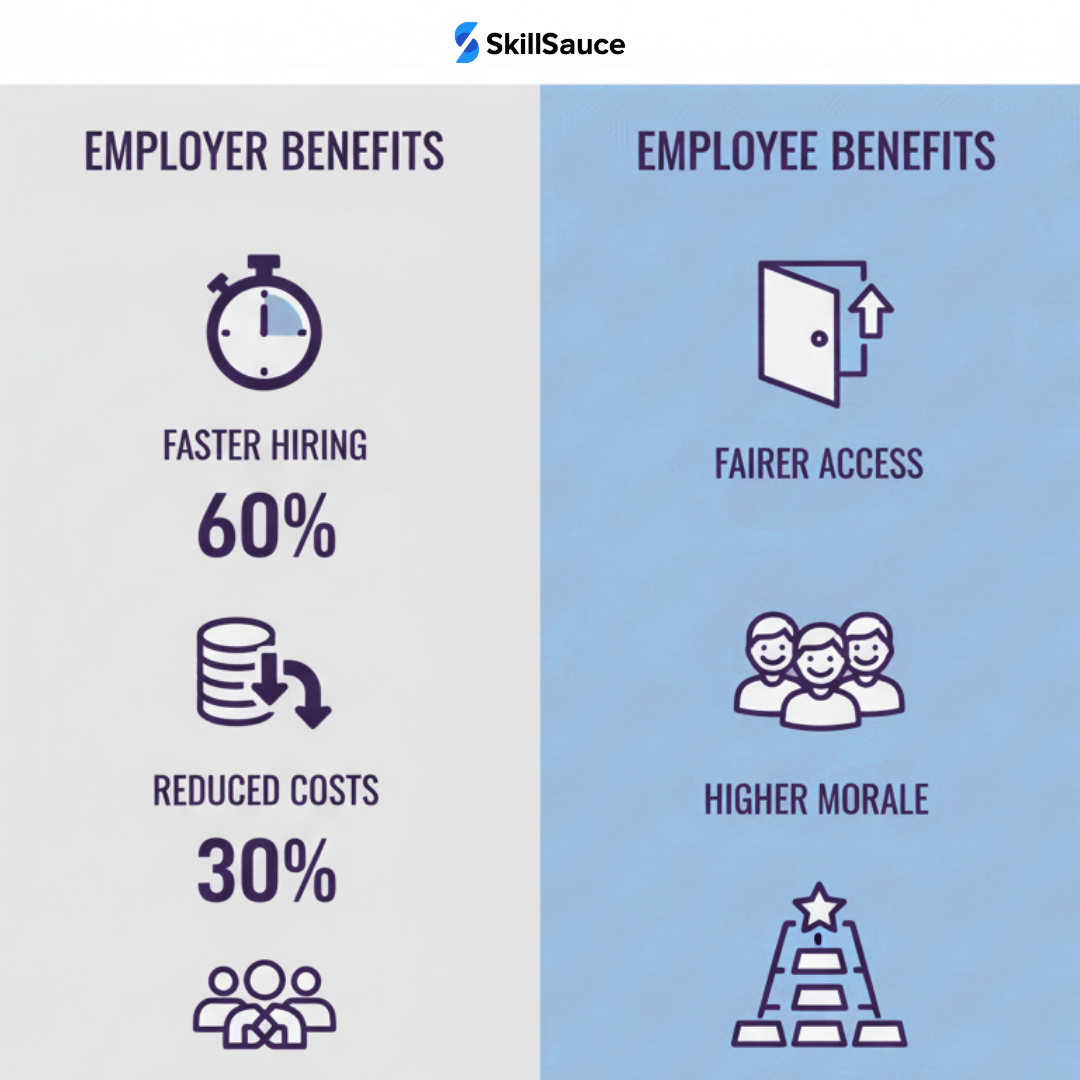
For Employers:
- 60% faster hiring cycles
- Up to 30% cost reduction in recruitment
- Improved staff retention & diversity
- Better alignment of skills to roles
For Employees:
- Fairer opportunities for non-traditional backgrounds
- Higher morale and engagement
- Access to better career paths
Case Studies:
- IBM: $250M apprenticeship program, removing degree requirements from half of postings.
- Google: “Grow with Google” upskilling initiative.
- Delta Airlines: Expanded talent pool by prioritizing skill-based tests.
- Colorado & Pennsylvania: 60% of new state hires came from non-degree applicants post-policy reform.
👉 External link suggestion: Link to IBM’s official apprenticeship program or Google’s “Grow with Google” resource.
Key Challenges Employers Must Tackle
- Bias in AI tools – 37% of companies still see bias due to flawed datasets.
- Solution: Balanced data, explainable AI, human oversight.
- Scalability vs. Candidate Experience – Automation risks depersonalization.
- Solution: Blend AI efficiency with human interaction.
- Resistance to Change – HR teams need leadership buy-in and training.
- Over-reliance on current skills – May ignore future potential.
- Solution: Combine skills with aptitude assessments.
👉 Internal link suggestion: Link this to your blog on AI hiring challenges (if available).
The Future of Skills-Based Hiring (2025–2030)
Looking ahead, experts predict:
- Dominance of skills-first hiring across industries.
- Job titles & degrees will matter less; verified skills profiles will drive mobility.
- AI will expand into personalized upskilling and employee growth plans.
- Governments will enforce fairness audits and bias-mitigation guidelines.
- Organizations with skill-first practices will be 57% more adaptable to change (LinkedIn data).
Policy Moves & Thought Leader Insights
- U.S. federal mandates (Chance to Compete Act, SMEQA, USA Hire) embed skills-based hiring into law.
- 50%+ of U.S. states now follow suit—Delaware, Virginia, Colorado leading with measurable results.
- India: Rapid acceleration driven by talent shortages and digital-first industries.
- Thought leaders (LinkedIn, Korn Ferry): Skills-first organizations are more resilient and innovative.
Conclusion
The rise of AI-powered, skills-based hiring marks a turning point in recruitment. For employers, it’s a chance to unlock better performance, diversity, and retention. For employees, it creates fairer access and mobility.
Call to Action: Want to adopt skills-based hiring without the complexity? Explore how SkillSauce’s AI-driven assessments, proctoring, and analytics can help you build future-ready teams.