

What is a Psychometric Test?
A psychometric test offers a scientific approach to assess an individual’s competencies through carefully designed questions, often called test items. These tests not only evaluate how fit a person is for a role but also provide deeper insights into their personality, aptitudes, interests, and emotional intelligence assessments.
In today’s competitive world, psychometric tests have become an essential part of recruitment and personal development. Unlike resumes or interviews that reflect limited information, these tests reveal hidden capabilities and provide standardized, reliable, and validated results. They are also norm-referenced, meaning participants’ performances are compared against predefined groups to ensure fairness and accuracy. This makes psychometric tests a trusted method to evaluate behavioral tendencies, cognitive abilities, and personality traits. Increasingly, they form the backbone of competency-based hiring tests, ensuring employers make better, data-driven hiring decisions.
The Art & Science of Crafting a Psychometric Test
Designing a psychometric test is a detailed process that requires both scientific knowledge and psychological insights. It is not about random questions but about carefully structured steps to ensure accuracy and relevance.
Step 1: Understanding Job Profiles
The first step is to analyze job roles common across industries, such as customer support, marketing, sales, developers, analysts, and managers. Recognizing these universal roles helps in creating tests that are widely applicable and practical.
Step 2: Identifying Core Competencies
Competencies define how well someone can perform in a role. Research shows that around 30 key competencies are critical to success, including problem solving, communication, decision making, and emotional intelligence assessments. These competencies act as the foundation of competency-based hiring tests used across organizations today.
Step 3: Narrowing to Top Competencies
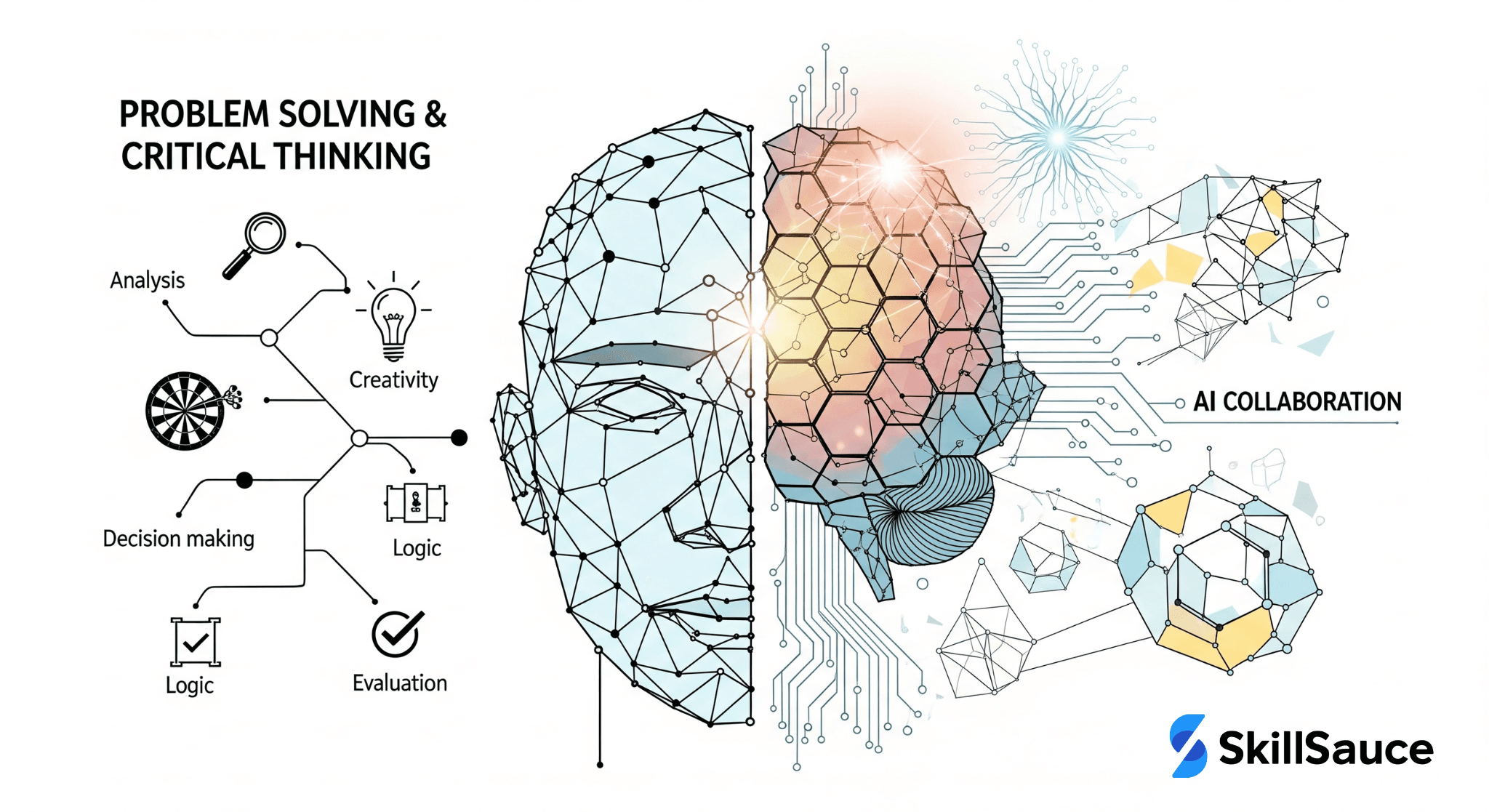
From the initial 30 competencies, the focus is narrowed to the top 10 most critical ones. Among them, Problem Solving and Critical Thinking stand out because they drive better decision making, adaptability, and creativity.
Step 4: Breaking Down Problem Solving & Critical Thinking
Problem Solving & Critical Thinking is further divided into subcategories:
- Logical Reasoning – deriving practical conclusions from systematic thinking.
- Numerical Reasoning – analyzing data and numbers efficiently.
- Abstract Reasoning – identifying patterns and connections in complex scenarios.
- Critical Thinking – evaluating evidence and drawing rational outcomes.
- Adaptability in Problem Solving – staying flexible and cooperative in changing conditions.
Step 5: Using AI to Refine Questions
Artificial Intelligence helps in drafting diverse and insightful questions. However, human expertise is equally important. AI-generated questions are refined by experts to improve clarity, remove bias, and ensure natural responses. Steps include:
- Drafting initial questions with AI.
- Improving prompts for refined results.
- Enhancing quality by comparing outputs from multiple AI tools.
- Neutralizing wording to avoid socially desirable responses.
Step 6: Ensuring Validity & Credibility
Every finalized question undergoes validation to ensure it measures what it claims. Both AI and human intervention contribute to refining the test, making it credible and reliable. The aim is to assess participants authentically without leading them toward “expected” answers.
Why Psychometric Tests Matter in Recruitment
Modern organizations need more than just resumes or interview impressions. They require deeper insights into candidates’ personalities and thought processes. Competency-based hiring tests make this possible by focusing on specific skills and behaviors linked to job success. Similarly, emotional intelligence assessments allow employers to evaluate how well individuals manage their emotions, interact with others, and adapt to challenges—traits critical for leadership and teamwork.
By combining scientific methods with human understanding, psychometric tests help predict performance, identify strengths, and minimize wrong hiring decisions. This not only saves time and cost for organizations but also benefits candidates by helping them discover their own strengths and areas for growth.
Conclusion
Creating effective psychometric tests is both an art and a science. The process blends research, technology, and psychology to design reliable tools that support modern recruitment. From identifying competencies to refining questions with AI and validating results, every step ensures the test is meaningful and accurate.
In today’s workplace, competency-based hiring tests and emotional intelligence assessments are not just recruitment aids—they are strategic tools for building stronger, more capable teams. They empower organizations to select the right talent while giving individuals a clearer understanding of their own capabilities.
By focusing on problem solving, critical thinking, and emotional intelligence, psychometric tests ensure that recruitment is no longer a guessing game but a structured, scientific, and future-ready process.