

How to Engage Hourly Job Applicants 24/7 with AI Chatbots
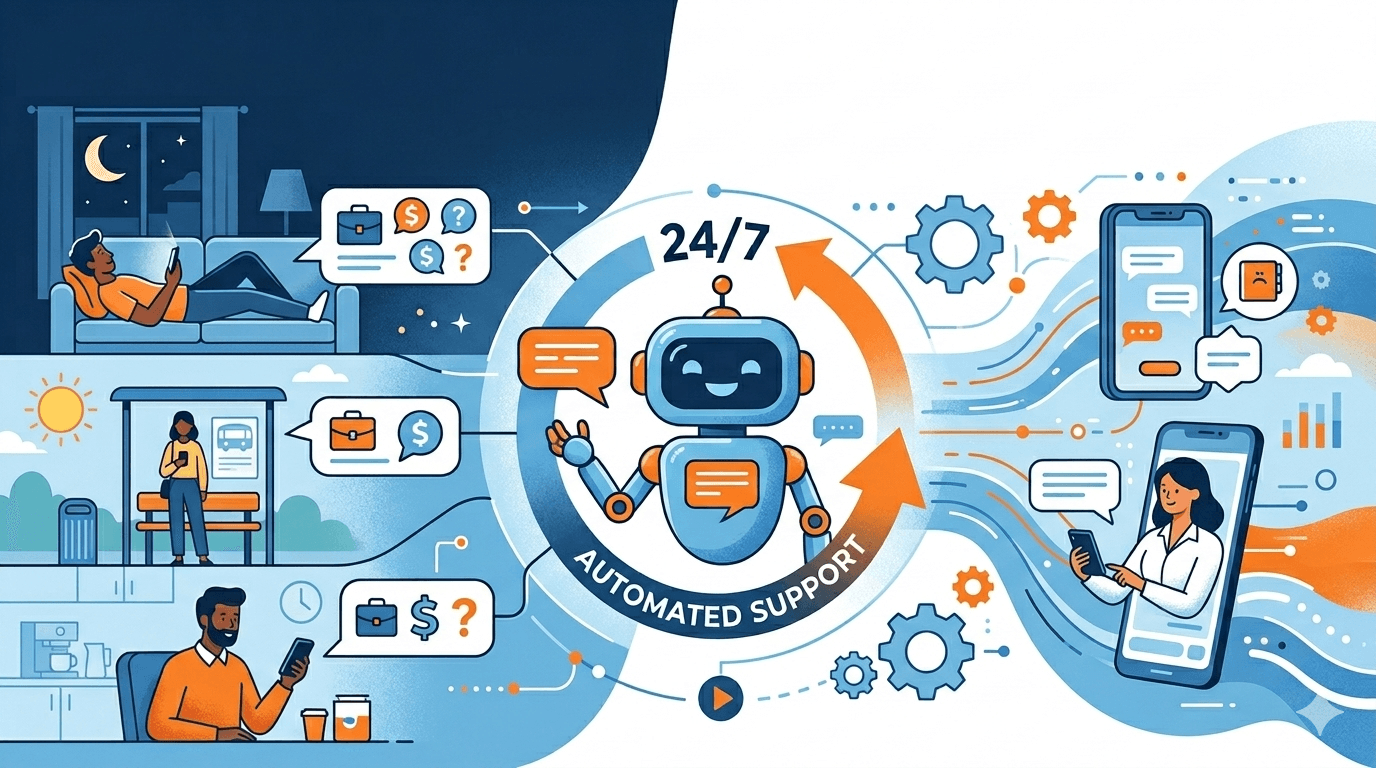
It's 11:37 PM on a Tuesday night. Maria just finished her shift at a competing retail store and is scrolling through job listings on her phone. She finds your open sales associate position, clicks apply, and has three immediate questions: What's the starting pay? Can you work around her current schedule during the transition? When's the first interview available? Your recruiting team won't be online for another nine hours. By then, Maria will have applied to four other positions, received instant responses from two of them, and scheduled an interview with the competitor who answered her questions at 11:43 PM.
This scenario plays out thousands of times daily across healthcare, retail, and manufacturing recruitment. The best hourly candidates apply outside business hours—during breaks, after shifts, late at night when they finally have time to job search. They have immediate questions, expect quick responses, and make decisions fast. Organizations that can only engage hourly job applicants during 9-to-5 business hours are fundamentally mismatched with how frontline talent actually searches for work.
The talent acquisition teams winning the hourly hiring war have discovered something their competitors haven't: AI chatbots that engage candidates instantly, answer questions comprehensively, conduct screening conversations, and schedule interviews—all without human intervention and available 24 hours a day, 7 days a week. While others lose candidates to silence and delays, these organizations capture talent the moment interest peaks.
Why 24/7 Engagement Is Non-Negotiable for Hourly Hiring
The employment dynamics for hourly workers differ fundamentally from professional hiring in ways that make instant, around-the-clock engagement essential rather than optional.
First, hourly job seekers are typically employed while searching. They're looking for better opportunities during off-hours—before their current shift, during lunch breaks, or late at night after work. These aren't convenient 9-to-5 job seekers who can engage during your recruiting team's business hours. They're applying at 6 AM before heading to their warehouse shift, at 2 PM during retail lunch breaks, or at 10 PM after their nursing assistant shift ends.
Second, hourly candidates move fast through hiring pipelines. Unlike professional roles where candidates might deliberate for weeks, hourly workers often receive multiple offers within days and make decisions quickly. The window to engage them is measured in hours, not days. A nursing assistant who applies Monday evening and doesn't hear back until Wednesday afternoon has likely scheduled interviews with three competitors and accepted an offer from whoever responded first.
Third, hourly applicants have immediate, practical questions that influence their decision to continue: What's the pay? What shifts are available? Where's the location? How soon can they start? When these questions go unanswered, candidates don't patiently wait—they move to the next opportunity that provides information immediately.
Fourth, the sheer volume of hourly hiring means you're constantly receiving applications. If you're hiring across multiple retail locations, warehouse facilities, or healthcare sites, applications arrive continuously throughout the day and night. Batching responses to business hours creates artificial delays that cost you candidates.
The organizations still operating 9-to-5 engagement models for hourly hiring are essentially turning away interested candidates during 70% of the hours when they're actually job searching. It's like running a retail store that's only open Tuesday through Thursday—technically functional, but strategically absurd.
The Candidate Engagement Crisis in High-Volume Hiring
The inability to engage hourly job applicants outside business hours creates a cascade of problems that compound across your entire recruiting operation:
Massive Application Abandonment:
Studies show that 60% of hourly candidates abandon applications if they don't receive immediate engagement. They start your application, hit a question they need clarified, get no response, and move on. You never even realize they were interested.
Lost Qualified Talent:
Your best candidates—those currently employed and actively comparing opportunities—are the ones most likely to apply outside business hours. By failing to engage them immediately, you systematically lose your highest-quality applicants to competitors with better responsiveness.
Extended Time-to-Fill:
Every hour of delay between application and initial engagement adds time to your hiring cycle. When you're only engaging during business hours, candidates who apply Friday evening don't hear from you until Monday morning—a 60+ hour delay that's fatal in competitive hourly markets.
Poor Candidate Experience:
Hourly workers remember being ghosted by employers who never responded to their applications. This negative experience damages your employer brand in local labor markets where word-of-mouth significantly impacts application volume.
Recruiter Overwhelm:
When you batch all engagement to business hours, your recruiting team faces impossible morning surges. They arrive to dozens of overnight applications, missed questions, frustrated candidates who've already moved on, and a backlog that takes hours to clear—only to repeat the cycle tomorrow.
Competitive Disadvantage:
While you're sleeping, competitors with 24/7 engagement are screening your candidates, answering their questions, and scheduling interviews. You're not competing on equal footing—you're fighting with significant structural disadvantages.
How AI Chatbots Transform Hourly Candidate Engagement
AI-powered chatbots solve the 24/7 engagement challenge by providing instant, intelligent interaction with candidates regardless of when they apply. These systems don't replace human recruiters—they extend recruiting capabilities across all hours while maintaining quality and personalization.
Modern AI chatbots designed for hourly hiring engage candidates through natural text message conversations. When someone applies at 11 PM, the chatbot responds immediately: "Thanks for your interest in our warehouse position! I can answer questions and get you screened for the role. What would you like to know?" The conversation proceeds naturally, with the AI answering common questions about pay, shifts, location, benefits, and requirements.
Beyond answering questions, the chatbot conducts meaningful screening. It asks job-relevant questions about experience, availability, certifications, and skills—gathering the information recruiters need to evaluate candidates. For a retail position, it might ask about customer service experience and schedule flexibility. For healthcare roles, it verifies certifications and shift preferences. For warehouse positions, it confirms physical capabilities and safety awareness.
This screening happens conversationally, not through rigid forms. Candidates feel like they're texting with a knowledgeable recruiter rather than filling out bureaucratic applications. The experience is mobile-friendly, completion rates are high, and candidates provide detailed information because the process feels engaging rather than tedious.
When candidates qualify based on screening responses, the AI can immediately schedule interviews by integrating with recruiter calendars. "You're a strong match for this position! I have interview slots available tomorrow at 2 PM or Thursday at 10 AM. Which works better?" Qualified candidates move from application to scheduled interview in minutes, even at midnight.
The system also handles routine follow-ups automatically. If a candidate doesn't complete screening, the chatbot sends reminders. Before scheduled interviews, it sends confirmations and preparation information. After interviews, it can request feedback or provide next steps. All of this happens without human intervention until the candidate is ready for actual human interaction.
Essential Capabilities for Effective Engagement Chatbots
Not all AI chatbots deliver equal results for hourly hiring. Effective systems share several critical characteristics:
Natural Language Processing:
The chatbot must understand conversational language, not just rigid keyword matching. Candidates don't type "What is the hourly compensation for this role?"—they ask "how much does it pay?" The system needs to comprehend varied phrasings and respond appropriately.
Comprehensive Question Handling:
The chatbot should answer the full range of questions hourly candidates actually ask: pay rates, shift options, locations, benefits, start dates, dress codes, parking, transportation, advancement opportunities, and training provided. Gaps in knowledge create frustration.
Intelligent Screening:
Beyond answering questions, the system must conduct job-relevant screening through conversational exchanges. This means adapting questions based on previous answers, recognizing relevant experience in different contexts, and evaluating transferable skills.
Immediate Response Time:
"24/7 availability" is meaningless if response times are slow. The chatbot must engage candidates within seconds of initial contact, maintaining conversational flow without delays that cause candidates to disengage.
Mobile Optimization:
Hourly candidates primarily use smartphones for job searching. The chatbot experience must work flawlessly on mobile devices through text messaging, not require downloading apps or navigating complex interfaces.
Seamless Handoff:
When candidates need human recruiters—for complex questions, interview discussions, or final hiring decisions—the transition should be smooth. The recruiter receives complete conversation context and can continue where the chatbot left off.
Multi-Language Support:
In many markets, hourly candidates speak multiple languages. Chatbots that can engage in Spanish, Vietnamese, or other relevant languages dramatically expand your accessible talent pool.
Integration Capabilities:
The chatbot must integrate with your applicant tracking system, calendar tools, and other recruiting technology to avoid creating information silos or duplicate data entry.
The Strategic Benefits of 24/7 AI Engagement
Organizations implementing AI-driven engagement tools often combine conversational screening with structured evaluation systems. Platforms like SkillSauce complement chatbot-based engagement by enabling automated skill assessments, AI interviews, and data-driven candidate evaluation—helping hiring teams move beyond engagement to objective selection.
Dramatically Increased Application Completion:
When candidates get immediate answers to their questions, application completion rates increase by 200-300%. Barriers that caused abandonment disappear because the chatbot removes uncertainty instantly.
Faster Time-to-Hire:
Eliminating delays between application and initial engagement accelerates your entire hiring cycle. Candidates who apply Monday evening are screened, qualified, and interview-scheduled by Tuesday morning—before competitors even see their applications.
Access to Employed Candidates:
The best hourly workers—those currently employed but open to better opportunities—primarily search outside business hours. 24/7 engagement lets you capture this premium talent segment that business-hours-only approaches miss entirely.
Improved Candidate Experience:
Instant, helpful responses create positive impressions that strengthen employer brand. Even candidates you ultimately don't hire remember that your organization respected their time with immediate engagement.
Reduced Recruiter Burden:
AI chatbots handle repetitive tasks—answering common questions, conducting initial screening, scheduling interviews—freeing recruiters to focus on high-value activities like interviewing qualified candidates and building relationships.
Better Quality of Hire:
When chatbots conduct structured screening consistently across all candidates, you gather standardized qualification data that supports better hiring decisions. The quality of information improves, leading to better matches.
Scalability Without Proportional Cost:
Whether you're hiring 50 or 500 workers monthly, AI chatbots scale effortlessly. You don't need to triple your recruiting team size to triple hiring volume—the technology absorbs the increase.
Geographic Expansion:
Organizations hiring across multiple time zones benefit enormously from 24/7 engagement. Your East Coast facilities can engage West Coast night-shift applicants, and vice versa, without requiring recruiters to work around the clock.
Competitive Intelligence: Chatbot conversations reveal what candidates care about—which questions come up most, what concerns they raise, which competitors they mention. This intelligence helps refine your recruiting strategy.
How CloudApper AI Recruiter Delivers 24/7 Engagement
CloudApper AI Recruiter was purpose-built to engage hourly job applicants around the clock through intelligent, conversational interactions that feel personal despite being automated.
The platform operates through text messaging—the communication channel hourly candidates actually use. When someone applies to your nursing assistant position at 2 AM, CloudApper immediately sends a text: "Hi! Thanks for applying to our CNA position at Memorial Hospital. I'm here to answer questions and get you started. What would you like to know first?"
The conversation proceeds naturally from there. Candidates can ask about pay ($18-22/hour depending on experience and shift differential), shifts (we need coverage for nights and weekends but offer flexible scheduling), benefits (health insurance, 401k matching, tuition assistance for continued education), or any other concerns. CloudApper provides accurate, conversational responses instantly.
Simultaneously, the platform conducts comprehensive screening. It verifies CNA certification status, confirms schedule availability aligns with open shifts, assesses communication skills through conversational exchanges, evaluates relevant experience, and determines whether candidates meet all requirements. This screening happens through natural dialogue, not rigid forms.
For retail positions, CloudApper adapts its approach. It asks about customer service experience through scenario-based questions: "Tell me about a time you handled a difficult customer—what did you do?" It confirms schedule flexibility: "This position requires weekend availability. Does that work for your schedule?" It evaluates fit while maintaining conversational flow.
Warehouse and manufacturing screening focuses appropriately on different factors: physical capability for roles requiring lifting or standing, safety awareness and commitment to protocols, experience with relevant equipment or processes, and willingness to work required shifts including potential overtime.
When candidates qualify, CloudApper immediately offers interview scheduling integrated with your recruiting team's calendars. "Great! Based on your experience and availability, you're a strong candidate. I can schedule you for an interview with our hiring manager. We have openings tomorrow at 1 PM, Wednesday at 10 AM, or Thursday at 3 PM. Which works best?"
The platform maintains complete conversation histories, so when recruiters review candidates, they see every question asked, every answer provided, and complete context for making informed hiring decisions. There's no information loss between chatbot screening and human evaluation.
CloudApper also handles the entire candidate journey beyond initial engagement. It sends interview reminders, provides preparation information, requests documentation like certifications or identification, answers follow-up questions, and keeps candidates engaged throughout the process. This comprehensive approach ensures no one falls through the cracks due to communication gaps.
For talent acquisition teams managing hiring across multiple locations, CloudApper provides centralized visibility into all candidate interactions. You can see engagement metrics across sites, identify common candidate questions that suggest messaging improvements, track screening completion rates, and optimize your approach based on data.
The platform's AI continuously learns and improves. It identifies which responses generate best candidate engagement, which screening questions provide most predictive value, and which conversation flows produce highest completion rates. This optimization happens automatically, improving results over time without manual intervention.
Implementation Best Practices
Successfully deploying AI chatbots for 24/7 hourly candidate engagement requires thoughtful planning:
Start with Question Library:
Before launching, compile comprehensive answers to every question hourly candidates might ask. Include pay ranges, shift details, benefits, location specifics, parking, dress code, advancement opportunities, and training provided. Incomplete information undermines the entire approach.
Design Natural Conversation Flows:
Map how conversations should proceed based on candidate responses. If someone asks about pay first, what follow-up questions make sense? If they express schedule concerns, how should the chatbot explore whether you can accommodate them?
Customize by Role Type:
Different positions require different screening approaches. Healthcare roles need certification verification; retail positions emphasize customer service; warehouse jobs focus on physical requirements and safety. Configure your chatbot to adapt appropriately.
Test Extensively:
Before full deployment, test with internal volunteers who mimic real candidate behavior. Identify gaps in question coverage, awkward conversation transitions, or screening logic errors. Refine until the experience feels seamless.
Train Your Team:
Ensure recruiters understand how the chatbot works, what screening it conducts, and how to interpret conversation summaries. They should know when to intervene in chatbot conversations and how to take over smoothly.
Monitor Continuously:
Track key metrics—application completion rates, screening completion rates, time-to-first-response, candidate satisfaction, and conversion from application to interview. Identify improvement opportunities and adjust accordingly.
Refine Based on Data:
Review actual candidate conversations to see what questions emerge frequently, where confusion occurs, and what improvements would enhance the experience. Let real usage inform continuous optimization.
FAQs
Winning the 24/7 Engagement Race
The hourly hiring landscape has fundamentally shifted. Candidates expect instant engagement, immediate answers, and fast movement through hiring pipelines. Organizations still operating on business-hours-only models are competing in a 24/7 war with part-time availability.
AI chatbots that engage hourly job applicants around the clock aren't a luxury or a future trend—they're table stakes for organizations serious about winning talent competition in healthcare, retail, and manufacturing. The technology exists, the business case is compelling, and the competitive advantage is substantial.
For talent acquisition professionals and HR leaders managing high-volume hourly hiring, the question isn't whether to implement 24/7 AI engagement but how quickly you can deploy it before competitors capture all the candidates who apply outside your current business hours.
Your next great warehouse worker is applying at midnight. Your future top-performing nursing assistant is job searching at 6 AM before her current shift. Your best retail associate prospect is browsing opportunities at 9 PM after putting kids to bed. Are you ready to engage them?
To learn more about how CloudApper AI Recruiter delivers 24/7 candidate engagement designed specifically for high-volume hourly hiring, visit this page.