
Introduction
By 2030, an estimated 85 million jobs will go unfilled due to skill development gaps across industries.
These numbers explain why 98% of business executives plan to add more skills-based approaches to their organizations. But many companies still value formal qualifications and job histories more than actual employee skills. About 35% of employees feel their true capabilities don't show up in their qualifications or résumés.
The situation needs immediate attention. Business executives (73%) expect talent shortages to continue over the next three years. Traditional hiring and development models don't work anymore. Smart organizations now focus on what people can do rather than their job titles or histories.
The data shows promise. Most executives (80%) agree that making decisions based on people's skills instead of job history would reduce bias and create fairer workplaces. This approach helps fill talent gaps and builds more equitable work environments.
This detailed guide will show you how to build a skills-based organization. HR leaders will find useful strategies to change their organizations - from creating business cases to implementing soft skill development initiatives. Let's get started!
What is a Skills-Based Organization?
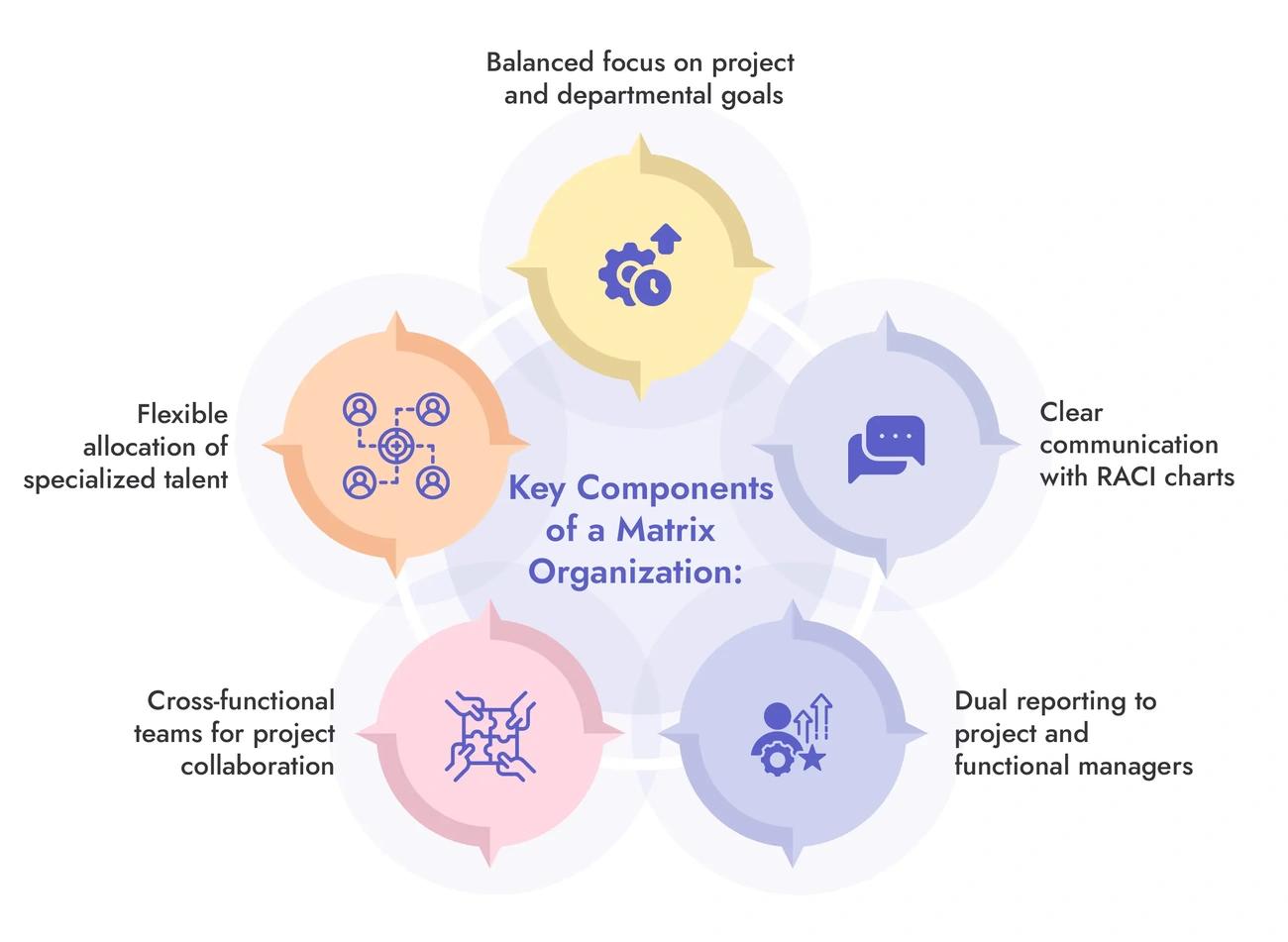
Image Source: Teamflect
"By decoupling some work from the job… people can be freed from being defined by their jobs and instead be seen as whole individuals with skills and capabilities that can be fluidly deployed to work matching their interests, as well as to evolving business priorities." — Deloitte, Global professional services firm specializing in organizational transformation and talent management
A Skills-Based Organization (SBO) puts employee skills at the heart of its talent strategies. It focuses on people's abilities and potential rather than job titles or academic qualifications. This approach helps companies adapt to market changes by matching employees' specific abilities to business needs.
SBOs view roles differently. They break down jobs into tasks and projects that align with employee skills. This model values both technical and soft skills, showing how each contributes to team success and organizational flexibility.
How it is different from traditional job-based models
Traditional organizations rely on fixed hierarchies, set job titles, and assessments based on qualifications or seniority. Skills-based organizations take a fresh approach:
| Traditional Model | Skills-Based Model |
|---|---|
| Focus on job titles and status | Focus on specific skills required for tasks |
| Fixed job descriptions | Work broken into projects and tasks |
| Evaluation based on seniority | Measurement based on performance and skills |
| Static organizational structures | Organizational fluidity and agility |
| Barriers linked to qualifications | Greater diversity through focus on capabilities |
Traditional models value professional history, but skills-based organizations look at future potential. Companies can now tap into talent they might have missed with conventional hiring methods.
Traditional job-based organizations see roles as defined positions with specific titles. Skills-based organizations view each role as a mix of skills needed for success. They break down jobs into smaller parts to identify essential skills and place employees more strategically.
This approach offers significant benefits:
- Increased agility: Teams can adapt faster to market changes by quickly bringing together people with needed skills
- Better resource utilization: Human capital matches tasks more effectively
- Improved innovation: Teams from different disciplines create better solutions
- Reduced bias: 80% of executives believe skills-based decisions are fairer than those based on job history
Examples of ground implementation
Leading organizations have already embraced skills-based approaches with great results:
Unilever has made skills central to its strategy. The company sees roles as skill collections rather than fixed positions. Their internal talent marketplace lets employees move between projects based on their abilities. This system helps match talent to needs based on skills and results, not just seniority.
Google looks at skills-based assessments for technical roles without requiring degrees. They value coding skills more than a candidate's background.
Revolut transformed its recruitment by using a skills-based approach. This change improved their time-to-hire by 40%.
IBM shows its commitment to skills-first hiring by opening half their jobs to people with right skills whatever their degrees. They keep updating skill requirements for positions and have created "new collar" jobs where practical skills matter more than college degrees.
Catalyte switched from resumes to skills-based hiring. Their teams show better problem-solving and creative abilities than traditional teams.
Companies using skills-based hiring see impressive results:
- 92.5% reduced mis-hires
- 91.4% reduced total time-to-hire
- 89.8% reduced total cost-to-hire
- 91.2% increased employee retention
Skills now have a shorter lifespan - less than five years on average, and even shorter in tech fields. Organizations that support continuous learning and skill growth are better prepared for today's business challenges.
Why HR Leaders Should Embrace the Skills-First Model
"Organizations who understand how skills will support their future workforce goals are equipped to access, build, and retain the talent they need." — Lightcast, Labor market analytics and skills intelligence platform
The business world changes faster than ever, creating an urgent need for organizations to adapt their talent strategies. Skills now last less than five years on average—even less in technical fields. Traditional workforce management doesn't work well anymore. Companies need a skills-first model that brings many advantages to HR leaders who plan ahead.
Dealing with talent shortages and quick changes
The talent shortage has reached a crisis point. Business executives (73%) expect staffing challenges to continue for the next three years. Only 32% of leaders believe their organization has the skills needed for future success. These worries explain why 70% of executives now look for skills creatively instead of just checking job experience.
Traditional workforce models react to immediate talent needs as they come up, which leads to quick fixes that don't last. Skills-based approaches offer better solutions:
| Traditional Approach | Skills-Based Approach |
|---|---|
| Recruiting based primarily on job titles | Identifying capabilities whatever the previous roles |
| Rigid job descriptions limiting talent pools | Flexible skill requirements expanding candidate options |
| Slow adaptation to business changes | Quick redeployment of skills to meet new challenges |
| Limited internal mobility | Dynamic talent allocation across departments |
| Fixed career paths | Tailored development based on skill portfolios |
Organizations using skills-based strategies see real benefits:
- 3x boost in productivity
- 2.5x better handling of external pressures
- 5.5x better at managing change
- 26% fewer employees likely to leave within a year
Business executives (85%) agree that organizations should create more flexible ways to organize work and adapt to market changes quickly. Skills-based approaches make this possible, helping companies turn disruption into a chance for growth.

Want to simplify hiring with skills-first assessments?
Talk to UsMeeting employee expectations and market trends
Workers today want something different that matches perfectly with skills-based models. Half of all workers say they're more likely to stay with companies that let them use their skills freely. People's attention is drawn to organizations that value them as human beings (64%).
Right now, only 26% of workers strongly feel their employer sees them as whole individuals with unique skills to offer. HR leaders can close this gap by starting skill development programs.
Skills-first approaches help beyond just hiring:
- Better internal mobility: Companies can find and use hidden talent in their current workforce, letting employees contribute beyond their job titles.
- Higher retention: Companies keep their people longer when they put skills first (83%). This makes skill development great for retention.
- More fairness: Skills-based organizations give everyone a fair chance by looking at real abilities instead of credentials.
- Ready for tomorrow: Business and HR executives (77%) say moving skills around flexibly helps handle future changes. This approach builds long-term strength.
HR leaders must embrace skills-first models now. Most organizational leaders (81%) agree that focusing on skills drives growth through better productivity, breakthroughs, and flexibility. HR leaders who focus on employee skills rather than traditional credentials can solve talent shortages while building organizations that adapt better and keep their people engaged.
Phase 1: Build the Business Case for Skills
A strong foundation is crucial to build a successful skills-based organization. HR leaders must first make a compelling business case that appeals to executives and stakeholders. These steps will help you create an undeniable argument to implement skill development programs throughout your organization.
Define what 'skills' mean in your context
A clear definition of "skills" in your organization must come before any changes begin. Research shows skills generally include:
- Hard/technical skills: Coding, data analysis, accounting
- Human capabilities: Critical thinking, emotional intelligence
- Potential: Latent qualities or adjacent skills that could be developed
"Skills" serves as a way to define workers as unique individuals with their own mix of capabilities, interests, passions, and work styles. This detailed view helps organizations look beyond traditional job descriptions.
You should also know the difference between commonly confused terms:
| Term | Definition | Focus Area |
|---|---|---|
| Skills | Specific abilities or knowledge | What a person can do |
| Competencies | Broader concept including skills, knowledge, behavior, and attitude | "The how" of performance |
| Capabilities | Recognition of worker potential and future growth | Long-term development |
These definitions are the life-blood of your skills transformation experience.
Identify business problems a skills-based model solves
Your next step is to spell out specific business challenges that a skills-based approach fixes. Research proves this model effectively handles several urgent issues:
- Talent shortages: 73% of executives expect continued talent shortages over the next three years. Creative approaches to finding skilled workers are needed.
- Retention challenges: Companies could have kept 77% of employees who left. Many cited lack of career development as their reason. Skills-based practices create more internal opportunities and boost retention rates.
- Performance prediction: Hiring for skills is five times more predictive of job performance than hiring for education and twice as predictive as hiring for work experience.
- Employee longevity: Workers without degrees stay in their jobs 34% longer than those with degrees.
- Workforce agility: 85% of executives believe organizations should create more flexible ways to organize work. Skills-based approaches make this easier.
This approach provides strategic resilience during uncertain economic times. Mapping skills across your organization lets you move talent where needed instead of always hiring externally.
Set measurable success criteria
Clear metrics demonstrate your skill development program's effect and help secure leadership support:
Financial Metrics:
- Cost savings from reduced external hiring
- Decreased turnover costs (organizations can save up to £1.5m in retention costs with a skills-based approach)
- Faster project staffing timeframes
- Improved productivity measurements
Performance Indicators:
- Reduction in time-to-hire
- Increase in internal mobility rates
- Improved project success percentages
- Enhanced employee satisfaction scores
- Growth in applicant pool (some organizations have quadrupled applicants after implementing skills-based job postings)
Success stories from companies like Boeing, Walmart, and IBM add credibility to your targets. These industry leaders have already proven the value of skills-based approaches.
These steps will help you build a solid business case. You'll create the foundation to move toward a skills-based organization that maximizes your workforce's potential.
Phase 2: Deconstruct Work and Identify Needs
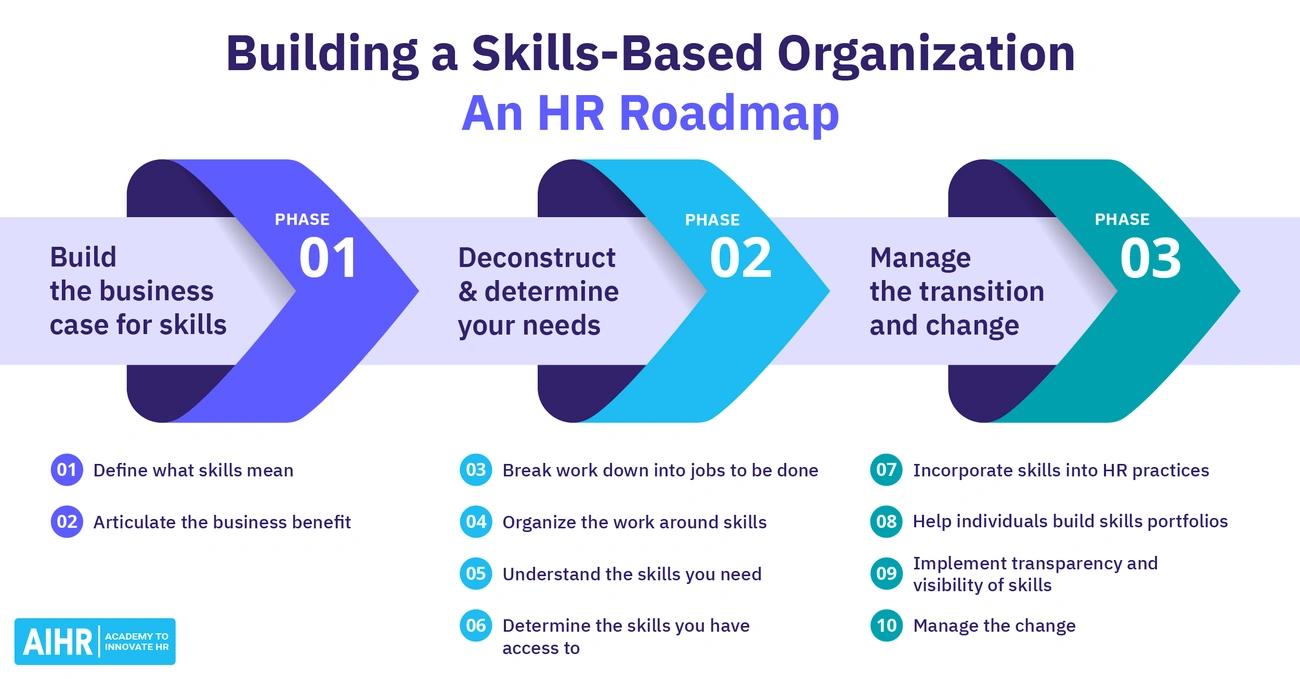
Image Source: AIHR
A strong business case sets the stage to analyze work into its basic components. Companies that see workers as a collection of skills rather than just job titles are 98% more likely to retain high performers. These companies are also 57% more likely to anticipate and respond well to change.
Break down roles into tasks and outcomes
Traditional job descriptions often hide the actual skills needed to succeed. A clearer picture of skill requirements emerges when roles are broken into specific tasks. This process, known as "fractionalization," takes apart conventional job structures. The work gets divided into meaningful chunks that evolve with changing business needs.
The best way to analyze roles:
- Start by identifying all recurring tasks across your organization
- Categorize these into operational, strategic, and technical components
- Document the specific outcomes expected from each task
- Analyze which tasks could be grouped differently than current job descriptions suggest
Some organizations already see great results with this approach. To name just one example, Haier runs with a fully fractionalized work model where their 75,000+ employees work in self-organizing, fluid microenterprises of 10-15 people each. Cleveland Clinic took a similar path by moving away from medical specialties and specific job titles. They now define all staff as "caregivers" who treat patients with an all-encompassing approach.
Map tasks to required employee skills
The next step after breaking down roles is to identify specific skills for each task. This mapping creates a clear link between skill needs and availability in your organization.
Each identified task needs:
- Both technical/hard skills and human capabilities
- The right proficiency level (beginner to expert)
- Core job-specific and cross-functional capabilities
- Soft skills like critical thinking or collaboration
This detailed mapping gives great insights. A database optimization task might need SQL expertise (technical skill), analytical thinking, and problem-solving (soft skills). These connections help build a complete picture of what drives performance in your organization.
Use a skills segmentation matrix
A skills matrix helps plan your workforce strategically by mapping employee skills against proficiency levels. It usually appears as a table that compares skills and other data vertically and horizontally.
Common matrix formats include:
| Matrix Type | Purpose | Application |
|---|---|---|
| Skills inventory matrix | Shows overall skills coverage | Resource planning, team composition |
| Skills gap matrix | Compares current vs. required skills | Training needs identification |
| Skills vs. roles matrix | Maps required skills per role | Career pathing, job redesign |
Creating your matrix requires:
- List relevant skills along one axis and roles/employee names along the other
- Establish clear rating criteria (typically 0-5 scale) with explicit definitions
- Gather data through multiple sources including self-assessments, manager reviews, and objective tests
- Use color coding for visual impact (green for strengths, yellow for developing skills, red for gaps)
A completed skills matrix becomes a powerful decision-making tool. Organizations find that skills matrices help update inefficient workflows, improve training programs, scale hiring with precision, and create effective succession plans.
This phase turns abstract job titles into clear skill requirements. These requirements are the foundations for all future talent decisions. Understanding which skills lead to success helps design precise development initiatives and find hidden talent throughout your organization.
Phase 3: Operationalize Skills in HR Practices
Your organization needs to embed the skills framework into core HR practices after establishing it. Companies that use skills-based approaches see real benefits. Their employee retention increases by 91.2%, and 73% of companies now use skills-based hiring.
Skills-based hiring and recruitment
Skills-based hiring looks at candidates' proven abilities instead of just credentials or job titles. The process uses assessments, project-based tasks, or portfolio reviews to evaluate candidates. Companies using this method report these impressive results:
| Traditional Hiring | Skills-Based Hiring |
|---|---|
| Prioritizes degrees and job history | Centers on practical competencies |
| Limited candidate pools | 50% more jobs available to diverse candidates |
| Lengthy time-to-hire | 91.4% reduced time-to-hire |
| Higher turnover rates | 34% longer employee retention |
Here's how to make skills-based hiring work:
- Break down and identify role-specific skills into must-have versus nice-to-have capabilities
- Update job descriptions to focus on skills over credentials and remove unnecessary degree requirements
- Add skills assessments through practical tests, work samples, and structured interviews
- Help recruiters learn to assess candidates based on abilities rather than traditional qualifications
Skills-based performance and rewards
Leading organizations are moving from yearly reviews to skills-based performance management with ongoing development. This change reflects a new way companies view and keep talent.
Performance management should focus on developing future capabilities rather than past accomplishments. Organizations can do this by:
- Having frequent, brief check-ins instead of big yearly reviews
- Looking forward at skill development rather than backward at past performance
- Making learning part of daily work instead of a separate activity
Research shows 75% of executives and workers support skills-based pay and want transparency about skill values. Some organizations now offer both a base salary for the job role and a "skills salary" based on market value and organizational needs.
Soft skill development and training programs
Soft skills training programs help create well-rounded employees. These programs build interpersonal abilities like communication, teamwork, problem-solving, and adaptability.
Good soft skills training delivers measurable business results. A manufacturing company saw about 250% ROI within months after completing a year-long soft skill training program. Here's how to create successful soft skill development:
- Get a full picture of training needs to find skill gaps
- Create engaging content using real-life examples from your organization
- Choose the right delivery methods like workshops, e-learning, coaching, and role-playing
- Give constructive feedback during the program to help skills improve
- Track success through engagement metrics, role-play outcomes, and performance improvements
A skills-focused approach to HR practices creates a unified system. Hiring, performance, and development work together to support your organization's skills strategy. This results in a more adaptable and resilient workforce.
Build a Skills Hub and Governance Model
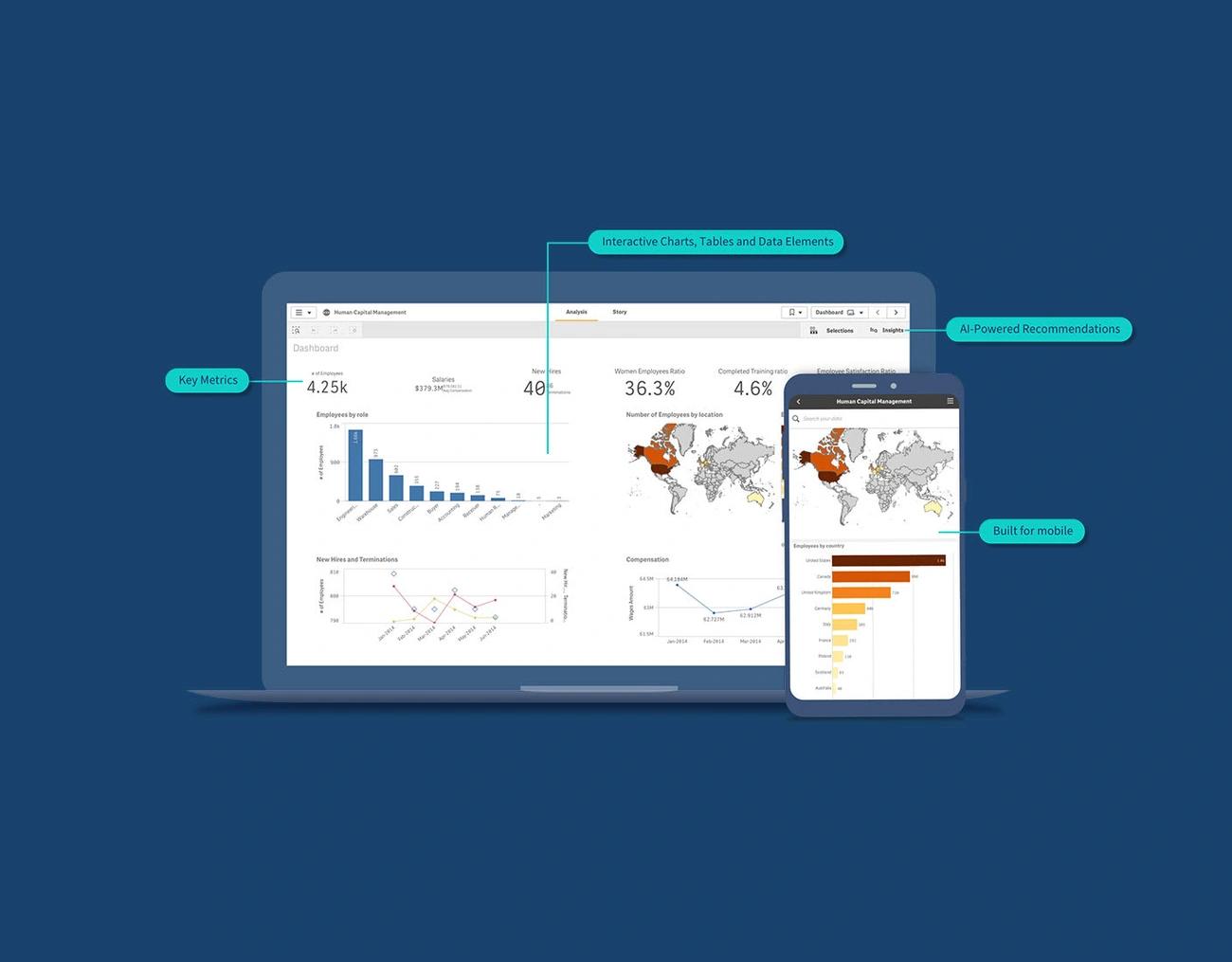
Image Source: Qlik
A reliable infrastructure that manages skill data forms the foundation of any successful skills-based organization. Organizations need thoughtful planning and clear accountability to build this foundation consistently.
Create a centralized skills database
A centralized skills database acts as the "central bank" for workforce management. This single source of truth contains several vital components:
| Skills Hub Components | Description |
|---|---|
| Talent philosophy | A shared approach on the value of skills as the "red thread" of talent management |
| Skills framework | Common language and framework for skills across the organization |
| Data enablers | Single source of truth regarding skills data |
| Skills taxonomy | Standardized skill categorization systems |
Organizations can now eliminate the endless cycle of manual updates and revisions that once pulled HR resources away from strategic initiatives. Teams can map and customize needed skills to meet organizational objectives while maintaining a curated source of truth.
Establish ownership and governance
Organizations need clear governance structures to determine skill ownership. Two main categories define effective governance models:
- Centralized Model: A central Skills Governance team maintains quality and consistency throughout the organization
- Decentralized Model: Local units handle quality assurance of skills at departmental levels
Organizations can clarify responsibilities through a RACI matrix that defines who is Responsible, Accountable, Consulted, and Informed for each governance task. This well-laid-out process helps teams plan, implement, and monitor skill management activities systematically.
Many companies set up a Steering Committee to provide broad policy direction and periodic reviews. Regional Monitoring Committees oversee daily operations with participation from education departments and other stakeholders.
Utilize AI for skills tracking
AI changes skills management by automating manual processes. Organizations that use AI can:
- Spot skill gaps through analysis of job descriptions, employee profiles, and industry trends
- Predict future skill needs by studying external market developments
- Remove manual work through automated skill mapping and assessment
AI-powered platforms build dynamic skills matrices that map employee proficiencies against organizational needs continuously. These systems capture changing skill dynamics by gathering feedback and engaging users with evolving skills graphs.
This technology enables precise talent matching while supporting strategic workforce planning by monitoring emerging skills and market trends. Teams can optimize workforce allocation and boost productivity while minimizing disruptions.
Support Employees with Skill Development Programs
Organizations help their employees grow by offering well-laid-out yet flexible paths to build skills. The best skill development programs match company needs with each person's learning priorities and give them chances to practice what they learn.
Strengthen self-led learning and upskilling
Self-directed learning equips employees to guide their own growth experience. This method works because employees set their own goals and stay motivated when they see clear benefits for themselves. Good self-led programs include:
| Traditional Training | Self-Directed Approach |
|---|---|
| Instructor-paced | Learner-controlled speed |
| Fixed schedules | Flexible timing |
| Standard content | Personalized pathways |
| Limited formats | Multi-modal learning |
Adult learning principles are the foundations of effective program design. Adults learn best through relevant, hands-on training that values their experience. They want control over their learning methods, which makes flexible formats and optional paths valuable.
Make use of internal mobility and gig assignments
Internal gig projects are a great way to get transferable skills while helping achieve company goals. These short-term projects take 3-4 hours weekly over 3-4 months. Employees can improve their technical troubleshooting, project management, and data analysis skills.
Companies using internal gig assignments see three main benefits:
- Better transferable skills growth
- Higher employee involvement (40% of participants preferred gig-style work)
- Lower labor costs through smarter resource use
Track progress with skills portfolios
Digital portfolios help both employees and companies see skill growth clearly. A central "skills bank" lets managers and employees build portfolios together. These portfolios show current abilities and point to related skills for future growth.
Good tracking systems show up-to-the-minute data about growing competencies and remaining gaps. Managers can spot new skill trends, adjust training programs quickly, and move talent around before issues come up.
Manage Change and Scale the Transformation
Image Source: Culture Partners
Organizations need careful change management to become skills-based. Studies show that only 34% of organizational change initiatives succeed. This makes it crucial to implement skill development programs the right way.
Start with pilot teams or departments
Small-scale pilots help companies learn about skills-based approaches before rolling them out widely. Teams should pick departments where they can measure and define skills clearly. They must also track important metrics like how fast people learn new skills and improve existing ones.
| Effective Pilot Approach | Ineffective Approach |
|---|---|
| Specific business objectives | Vague implementation goals |
| Cross-functional implementation team | HR-only initiative |
| Phased implementation | Organization-wide immediate rollout |
| Regular measurement | No success metrics |
Communicate wins and iterate
Clear communication keeps the momentum going during changes. Teams can showcase progress through quick updates and simple dashboards that show how many people adopt new practices. A great example comes from Denver Economic Development Opportunity. They give continuous training and hands-on support to employers who use skills-based practices.
Ensure executive sponsorship
Executive support significantly boosts the success rate of any transformation. Skills-based approaches need backing from top leadership, with both HR and business leaders working together. Good sponsors share their vision, provide resources, and champion the cause while clearing obstacles. Metro Atlanta Chamber shows this approach well. They bring local workforce partners together and offer resources to help implement skills-based practices.
Conclusion
A skills-based organization model marks a fundamental change from traditional hiring and development approaches. Without doubt, this change demands commitment, but the advantages are nowhere near the challenges. Companies that implement skills-based approaches see remarkable results with increased efficiency in talent acquisition, better retention rates, and a more agile workforce.
Clear phases mark the path to becoming a skills-based organization. Your business case must appeal to executives first. You need to break down existing roles into specific tasks and skills next. These insights should then flow into your HR practices, from recruitment to performance management.
Skills-based hiring serves as the life-blood of this change. This approach delivers:
- 50% larger talent pools by removing unnecessary degree requirements
- 90% faster hiring time
- Better retention rates by focusing on capabilities over credentials
- Less bias and more equitable opportunities
Your organization's change to skills needs resilient infrastructure. A centralized skills database, clear governance, and AI-powered skills tracking are the foundations for lasting change. Employee development thrives through self-led learning, internal gig assignments, and complete skills portfolios.
Note that successful changes need thoughtful management. Pilot programs should come first, followed by consistent communication of wins and executive sponsorship before expanding across the organization.
Organizations that value people's abilities over their past titles will own the future. This move requires work, but companies that welcome skills-based approaches gain competitive edges through increased efficiency, breakthroughs, and organizational resilience. Your organization must become skills-based - the only question is how soon you'll begin this experience.
Build a Truly Skills-First Workforce with TESSA AI
Automate interviews, reduce bias, and hire faster with our AI-led assessment suite.
Request a DemoKey Takeaways
Building a skills-based organization transforms how companies hire, develop, and deploy talent by focusing on capabilities rather than credentials or job titles.
- Start with a strong business case: Define skills clearly, identify specific problems this approach solves, and set measurable success criteria to gain executive buy-in.
- Deconstruct roles into tasks and skills: Break down traditional job descriptions into specific tasks, map required skills to each task, and use skills matrices for strategic workforce planning.
- Operationalize skills across HR practices: Implement skills-based hiring, performance management, and development programs while creating centralized skills databases with clear governance.
- Support continuous learning: Encourage self-directed upskilling, provide internal gig assignments for skill development, and track progress through digital skills portfolios.
- Manage change strategically: Begin with pilot programs, communicate wins consistently, ensure executive sponsorship, and scale gradually across the organization.
Organizations implementing skills-based approaches report 91% increased retention, 50% larger talent pools, and 90% reduced time-to-hire. This transformation requires commitment but delivers competitive advantages through improved productivity, innovation, and workforce agility in today's rapidly evolving business landscape.
FAQs
Q1. What are the key components of a skills-based organization?
A skills-based organization focuses on employee capabilities rather than job titles. Key components include a centralized skills database, skills-based hiring practices, continuous learning opportunities, and performance management based on skill development.
Q2. How does skills-based hiring differ from traditional recruitment?
Skills-based hiring evaluates candidates on their actual abilities rather than credentials or job history. It uses practical assessments, removes degree requirements, expands talent pools, and improves job performance prediction.
Q3. What are the benefits of implementing a skills-based approach?
Organizations report increased retention, faster hiring, improved workforce agility, reduced talent gaps, and more equitable opportunities.
Q4. How can companies support employee skill development?
Provide self-directed learning, internal gigs, digital skills portfolios, cross-functional opportunities, and flexible learning pathways.
Q5. What steps are involved in transitioning to a skills-based organization?
Build a business case, deconstruct roles into skills, operationalize skills across HR systems, create a skills hub, run pilot programs, and secure executive sponsorship.