
Introduction
Have you ever wondered what job simulation is and how it could improve your hiring process? Three in four employers made bad hires, which cost companies $14,900 on average for each wrong recruitment decision last year. These numbers show why traditional hiring methods don't work well enough.
Job simulation goes beyond typical assessments and lets candidates show their actual capabilities through realistic work scenarios. The training gives recruiters a clear picture of a candidate's personality and abilities that go beyond job-specific skills. Job simulation based learning has shown great results - participants remember 75% more information compared to traditional training methods. Work simulations test and compare candidate skills objectively while giving hiring teams the data they need for smart decisions.
This complete guide will help you learn about implementing job simulations in your recruitment process. You'll discover different types, ideal timing and step-by-step creation methods. The benefits for employers and candidates, real-life examples, and solutions to common challenges are also covered. You'll get practical knowledge to merge this effective tool into your hiring strategy.
Understanding Job Simulation Meaning in Modern Hiring
Job simulation represents a game-changing approach to recruitment. Companies are moving away from traditional resume screening and interviews to practical assessments that mirror real workplace challenges.
Definition of job simulation vs traditional assessments
Job simulations are interactive pre-employment tests where candidates perform tasks they'll face in their actual job. These exercises create authentic workplace scenarios that let recruiters see technical skills and soft skills like problem-solving, adaptability, and decision-making in action.
Traditional hiring methods just don't cut it anymore. Studies show unstructured interviews predict job success only 14% of the time. About 74% of employers admit they made bad hires because they relied too much on resumes or gut feelings. This gap between interview performance and actual job capability explains why companies are looking for better options.
The main differences between job simulation and regular assessments are clear:
- Evidence vs. Claims: Job simulations need candidates to "do the task now," while old methods rely on what people say they can do and hypothetical "What would you do if...?" questions
- Practical vs. Theoretical: Work simulations look at how well someone can do the job, while regular interviews focus on personality and culture fit
- Objective vs. Subjective: Simulations give measurable data that you can analyze systematically, which helps reduce unconscious bias
- Reality vs. Abstraction: Job simulations create real environments where people show their skills instead of just talking about them
A good job simulation lets you see someone's actual performance. To name just one example, having candidates solve support tickets in a Zendesk-like environment shows real skills better than basic customer service questions through video and text.
How job simulations fit into simulation-based learning
Simulation-based learning is a broader educational approach that naturally includes job simulations. The Simulation Recruitment Method (SRM), first developed in the 1990s, changed how organizations find talent by focusing on proven skills rather than credentials.
Simulation-based learning in recruitment works on simple principles:
- Diplomas and training aren't always the best way to find qualified candidates
- Skills and soft skills tell you more about someone's potential
- Practical exercises in realistic situations give objective results
Job simulations put these ideas into practice and help companies hire better. The process usually works like this:
- Position Analysis: Looking at what the job needs in terms of technical and behavioral skills
- Scenario Design: Building exercises that match real job tasks
- Assessment Development: Creating fair ways to measure relevant skills
- Implementation: Running the simulation in a controlled setting
This method works especially well for technical jobs where actual skills matter more than formal education. It opens doors for self-taught professionals and people with different backgrounds.
Job simulations also help candidates understand what they're getting into. They can see if the job and culture match their expectations before accepting an offer. This transparency helps both sides make better decisions and often leads to lower turnover rates.
Types of Job Simulations Used in Hiring
Modern recruitment teams now welcome various job simulation methods to assess candidates beyond traditional interviews. Each simulation type has a specific purpose. Hiring managers can review different skills and competencies in a controlled environment.
Role-playing simulations for interpersonal skills
Role-playing simulations help assess a candidate's communication abilities, negotiation tactics, leadership potential, and customer service approach in real-time. Applicants act out scenarios that directly connect to the position and show how they handle interpersonal challenges.
A typical role-play simulation puts candidates in situations where they respond to customer complaints, handle team conflicts, or help others through business challenges. Companies like Amazon, American Express, and KPMG use this method when hiring people for positions that need strong people skills.
Role-playing shows how candidates:
- Take charge of business situations
- Delegate tasks efficiently
- Guide group decision-making processes
- Resolve conflicts constructively
These simulations give realistic previews of job challenges. Employers can spot candidates whose responses match their company's values.
Work sample simulations for technical roles
Work sample tests ask applicants to perform tasks similar to those in the actual job. These simulations create specific work scenarios in settings that match the real workplace.
Technical positions might need candidates to debug code, build small features, or complete analytical tasks. This method works well when hiring for roles that need specialized skills right away, without much on-the-job training.
Trained assessors watch behaviors and measure task outcomes to score work samples. They look at the quality of technical solutions and track errors made. Work samples rank among the most predictive job simulation types because they show what candidates can do rather than what they say they can do.
In-basket simulations for time management
In-basket exercises (also called in-tray exercises) show how well candidates prioritize tasks, manage time, and make decisions under pressure. The name comes from actual physical "in-baskets" where office desks once collected tasks.
Candidates get a mix of emails, phone messages, reports, and tasks they'd typically handle in the role. They must organize, prioritize, and respond to everything within 30-60 minutes.
These exercises measure:
- Planning and administrative skills
- Decision-making under pressure
- Task prioritization capabilities
- Problem-solving approaches
- Communication style across different formats
Administrative and managerial positions benefit most from these assessments. IBM, McKinsey, and UPS use in-basket exercises to hire executive assistants, operations managers, and project coordinators.
Situational judgment tests (SJT)
Situational judgment tests show workplace scenarios and ask candidates how they would handle each one. While candidates don't enter actual simulated settings, SJTs work as low-fidelity simulations that measure social functioning aspects.
The tests come in linear format (same questions, same order for all) or interactive format (scenarios change based on previous answers). They excel at measuring:
- Conflict management abilities
- Problem-solving skills
- Negotiation tactics
- Teamwork facilitation
- Cultural awareness
Subject matter experts judge the best and worst alternatives to create scores. Many companies use SJTs because they're easy to scale and often match well with actual job performance.
Take-home assignments for remote roles
Take-home assignments let candidates complete job simulation tasks remotely within a set timeframe. These assignments test critical thinking, creativity, and problem-solving through real-life tasks that match the position.
Remote and hybrid roles often use this format. Spotify, The New York Times, and Airbnb give take-home assignments to test software developers, journalists, and UX designers.
Good take-home assignments reflect the actual role. They need clear instructions, reasonable time limits (usually 2-4 hours), and specific requirements for deliverables. LinkedIn's research shows that 76% of recruiters get better hiring results with skills-based assessments like take-home assignments.
The best take-home assignments respect candidates' time while giving useful evaluation data. Organizations can test skills without requiring candidates to show up in person.

Want to See Job Simulations in Action?
Explore real examples and understand how top teams use simulations to hire better.
Browse Simulation LibraryWhen to Use Job Simulations in the Hiring Funnel
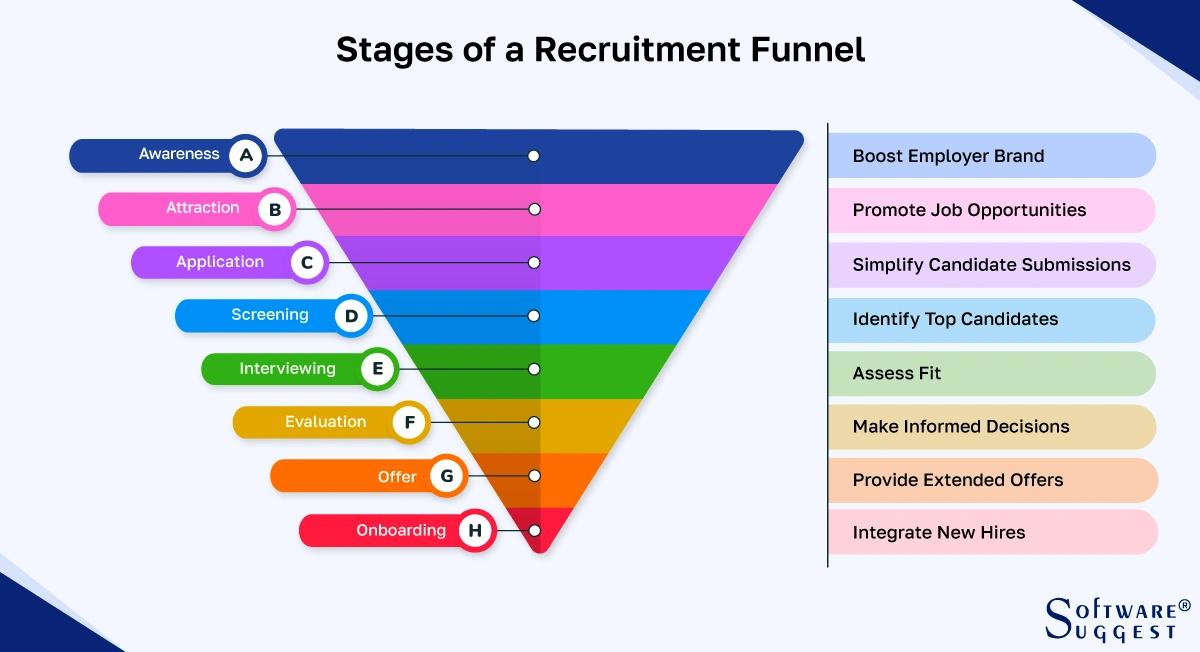
Image Source: SoftwareSuggest
When to Use Job Simulations in the Hiring Funnel
The right timing can make job simulations work better in your recruitment process. You need to pick the best moment to use these assessments to find top talent.
Using simulations in job postings
Job simulations in your job ads give you a fresh way to select candidates. This helps you get past the usual barriers that stop qualified people from applying. Research shows that job simulation assessments let companies hire top candidates solely on their skills and competencies. This works great for graduate hiring.
Adding simulation assessments to job posts means:
- Every applicant gets a fair chance to show what they can do
- Companies can spot skilled people who might not have standard credentials
- Hiring teams can build diverse talent pools based on what people can actually do
A big UK supermarket chain used this method and cut out 25% of lowest performers before looking at any CVs. But you need the right software to handle and review large numbers of applicants.
Initial screening with short tasks
Short simulations at the initial screening stage help filter candidates quickly. Simple, focused tests check core skills and show which applicants meet basic requirements. About 54% of employers, including big names like Deloitte and GSK, now use job simulation exercises to save money on hiring.
These early tests look at basic skills through quick, standard tasks. The main goal is to find qualified candidates while keeping your company's reputation strong. Technical jobs work best with early simulations that test coding or technical skills.
Mid-stage assessments for deeper evaluation
After the first resume reviews, mid-stage job simulations give you a better look at candidates. People face tougher scenarios that test how they solve problems and make decisions.
These tests show if candidates can back up what they claimed in resumes and interviews. Recruiters see exactly how people handle job-related challenges. Some companies use different types of simulations - starting with work samples to find good candidates, then using harder tests for the shortlist.
Final round simulations with team involvement
The toughest scenarios come in final-stage simulations. Your team members often help evaluate candidates at this point, which works great for role-playing and in-basket exercises.
Saving these big tests for shortlisted candidates has its perks:
- Your current employees face less disruption
- You spend less time making and grading simulations
- You can take a closer look at serious candidates
These final tests copy real challenges people might face in the job. Hiring managers get a full picture of how each person handles pressure. Manager roles benefit most from late-stage simulations that test leadership and decision-making.
Whatever stage you use job simulations, you need to tell candidates clearly about the format, time needed, and why it matters. This keeps everyone happy during your hiring process.
How to Create a Job Simulation Step-by-Step
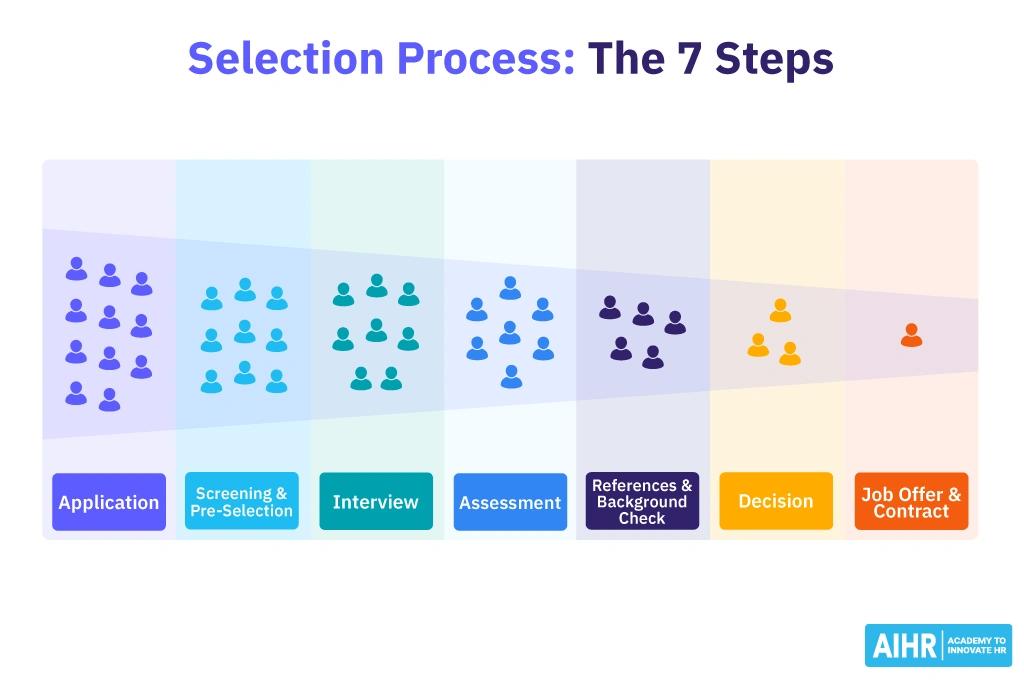
Image Source: AIHR
How to Create a Job Simulation Step-by-Step
A methodical approach to planning and execution will help you create effective job simulations. Your hiring teams can develop assessments that predict on-the-job performance accurately and give candidates a realistic preview of their potential roles.
Define role-specific skills and competencies
Start with a full picture of the position to identify both technical abilities and soft skills needed for success. Role-specific skill requirements include unique abilities, knowledge, and experiences that a person needs to excel at their job. Your requirements should fall into these categories:
- Technical expertise (hard skills like coding or design)
- Operational skills (hands-on experience with tools and systems)
- Interpersonal abilities (communication, teamwork)
- Problem-solving capabilities
Pick 10-15 key skills per position to build a balanced framework. Cooperate with team leads and top performers to find skills that distinguish successful employees from average ones. Keep your focus on competencies that line up with your organization's strategic goals.
Design realistic job scenarios
Job simulations must reflect real workplace challenges. Candidates should experience something that feels just like their actual job conditions. Here's how to develop your scenarios:
Build your simulations from real situations your team has faced. Use specific challenges that employees tackle daily instead of made-up problems.
Add time limits that create genuine workplace pressure. This shows you how candidates perform under conditions they'll face in the role.
Give clear, direct instructions for the simulation. A well-laid-out scenario with explicit directions tests the right skills rather than someone's ability to decode vague instructions.
Choose the right simulation format
Pick a format that matches the skills you need to review. Different roles need different types of simulations:
Task-based simulations work best for roles that produce measurable outputs like writing, coding, or data analysis. In-basket exercises help evaluate time management and prioritization skills for administrative positions. Role-playing exercises excel for customer service, sales, and leadership positions.
Your simulation format should match the job's nature and test all required skills. Technical positions benefit from work samples that show practical abilities rather than theoretical knowledge.
Select a simulation platform or tool
The right technology makes implementation successful. Look for a reputable job simulation platform that delivers accurate assessments and reliable performance. Here's what matters:
The platform should work smoothly on all devices and browsers. Technical problems can hurt candidate performance and leave a bad impression. Find platforms that let you customize simulations for your specific needs.
Test everything with your internal team before going live. This helps you spot and fix issues before candidates see them.
Ensure accessibility and fairness
Your job simulations must work for everyone. Create content free from bias, stereotypes, and assumptions that might put certain candidate groups at a disadvantage. Make your evaluation process standard by:
Creating clear scoring rubrics with specific, observable criteria for each skill. Use consistent rating scales (e.g., 1-5) that clearly define each level.
Getting multiple evaluators to assess simulations fairly reduces individual bias. Two people scoring each assessment improves objectivity.
Your simulations should accommodate candidates with disabilities. Qualified applicants should be able to complete assessments whatever their physical limitations.
Benefits of Job Simulations for Employers
Job simulations give measurable advantages to hiring teams that want to boost their recruitment process. These practical assessments give employers solid proof of what candidates can do, unlike traditional methods.
Improved skill validation over resumes
Resumes often tell an incomplete—sometimes misleading—story about what candidates can do. Research shows that 78% of job seekers have admitted to lying on their resumes. This eye-opening statistic shows why resume screening alone fails to spot real talent.
Job simulations create solid proof of skills by making candidates do real tasks instead of just listing what they claim they can do. Hiring teams get a clear view of:
- Technical skills and how people solve problems
- How they work in real conditions
- What they can actually do versus what they claim
Companies using job simulations say these tests have made their recruitment process better. Simulations replace gut feelings with real performance data, letting employers watch candidates in action before they decide to hire.
Reduced risk of bad hires
Bad hires cost companies a lot of money. A CareerBuilder survey found that companies lost about ₹1,257,268.72 (around $14,900) for each bad hire last year. Plus, about three in four employers (74%) say they've picked the wrong person for a job.
Job simulation assessments help hiring teams:
- Find candidates who can actually do the job
- Spot possible problems before making job offers
- Make evidence-based hiring choices based on what candidates show they can do
The better match between what candidates can do and what jobs need leads to fewer people leaving.
Faster time-to-hire and onboarding
Well-planned job simulations speed up hiring, though they might seem like extra work. These tests automatically filter out people who can't handle basic job tasks, which means fewer wasted interviews.
Virtual job simulations let recruiters focus on applicants who have already tried real job tasks and know what the role involves. This helps hiring teams:
- Test many candidates at once
- Find qualified people faster
- Choose based on proven fit rather than who's available
People who finish job simulations start their jobs better prepared, which makes onboarding smoother. This matters because 40% of new hires leave within six months.
Boosted employer branding
Job simulations make organizations look better to potential employees. Companies show their steadfast dedication to fair testing by letting candidates try the job first.
Candidates like experiencing the role before they commit. This creates good impressions even for those who don't get the job. The approach makes companies look good by showing:
- Commitment to objective assessment practices
- Respect for people's time and skills
- Clear communication about job expectations
Companies using simulation assessments often look innovative and forward-thinking to candidates. This reputation matters in competitive job markets where company image affects application decisions.
Job simulations work well. Candidates completing these assessments are 3.3 times more likely to get jobs. Those using Forage's simulation platform double their interview chances and are four times more likely to receive offers.
Benefits of Job Simulations for Candidates
Job simulations have great benefits for candidates and create a two-way recruitment process. These practical tests give job seekers valuable insights and chances throughout their job search experience.
Realistic job preview before accepting offer
Job simulations work like windows into future careers and show candidates what their daily work would really look like. A LinkedIn report shows that "not knowing what it's like to work at an organization" is the primary obstacle to positive candidate experiences.
Candidates get direct experience with:
- Actual tasks they would do each day
- Workplace dynamics and team interactions
- Potential challenges they might face
- Company culture and work environment
This preview is especially helpful in retail, call centers, financial services, and manufacturing, where job descriptions don't capture the full scope of responsibilities. Candidates can then make better decisions about whether positions line up with their career goals.
Better ways to show skills beyond resume
The usual hiring methods don't work well for talented people whose abilities aren't easy to show on paper. Job simulations create a fair playing field where candidates can show their practical skills whatever their formal qualifications.
These simulations focus on abilities rather than credentials. A global company using Forage job simulations saw great results: candidates were 30% more confident about the work and understood the company 38% better. Even better, 92% of participants said they learned practical, job-relevant skills.
Job simulations are a great way to get noticed through real performance rather than past experience. This helps people without traditional backgrounds or those switching careers who might get overlooked in normal resume screening.
Better match with job expectations
Candidates and employers understand each other better through simulation-based tests. Real tasks help job seekers know exactly what to expect in potential roles.
Before saying yes to jobs, candidates can review whether:
- They have the right skills to succeed
- The role fits their career goals
- They would enjoy their daily work
- The company culture matches their style
This clarity helps avoid the disappointment that makes people quit in their first year when they find the actual job differs from what was advertised. Candidates who feel unprepared or uninterested can step away early—which helps everyone involved.
Job simulations reshape recruitment into a shared exploration where candidates can make confident, informed career choices.
Examples of Work Simulation in Different Roles
Job simulations mirror actual workplace tasks. They help hiring teams review candidates based on real-life performance rather than theoretical knowledge. Here's how different industries use work simulations to find top talent.
Tech hiring: coding and debugging tasks
Programming positions need coding challenges that show a candidate's technical skills directly. Software development simulations ask candidates to write code that solves real-life problems similar to daily work tasks. These assessments look at:
- Algorithmic problem-solving capabilities
- Debugging skills with existing code
- Knowledge of specific programming languages
- Efficiency in optimizing solutions
Technical interviews use collaborative platforms like CoderPad. The platform creates a multi-file environment to test true problem-solving capabilities. This approach focuses on practical engineering work instead of puzzle-solving and ended up reducing time-to-hire by approximately 30%.
Customer service: handling complaint scenarios
Contact center positions need exercises that show a candidate's empathy and patience—qualities you can't see on resumes. Customer service simulations include:
- Verifying user information and eligibility
- Responding to complaint emails or chats
- Informing customers about product/service changes
- Handling escalations professionally
These scenarios reveal how candidates handle pressure, present solutions, and multitask to keep customers happy.
Sales: live pitch or negotiation simulation
Sales role-plays test a candidate's skills in building relationships and closing deals. REVMANEX creates a safe space where participants practice negotiation strategies by balancing competing objectives like profitability and market share. These simulations test:
- Building trust with financial decision-makers
- Finding client pain points through strategic questions
- Handling pricing objections and competitive comparisons
- Managing extreme sales situations with tight deadlines
Marketing: campaign planning task
Marketing simulations test strategic thinking and execution skills. Candidates might create a sample social media campaign within a set timeframe. Digital marketing simulations ask candidates to:
- Manage SEO and keyword strategies
- Create multiple versions of ads to compare engagement rates
- Track campaign performance analytics
- Allocate budget across different marketing channels
These realistic simulations give hiring teams a full picture of how candidates would perform in actual job conditions.
Common Challenges and How to Overcome Them
Hiring teams face several hurdles when they roll out job simulations. A good grasp of these challenges helps organizations make the most of their assessment investments.
Managing simulation cost and time
Job simulations need upfront investment for resources and preparation. The long-term benefits usually make up for these costs. Organizations should set aside budget for software, training, and support to make everything work smoothly.
Teams can save time by:
- Using standardized tools that let them evaluate multiple candidates at once
- Running quick simulations (15-30 minutes) early on to screen candidates
- Simplifying assessment steps to cut down interview stages
Avoiding bias in evaluation
Test bias remains the biggest problem that organizations don't deal very well with. Hiring teams can minimize its effects by:
Using several assessment methods together—not just simulations. This gives a complete picture of what candidates can do.
Creating structured, job-focused assessments that look at performance instead of background or education. Blind scoring and team reviews make the process fairer.
Ensuring candidate engagement
Candidates often shy away from simulation exercises because they take too much time. Organizations should focus on:
Writing clear instructions and building strong support systems to keep frustration away. Creating real-life scenarios that show actual job requirements while adding interactive elements makes the experience more interesting.
Conclusion
Job simulations represent a powerful transformation from traditional assessment methods to evidence-based hiring practices. This piece explores how these practical evaluations help learn about candidate capabilities. Job seekers get authentic glimpses into potential roles.
Numbers tell the story - organizations using simulation assessments reduce bad hire costs and speed up hiring. Their retention rates improve by a lot. On top of that, candidates get valuable chances to show skills beyond their resumes. This creates a fairer recruitment process for people with unconventional backgrounds or self-taught abilities.
Most companies rely on hypothetical interview questions and possibly inflated resumes. Simulation-based assessments focus on what matters most - proven competence. Both parties benefit equally. Employers feel confident about their hiring decisions. Candidates see realistic job previews before accepting offers.
Job simulations' versatility makes them valuable. Role-playing exercises work great for customer service positions. Developers tackle coding challenges. Managers face in-basket assessments. These evaluations match specific role requirements across industries.
Setting up job simulations needs original investment and planning. The long-term returns make these efforts worthwhile. Companies that solve common issues like cost management, bias prevention, and candidate engagement ended up building stronger teams.
Skills-based hiring will without doubt keep gaining momentum. Organizations now value proven abilities over credentials. Job simulations are pioneering this transformation. Hiring teams get objective data for decisions. Candidates receive fair chances to showcase their talents.
Start small with targeted simulations for the core team. You can expand your program based on results. The change might seem tough at first. Better hiring outcomes will quickly show why many forward-thinking organizations now call job simulations crucial parts of their recruitment strategy.
Ready to Upgrade Your Hiring Process?
Discover how SkillSauce helps you build faster, fairer, skill-based hiring workflows.
Request a DemoKey Takeaways
Job simulations revolutionize hiring by replacing guesswork with evidence-based assessment, helping organizations make smarter recruitment decisions while giving candidates fair opportunities to showcase their true abilities.
- Job simulations predict performance 75% better than traditional interviews by requiring candidates to demonstrate actual skills rather than just discussing hypothetical scenarios.
- Implement simulations strategically throughout your hiring funnel - use short tasks for initial screening, deeper assessments mid-stage, and comprehensive team evaluations for final rounds.
- Create realistic scenarios based on actual workplace challenges by analyzing role-specific competencies, designing authentic tasks, and ensuring accessibility across all candidate groups.
- Reduce bad hire costs averaging $14,900 per mistake while accelerating time-to-hire through objective skill validation that filters unqualified candidates early.
- Choose simulation types that match your needs - role-playing for interpersonal skills, work samples for technical roles, in-basket exercises for time management, and take-home assignments for remote positions.
When implemented thoughtfully, job simulations transform recruitment from subjective guesswork into objective skill demonstration, creating win-win outcomes where employers hire with confidence and candidates showcase their true potential beyond traditional credentials.