

Your company's recruitment metrics might not tell the whole story. The numbers paint a stark picture - 74% of companies struggle to find qualified talent. The time has come to measure what truly matters.
The talent hunt grows more challenging each day. Companies now spend an average of 41 days to fill positions, while US businesses shell out roughly $4,700 per hire. The best candidates vanish from the market within weeks. A quick and effective recruitment process has never been more crucial.
The real issue lies deeper. Many teams track recruitment KPIs that shine in presentations but fail to predict actual outcomes. Their focus drifts toward counting activities instead of measuring genuine results.
The sort of thing I love about this piece is how it cuts through the clutter to highlight 7 recruitment metrics that actually forecast hiring success. These metrics, from hire quality to staff retention rates, can turn your recruitment funnel data into a powerful predictive tool.
Quality of Hire
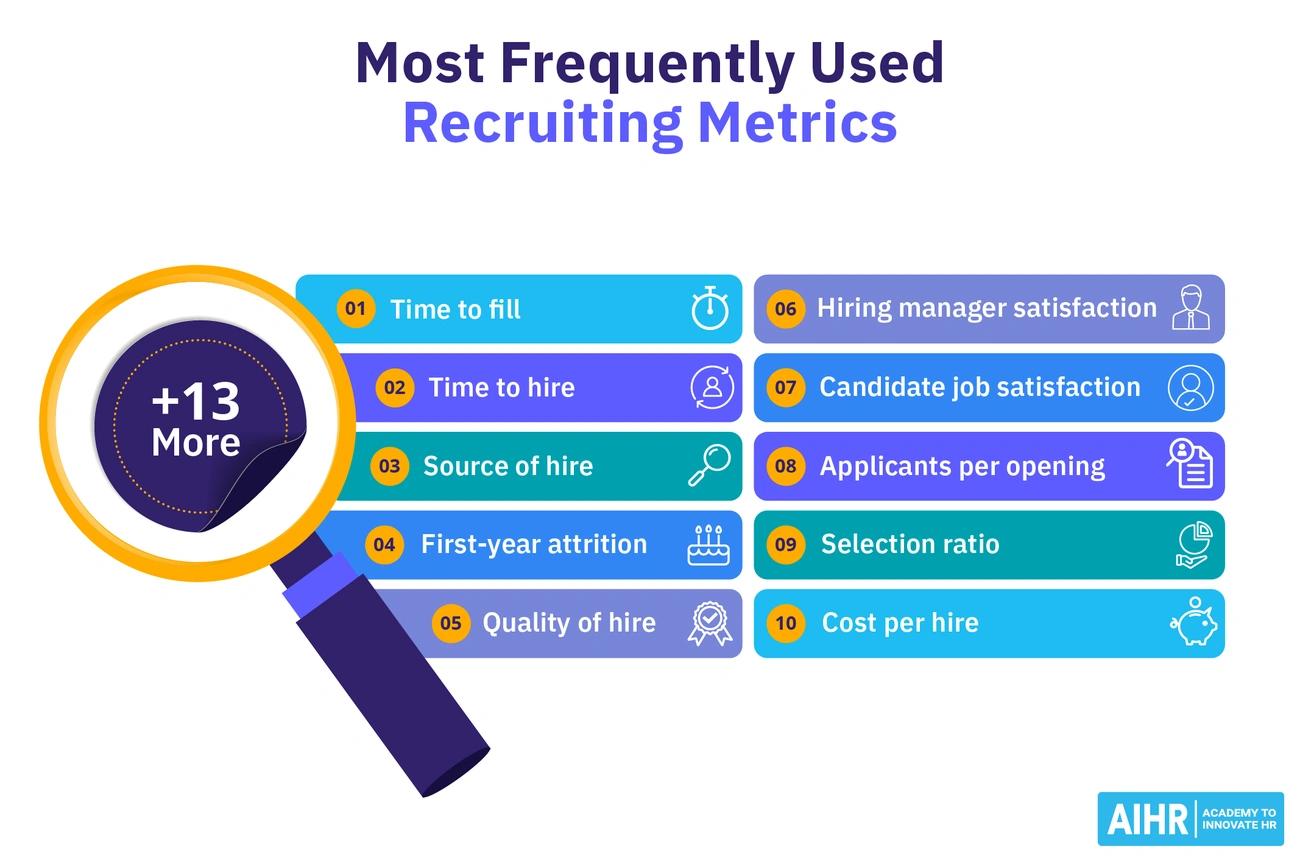
Image Source: AIHR
Talent acquisition professionals often refer to Quality of Hire (QoH) as the "holy grail" of recruitment metrics. This metric goes beyond traditional cost or speed measurements to show the real value new employees bring to your organization.
What is Quality of Hire
Quality of Hire measures the total value new employees add to an organization over time. This complete measurement looks at job performance, cultural fit, retention potential, and team dynamics. The metric shows how well a candidate fits their role, team, and the company.
Most recruitment metrics like time-to-fill or cost-per-hire focus on the hiring process. Quality of Hire looks at results. The metric answers a key question: "Did we hire the right person who will fit and contribute long-term?"
Quality of Hire stands out because it offers more than speed metrics. You get a complete picture of how new hires perform. The metric reflects both your talent quality and recruitment process effectiveness.
Why Quality of Hire predicts hiring success
Quality of Hire remains the #1 Talent Acquisition metric companies want to improve since 2023. Research shows clear reasons why QoH matters now:
- Top performers outdo average hires by 400%
- Replacing an employee costs 6-9 months of their annual salary
- Companies that boost Quality of Hire see 3x better first-year retention
More than 89% of talent acquisition professionals believe measuring quality of hire will grow in importance. Your organization's success depends on talent quality in today's competitive market.
Quality hires help organizations succeed by:
- Reaching proficiency faster with consistent performance
- Contributing substantially to organizational success
- Creating positive effects throughout the organization
- Building a stronger employer brand through better work
Quality hires reduce turnover costs and save recruitment resources. They help avoid the potential risks of poor hiring decisions. Bad hires waste money on recruiting and training while reducing productivity.
Quality of hire becomes even more vital during slow hiring periods or market uncertainty. Companies now make strategic headcount decisions as global hiring remains slow. Business success depends on quality of hire more than ever.
How to measure Quality of Hire
Only 25% of recruiters say they are highly confident in their organization's ability to measure quality of hire effectively. This shows a key challenge: QoH matters greatly but proves hard to measure.
Organizations need a solid framework to utilize Quality of Hire as a strategic metric. Start by picking metrics that matter most to your company.
The Future of Recruiting report shows how talent teams measure quality of hire:
- 66% measure job performance (meeting or exceeding goals)
- 60% track retention/turnover
- 44% use hiring manager satisfaction
- 44% assess skills match
- 37% consider peer, team, or client feedback
- 36% measure new hire satisfaction
- 35% evaluate team fit
- 32% look at culture add
- 27% factor in candidate credentials
- 26% track time to productivity
- 15% measure candidate diversity
- 9% assess promotion rates
Your Quality of Hire framework should include both pre-hire and post-hire metrics:
| Pre-Hire Metrics | Post-Hire Metrics |
|---|---|
| Assessment scores | Job performance |
| Work samples | Time to productivity |
| Structured interviews | Cultural fit |
| Candidate quality | Employee engagement |
| Time-to-fill | Hiring manager satisfaction |
Start tracking Quality of Hire by setting clear performance standards for each role. Use sales targets, project completion rates, or customer satisfaction scores. Clear standards help measure how new hires support company goals.
After choosing your key metrics, calculate Quality of Hire using simple formulas. One common method combines multiple metrics:
QoH = (Factor 1 + Factor 2 + Factor 3) / Number of factors
Here's an example using performance score (80/100), culture fit rating (100/100), and hiring manager satisfaction (90/100): QoH = (80 + 100 + 90) / 3 = 90%
You can also create a Quality of Hire scorecard to rate and compare employees. Scorecards track individual progress and show trends over time.
Tools to calculate Quality of Hire
Modern organizations use advanced tools and technology to measure Quality of Hire more effectively.
AI transforms how talent teams track the Quality of Hire metric. LinkedIn reports 61% of talent acquisition professionals expect AI to improve quality of hire measurement. AI tools analyze performance data, find patterns, and predict long-term success of new hires.
Recruiters who use LinkedIn's AI messaging make 9% better quality hires than those who use it least. This shows how technology directly affects hiring results.
Advanced analytics tools gather data from many sources to show trends and areas needing improvement. Predictive analytics helps refine hiring by using past data to forecast future performance.
Popular Quality of Hire measurement tools include:
- Employee satisfaction surveys for direct feedback
- Hiring manager surveys about new hire performance
- 360-degree feedback from all stakeholders
- Exit surveys to learn why people leave
Quality of Hire scorecards make comparing hires easier. Simple scorecards track retention and performance, while advanced ones measure employee value and engagement.
How to improve Quality of Hire
After setting up measurement systems, try these proven strategies to boost Quality of Hire:
1. Define the ideal candidate clearly
Know exactly who you need for each role before starting your search. Write detailed job descriptions that focus your search on specific skills and experience. Clear requirements help align everyone involved in hiring.
2. Strengthen your employer brand
LinkedIn data shows strong employer branding leads to better hires. Companies known for meeting candidate needs attract higher quality talent.
Organizations offering innovative projects are 11% more likely to make quality hires. Other factors that boost hire quality include:
- Chances to learn in-demand skills (+9%)
- Flexible work options (+9%)
- Working with talented teams (+9%)
- Meaningful work (+8%)
- Great pay and benefits (+8%)
3. Boost the candidate experience
Great candidate experiences attract top talent. Simple applications, clear communication, and helpful feedback strengthen your brand. HiBob reports that better candidate experiences improve hire quality by 70%.
4. Use structured interviews
Asking all candidates the same questions reduces bias and improves assessment accuracy. This method leads to more reliable hiring decisions.
5. Include diversity, equity, and inclusion practices
DEI practices throughout recruitment expand your talent pool and improve company culture. Top candidates prefer diverse, inclusive workplaces, which helps retention.
6. Use multiple recruitment channels
Find candidates through various sources like employee referrals, career fairs, and job boards. Different channels help reach more qualified candidates.
7. Use data to track progress
Monitor hiring metrics to find ways to improve your process. Data helps you make better recruitment decisions.
8. Create effective onboarding
Quality of Hire extends beyond the hiring decision. Good onboarding and growth opportunities help new hires succeed. Supporting employee development shows commitment and improves retention.
9. Train hiring managers well
Teach interview techniques, bias awareness, and decision-making. Well-trained managers choose better candidates and assess them more accurately.
These strategies can substantially improve Quality of Hire metrics and business results. Companies face skills shortages, new technology, and changing worker expectations. Hiring right becomes crucial for business success.
Employee Retention Rate
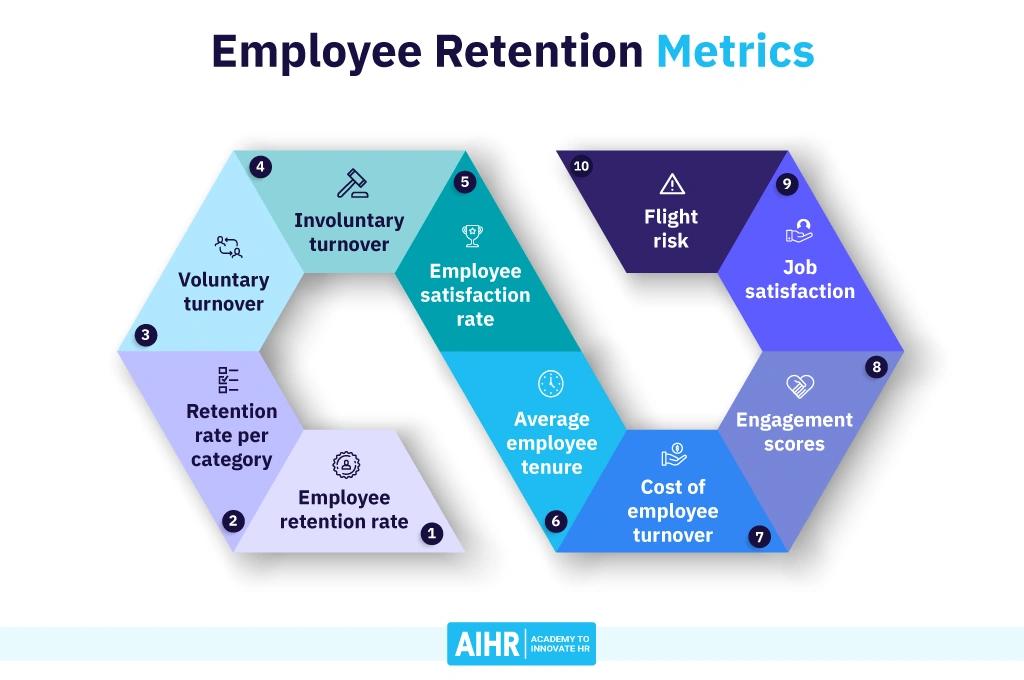
Image Source: AIHR
Employee Retention Rate
Employee retention rate ranks as a vital recruitment metric that links directly to an organization's success. This metric serves as a key indicator of workforce stability and tells us much more than basic turnover numbers. It reveals critical insights about your company's health and how well your recruitment works.
What is Employee Retention Rate
Employee retention rate shows what percentage of employees stay with your organization during a specific time. Many talent acquisition metrics look good on paper but lack real value. The retention rate proves different - it actually predicts hiring success by showing how well you keep your workforce stable and involved.
The retention rate is different from turnover rate, though they connect closely. Turnover shows how many employees leave during a specific time, while retention focuses on those who stay. These two metrics work together to paint a complete picture of workforce stability.
A simple formula helps calculate the employee retention rate:
(Remaining employees during a set timeframe / Initial number of employees during the same timeframe) × 100 = Retention rate
Here's a real-world example: Your company starts January 2025 with 500 employees. By December 31st, 2025, 482 of those original employees remain. Your annual retention rate would be: (482 ÷ 500) × 100 = 96.4%
The calculation specifically measures how many employees stay from day one of your measurement period. New hires who join after your starting date should not factor into this calculation. The accurate formula accounts for this:
[(Number of employees at end of period – number of new employees during period) / number of employees at start of period] × 100
You need these steps to calculate retention rate:
- Choose your measurement period (quarterly, annually)
- Count employees at the beginning of the period
- Count employees at the end of the period
- Count new hires during the period
- Apply the formula to find your percentage
Organizations benefit from tracking detailed retention metrics. A manager's retention rate shows the percentage of employees kept under specific leadership. Take this example: if you manage 15 people and 3 resign, your retention rate would be 80%. This number can spot leadership issues or highlight great management practices worth copying.
Department retention rates use the same math for specific organizational units. These rates often uncover valuable insights about team dynamics, leadership quality, or workload issues that company-wide numbers might miss.
Good retention rates depend heavily on your industry. A solid employee retention rate usually hits 90% or higher. Industry standards vary a lot - retail and entertainment typically see more turnover than stable industries.
The U.S. Bureau of Labor Statistics shows turnover rates from about 20% in public-sector jobs to 60% in professional services. This wide range shows why you need to compare your retention metrics against your industry's standards.
Comparison Table
| Aspect | Quality of Hire (QoH) | Employee Retention Rate |
|---|---|---|
| Definition | A total performance metric that evaluates the long-term value new employees bring to an organization | Percentage of employees who remain at the organization over a specific period |
| Calculation Method | QoH = (Factor 1 + Factor 2 + Factor 3) / Number of factors (e.g., performance score, culture fit, manager satisfaction) | (Number of employees at end − new employees during period) / employees at start × 100 |
| Key Metrics Used |
|
|
| Industry Standard | Not specifically mentioned | 90% or higher is good |
| Business Effect |
|
|
| Measurement Tools |
|
|
| Improvement Strategies |
|
|
Key Takeaways
These seven recruitment metrics move beyond vanity numbers to provide actionable insights that genuinely predict hiring success and drive business outcomes.
• Quality of Hire is the ultimate predictor: Successful hires outperform average ones by 400%, making QoH the #1 talent acquisition metric prioritized since 2023.
• Retention rate reveals recruitment effectiveness: A 90%+ retention rate indicates quality hiring decisions, while poor retention signals flawed selection processes costing 50-200% of annual salary.
• AI transforms measurement accuracy: 61% of talent professionals believe AI will improve Quality of Hire measurement, with AI-assisted recruiting showing 9% better hiring outcomes.
• Focus on outcomes, not activities: Traditional metrics like time-to-fill miss the mark—measure job performance, cultural fit, and long-term value instead of process speed.
• Employer branding directly impacts quality: Companies known for innovation, skill development, and flexibility are 8-11% more likely to make quality hires than those without strong value propositions.
The shift from measuring recruiting activity to predicting business impact represents the evolution of talent acquisition from administrative function to strategic business partner. Organizations that master these predictive metrics will build sustainable competitive advantages through superior talent decisions.