

Introduction: The Silent Problem Draining Your Hiring Success
Your hiring pipeline might be bleeding top talent—and you may not even realize it.
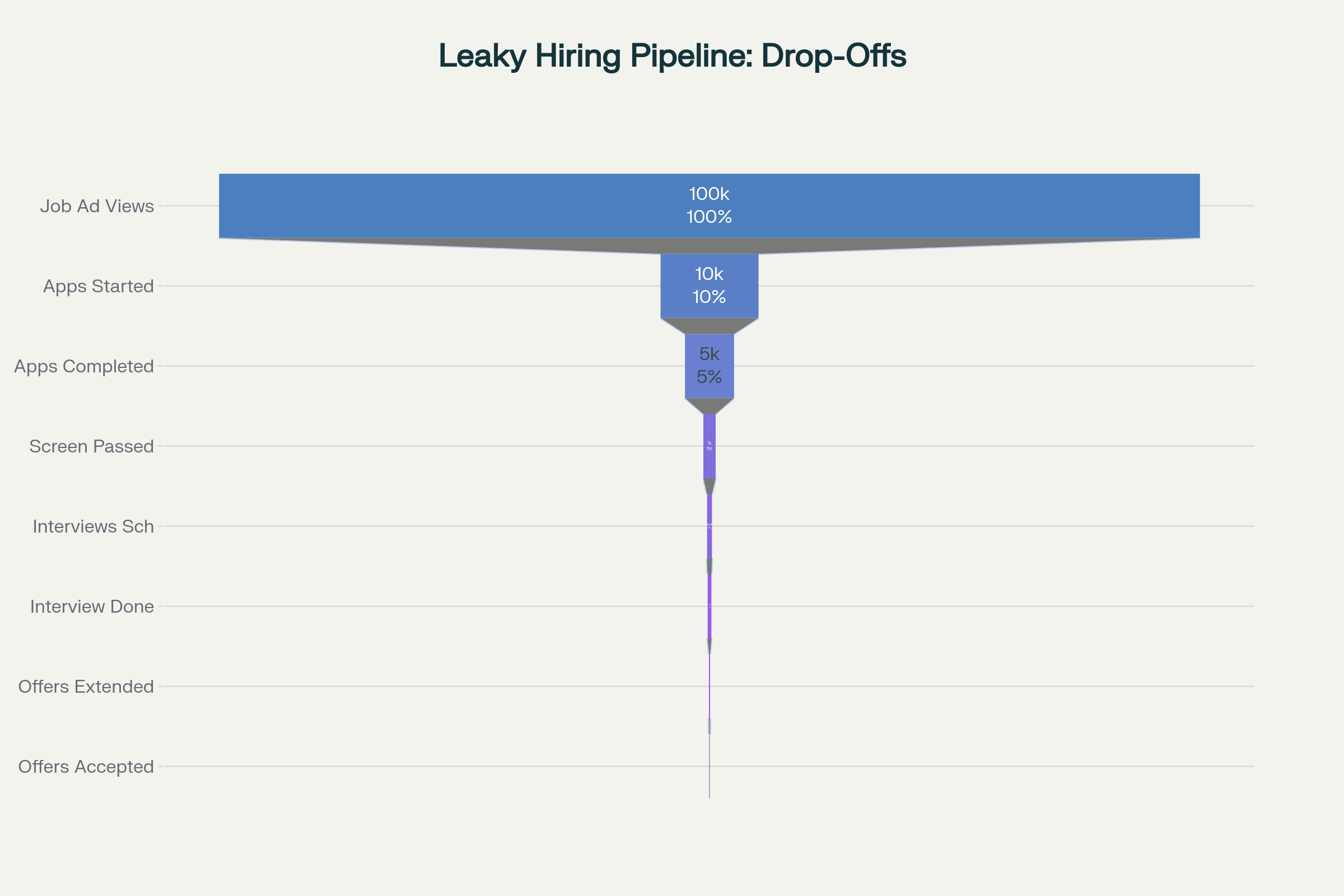
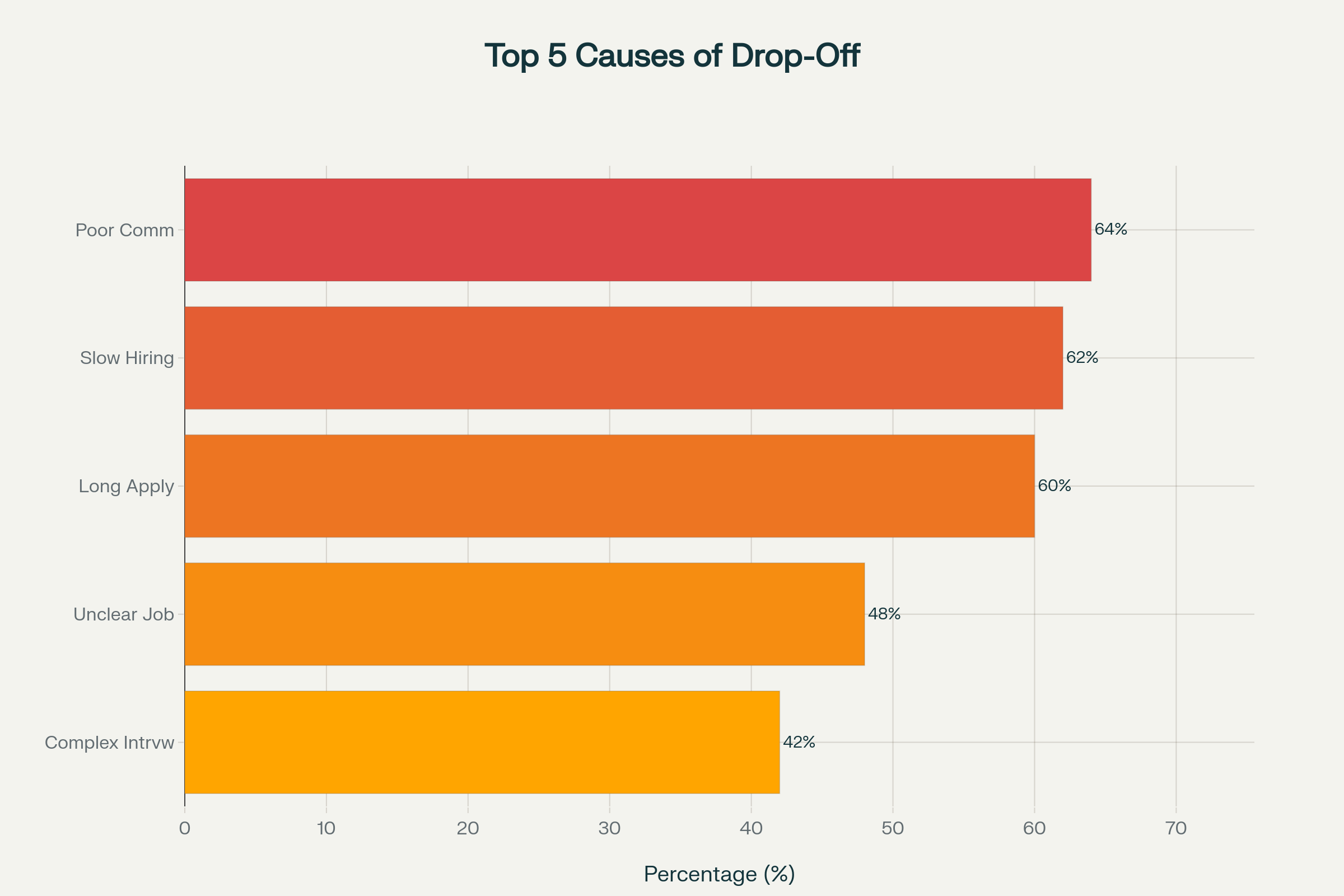
It’s not just a few candidates dropping off. Research shows that over 99% of candidates entering the recruitment funnel never make it to hire. Even worse, 64% withdraw due to poor communication, and 34% assume they’ve been ghosted after just one week of silence.
The result? Your hiring pipeline isn’t just leaking—it’s hemorrhaging qualified talent, costing you time, money, and your competitive edge.
Understanding the Anatomy of a Leaky Hiring Pipeline
Before you can fix leaks, you need to know where they form. Think of your recruitment process as a network of connected pipes—each stage is an opportunity for talent to escape if left unchecked.
Common Leak Points in the Hiring Process
1. Application Stage — Where Most Candidates Drop Off Up to 90% of candidates abandon applications because of lengthy, complicated forms. When job applications ask for 15–20 unnecessary fields or duplicate data from resumes, applicants simply give up.
Quick Fix: Keep applications under five minutes and enable autofill or resume upload to reduce friction.
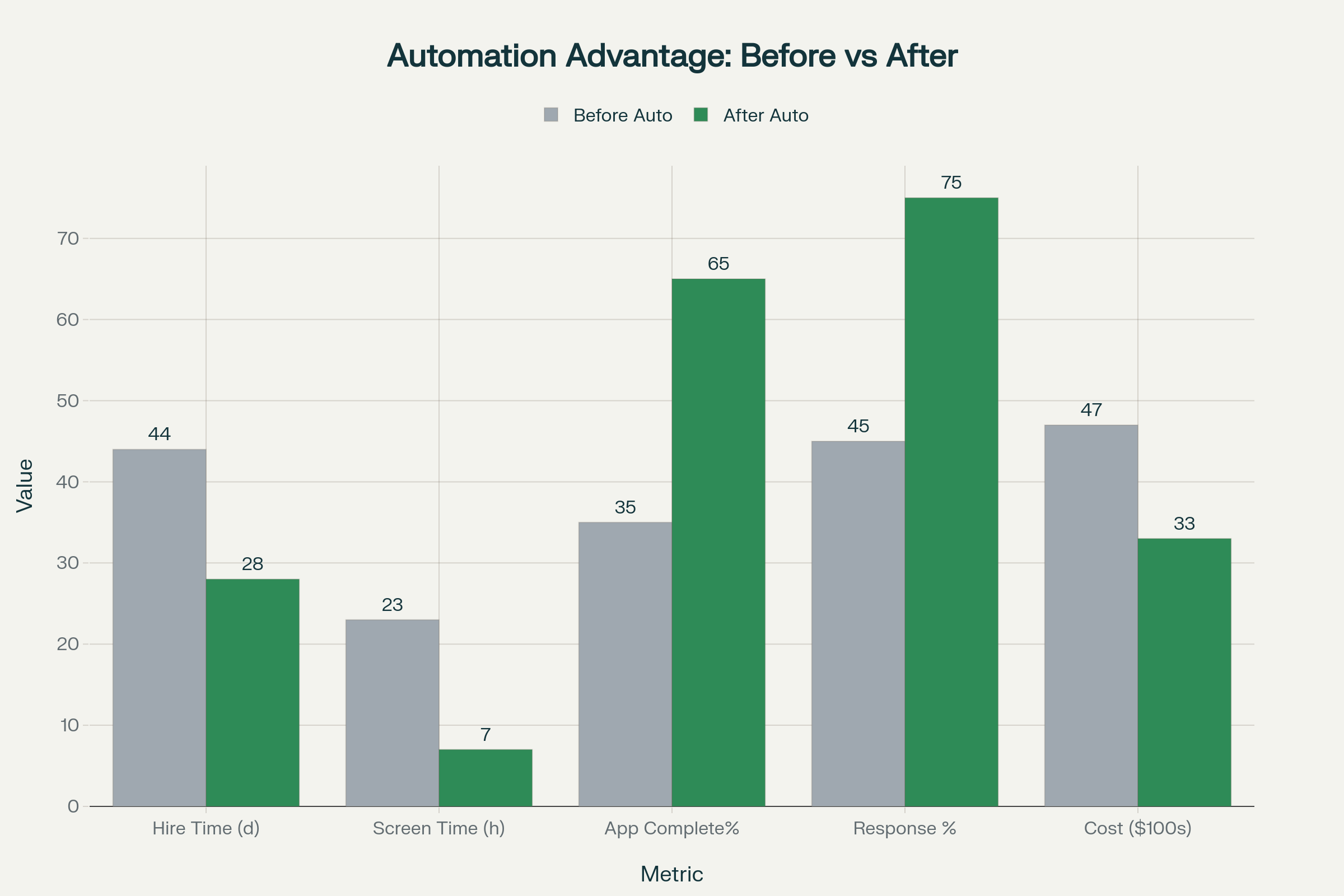
2. Screening Stage — The Bottleneck That Costs You Speed Recruiters spend an average of 23 hours screening resumes for a single hire, while 75–88% of applicants are unfit. During this delay, top candidates often accept other offers.
Quick Fix: Use AI-driven resume screening tools like SkillSauce’s TESSA AI to pre-screen candidates and prioritize top matches.
3. Interview Scheduling — When Coordination Kills Momentum Manual scheduling, time zone conflicts, and delayed feedback create frustrating gaps. Each delay increases drop-off rates and damages your candidate experience.
Quick Fix: Automate scheduling and feedback workflows through integrated ATS systems.
4. Offer Stage — Losing Top Talent at the Finish Line Even promising candidates vanish when offers are delayed. 62% lose interest if they don’t hear back within two weeks.
Quick Fix: Set clear SLAs (Service Level Agreements) for approvals and communicate timelines transparently.
The Hidden Costs of a Leaky Hiring Pipeline
Leaking talent doesn’t just affect your numbers—it drains your budget, productivity, and brand reputation.
1. Financial Impact
According to SHRM, the average cost-per-hire is $4,700, and time-to-fill is 44 days. When rushed hiring leads to mis-hires, organizations lose 30% of the employee’s first-year salary—roughly $5,000–$20,000 per wrong hire.
75% of employers admit to making at least one bad hire. Every leak increases that risk.
2. Productivity Drain
Pipeline gaps delay projects and overload existing employees. Research shows 36% of bad hires decrease team productivity, while 30% compromise work quality. Unfilled roles also lead to burnout in remaining teams.
3. Competitive Disadvantage
In 2024, 77% of organizations struggled to recruit full-time roles. Meanwhile, top candidates stay on the market for just 10 days before accepting other offers.
A slow hiring pipeline means your competitors hire the best before you even reach them.
Root Causes: Why Your Hiring Pipeline Springs Leaks
1. Recruitment Process Bottlenecks
- Manual Screening Overload: Gut-based screening is subjective and slow. Without data-driven filters, recruiters spend hours on low-fit candidates.
- Decentralized Hiring: When hiring varies by location or department, quality and process consistency collapse.
- Outdated Technology: Legacy ATS systems or Excel tracking cannot scale, resulting in delays and poor candidate management.
2. Poor Candidate Experience
The candidate experience crisis is real.
- 72% of candidates share hiring experiences online.
- 55% avoid companies with bad reviews.
- 38% are less likely to buy from a company after a poor hiring experience.
Negative experiences stem from unclear job descriptions, lack of communication, and complex applications. When candidates feel ignored, they don’t just withdraw—they become brand detractors.
3. Data Blindspots
Without analytics, it’s impossible to see where drop-offs happen. Many teams rely on intuition rather than metrics—missing vital insights like:
- Which stages have the highest drop-offs
- Which sourcing channels yield best-fit candidates
- Why top candidates disengage
Fix: Adopt data-driven hiring dashboards that visualize your recruitment funnel.
Sealing the Leaks: How to Strengthen Your Hiring Pipeline
Now that you know where leaks occur, here’s how to plug them—and transform your hiring pipeline into a conversion engine for top talent.
1. Streamline the Application Process
Simplify everything.
- Keep forms short (under 10 fields).
- Enable mobile-first design and resume parsing.
- Use autofill features to save time.
Result: Companies that simplified forms saw 30% higher completion rates.
2. Automate and Use AI Where It Counts
Automation is no longer optional—it’s essential.
- AI-powered screening cuts resume review time by 70%.
- Automated scheduling saves 50% of recruiter time.
- Chatbots boost engagement by 30%.
Tools like TESSA AI from SkillSauce use Retrieval-Augmented Generation (RAG) to analyze candidate skills and fit—fast, fair, and at scale.
3. Implement Smart Communication Protocols
Silence kills interest. Set structured, transparent communication workflows.
- Send automated stage updates via email/SMS.
- Provide next-step timelines.
- Use chatbots for quick candidate FAQs.
Candidates who received mobile notifications rated their experience 50% higher.
4. Measure, Track, and Optimize Constantly
You can’t fix what you don’t measure. Track metrics like:
- Application-to-screening conversion rate
- Interview-to-offer ratio
- Offer acceptance rate
- Candidate drop-off by stage
Use advanced analytics via your ATS to identify and prioritize high-leak areas.
5. Use Skills-Based Assessments
Move beyond resumes. Skills-first hiring helps reduce bias, improve diversity, and cut mis-hires.
Tools like SkillSauce’s AI Assessments evaluate candidates through skill tests across 500+ skill areas, supported by ethical AI proctoring (face detection, eye-tracking, and behavior monitoring).
6. Accelerate Decision-Making
Time kills offers. Empower managers to decide faster with clear scorecards and structured feedback.
Organizations that issue offers within 48 hours of interviews see far higher acceptance rates.
7. Build a Talent Community
Don’t start from scratch every time. Maintain warm connections with silver-medalist candidates and passive talent. Strong talent communities cut average time-to-fill from 170 days to 60 days.
Your employer brand plays a big role here. Highlight company culture, career paths, and employee stories—94% of candidates reapply after a positive experience.
Putting It All Together: Your 90-Day Action Plan
Weeks 1–2: Audit Your Funnel
- Map your entire hiring pipeline
- Identify drop-offs via ATS data
- Survey recent candidates for feedback
Weeks 3–4: Quick Fixes
- Simplify forms and make them mobile-friendly
- Add automated update emails and chatbots
- Create 24-hour communication SLAs
Month 2–3: Technology Implementation
- Upgrade or integrate an AI-powered ATS
- Use tools like SkillSauce for automation and analytics
- Add skills-based testing and AI scheduling
Month 4+: Continuous Optimization
- Review metrics monthly
- A/B test job ads and forms
- Collect candidate feedback regularly
- Train hiring teams in data-driven decisions
Conclusion: Turn Your Hiring Pipeline Into a Talent Magnet
Your hiring pipeline doesn’t have to leak top talent. By understanding weak points, leveraging automation, improving communication, and using data-backed strategies, you can seal those leaks for good.
The companies winning today aren’t just fast—they’re smart. They build strategic, skill-based, and candidate-first hiring pipelines that convert the best talent before competitors even notice them.
Start Building Your Talent Strategy Today
Request a demo of SkillSauce’s AI-driven recruitment platform and see how our tools help you seal hiring pipeline leaks, accelerate decision-making, and attract the best talent effortlessly.
Request a Demo