


Introduction
The U.S. companies spend approximately $4,700 on average to recruit a new employee. This figure represents just a fraction of actual hiring expenses. Companies pay up to $28,000 or more for executive and specialized positions due to complex requirements and fierce market competition.
A deeper look at cost per hire metrics reveals interesting patterns. Analytical insights help improve hiring quality according to 70% of hiring professionals. Industry costs vary substantially with $1,633 as the median amount. Many organizations miss crucial elements while calculating their cost per hire. Interviewer time adds $1,200–$3,200 per hire to the total expense.
This piece uncovers the recruitment expenses that top companies rarely discuss. You'll learn about accurate cost per hire calculations and understand why bringing a new employee aboard costs 3 to 4 times their salary. Smart hiring decisions start with a clear understanding of these numbers. Budget planning and recruitment optimization become easier with this knowledge.
What is Cost Per Hire and Why It Matters
Cost per hire (CPH) is a key recruitment metric that shows how much money organizations spend to bring new employees on board. This metric gives an explanation that can change your hiring approach and how you allocate your budget.
Cost per hire definition explained
The cost per hire metric covers all expenses linked to recruitment, such as advertising, equipment, travel, administrative costs, and benefits. The American National Standards Institute and Society of Human Resource Management created the official formula in 2012 to standardize this calculation:
Cost Per Hire = (Internal recruiting costs + External recruiting costs) / Total number of hires in a given time frame
Internal costs typically include:
- Recruiter salaries and time
- HR technology systems
- Employer branding initiatives
- Administrative expenses
External costs generally cover:
- Job board subscriptions and posting fees
- Recruitment agency commissions (15–30% of salary)
- Employee referral program bonuses
- Background checks and screening costs
The average cost per hire reached ₹3,29,310 (INR 373383.49) in 2021. Recruitment costs make up about 15% of all Human Resources expenses.
Why companies track this metric
Companies that track cost per hire gain several advantages in optimizing their recruitment. The metric creates financial transparency and helps teams plan budgets and allocate resources for future hiring. This clear view prevents overspending while ensuring proper investment in talent acquisition.
Cost per hire data leads to better hiring decisions. Research shows that 70% of hiring professionals find informed insights improve their hiring quality. Companies learn about which recruitment channels bring the best candidates at optimal costs.
CPH tracking reveals hiring process bottlenecks. High CPH numbers often point to problems that need fixing, while lower figures suggest effective hiring practices. This analysis helps organizations streamline their processes and cut unnecessary costs.
How it affects recruitment strategy
Your cost per hire shapes how you develop and implement recruitment strategies. The metric helps organizations determine if they're spending enough on talent acquisition. A low CPH might seem good but could mean you're not investing enough in essential hiring resources.
To cite an instance, Nokia cut their cost per hire by 74% compared to their average by choosing Indeed as their main job search engine. Ericsson took a social-first approach with employee advocacy that reduced their CPH by 70% and boosted retention rates.
Cost per hire data makes workforce planning easier. HR leaders use current hiring costs to plan for future recruitment, especially during seasonal hiring or expansion. Organizations can also make smarter choices between using internal teams or external agencies—a decision that affects both costs and quality of new hires.
Cost per hire serves as more than just a financial metric. It's a strategic tool that helps organizations balance their investment with results and create more efficient hiring processes.
The Standard Cost Per Hire Formula (With Example)
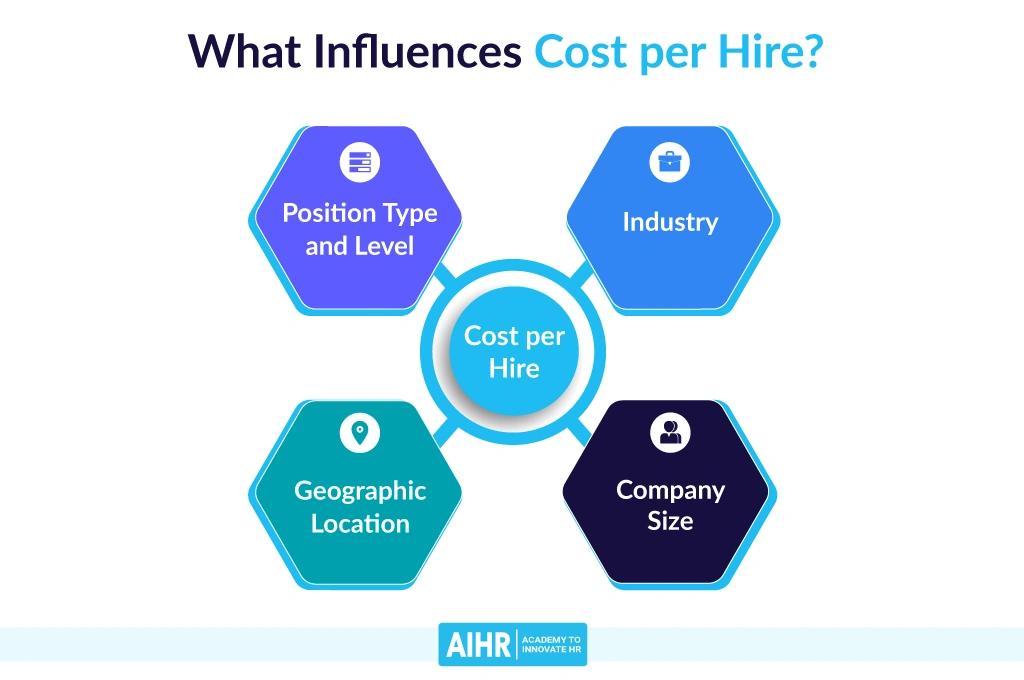
Image Source: AIHR
The cost per hire formula might look scary at first, but it's actually quite simple once you break it down. Any HR professional can become skilled at this calculation. Learning about these components will help you track how well your recruitment works and make analytical decisions.
Breakdown of internal vs external costs
You need to separate two main expense categories to calculate an accurate cost per hire:
Internal costs are expenses that happen inside your organization during recruitment. These typically include:
- Recruiter salaries and benefits (calculated as the portion of time spent on hiring)
- Hiring manager time spent on interviews and selection
- Compliance and administrative costs
- Employee referral program bonuses
- Internal systems and training for recruitment staff
External costs are all expenses paid to outside vendors or services, including:
- Job board subscriptions and posting fees
- Recruitment agency commissions (typically 15-30% of the new hire's salary)
- Background checks and pre-employment screenings
- Candidate assessment tools and aptitude tests
- Relocation expenses for new hires
- Job fair participation fees
How to calculate cost per hire step-by-step
A systematic approach will give a consistent and reliable calculation:
- Define your measurement period (monthly, quarterly, or annually)
- Gather all internal recruiting costs and sum them
- Collect and total all external recruiting costs
- Determine the total number of hires during that period
- Apply the formula: Cost Per Hire = (Internal Costs + External Costs) ÷ Number of Hires
Note that you must be consistent with what you include and exclude from calculations to make meaningful comparisons over time.
Cost per hire example using real numbers
Here's a practical example that shows this formula in action:
A company's quarterly recruitment expenses break down like this:
- Internal costs: INR 4,219,022.54 (recruiter salaries, hiring team time, etc.)
- External costs: INR 2,531,413.52 (job boards, agency fees, etc.)
- Total hires in the quarter: 20 employees
Applying our formula: Cost Per Hire = (INR 4,219,022.54 + INR 2,531,413.52) ÷ 20 Cost Per Hire = INR 6,750,436.06 ÷ 20 Cost Per Hire = INR 337,521.80 per new hire
This number gives you a baseline to compare future results and find ways to optimize your recruitment spending.
Free cost per hire calculator: how to use it
Manual calculations of cost per hire can take too much time and lead to mistakes, especially when you track many expenses in multiple departments.
Want to see your actual Cost Per Hire? Use the free SkillSauce Cost Per Hire Calculator to break down hiring costs and get accurate results in seconds.
A good cost per hire calculator should let you:
- Input both internal and external cost categories
- Define your measurement period
- Compare results against industry measures
- Generate reports for stakeholder presentations
- Identify your highest recruitment cost drivers
Regular tracking of your cost per hire with the right tools will help you streamline recruitment, justify budgets, and show the ROI of hiring initiatives. Using consistent calculation methods also lets you make meaningful comparisons with industry standards and your past data.
Want to skip spreadsheets and manual calculations? Use the free SkillSauce Cost Per Hire Calculator to instantly calculate internal and external hiring costs.
What Most Companies Miss: Hidden and Indirect Costs
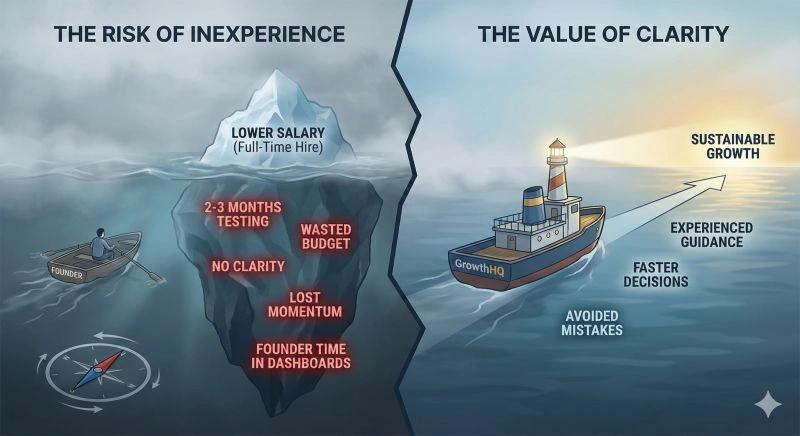
Image Source: LinkedIn
Organizations underestimate their true cost per hire by a lot. They focus only on direct expenses. Hidden and indirect costs make up 60% of total recruitment expenses, but these rarely show up in standard calculations.
Interview time and productivity loss
Your team's time spent during hiring creates huge hidden costs. A panel of three interviewers with an average salary of ₹10,969,460 costs companies ₹18,255.71 per interview in payroll alone. These costs go up when:
- Teams need more than four rounds of interviews
- Too many people attend each interview
- Interviews run longer than needed
This split focus doesn't just hurt your budget—it affects your core business. Team members who review resumes, conduct interviews, and negotiate salaries can't focus on their main work. HR professionals spend countless hours managing calendars, and 35% of recruiters say scheduling interviews takes up most of their time.
Vacancy costs and ramp-up time
Empty positions drain finances beyond the saved salary. Smart leaders track the damage from "excessive vacant position days." Revenue-generating roles can lose up to ₹421,902.25 each day. An average 42-day vacancy costs about ₹348,406.88.
Empty positions create a ripple effect:
- Staff burnout leads to 63% more sick days
- Team morale drops and turnover becomes 2.6x more likely
- Innovation drops by up to 30% over time
- Sales positions lose 5%+ revenue when unfilled
The costs keep adding up even after hiring someone new. New employees need 3-8 months to reach their peak productivity. Mid-level managers take six months to start paying for themselves. Companies lose money during this time as new hires cost more than they produce.
Soft costs that inflate your CPH
The Department of Labor shows a bad hire costs at least 30% of their first-year earnings. This number doesn't tell the whole story. The real cost per hire can reach 3-4 times the role's salary when you add lost productivity, manager time, and missed opportunities.
These soft costs come from productivity losses due to:
- New employees taking 3-12 months to get up to speed
- Mistakes and quality issues from poor fits
- Managers spending time fixing errors
- Teams becoming less productive due to disruption
Gallup's research shows that disengaged employees cost U.S. companies between ₹37,971.20-550 billion each year in lost productivity. A complete cost per hire must include both direct and indirect expenses—something most calculations miss.
Benchmarking: What’s a Good Cost Per Hire?
There is no universal “ideal” cost per hire, because hiring costs vary based on industry, role complexity, talent availability, and company scale. Benchmarking your cost per hire helps you understand whether your recruitment spending is competitive, efficient, and aligned with business outcomes. Instead of chasing the lowest number, high-performing teams focus on whether their cost per hire delivers consistent, high-quality hires.
Average cost per hire by industry
Cost per hire varies significantly across industries due to differences in skill scarcity, hiring volume, and competition for talent. High-growth and specialized sectors typically experience higher recruitment costs.
For example, technology, healthcare, and finance roles often have higher-than-average cost per hire due to longer hiring cycles, specialized assessments, and competitive compensation expectations. In contrast, retail, hospitality, and entry-level operations roles generally have lower cost per hire because of higher applicant volume and faster hiring timelines.
When benchmarking by industry, the goal is to compare against relevant peers rather than cross-industry averages that may distort performance insights.
Cost per hire by role and seniority
Role seniority has a direct impact on cost per hire. Entry-level positions usually have the lowest hiring costs due to simpler screening and shorter time-to-hire. Mid-level professional roles typically fall near the industry average.
Senior leadership, executive, and highly specialized roles can cost two to five times more than average. These roles often involve multiple interview rounds, external search firms, relocation expenses, and longer vacancy periods. A higher cost per hire at this level is expected, provided the hire delivers long-term value.
Evaluating cost per hire by role type helps organizations decide where higher investment is justified and where efficiency gains are possible.
How company size affects CPH
Company size plays a major role in shaping cost per hire. Smaller companies often have higher per-hire costs because fixed recruitment expenses are spread across fewer hires. Limited brand recognition and smaller recruiting teams can also increase reliance on paid channels or agencies.
Mid-sized companies usually achieve better balance, with dedicated hiring teams and repeatable processes that improve efficiency. Large enterprises benefit from economies of scale, strong employer branding, and internal mobility, often resulting in lower average cost per hire across high volumes.
Benchmarking cost per hire should always factor in organizational scale to avoid misleading comparisons.
How to Use CPH Data to Improve Hiring Decisions
Cost per hire is most powerful when used as a decision-making metric rather than a standalone number. When combined with other hiring metrics, CPH provides actionable insight into what is working—and what needs improvement—across the recruitment process.
Linking CPH with quality of hire
Cost per hire becomes far more meaningful when analyzed alongside quality of hire. A low cost per hire paired with poor performance or early attrition indicates underinvestment or weak screening. Conversely, a higher cost per hire that consistently produces strong performers may represent a smart long-term investment.
By linking CPH with performance, retention, and time-to-productivity data, organizations can evaluate true hiring ROI rather than focusing solely on cost reduction.
Tracking CPH alongside attrition
Tracking cost per hire without considering attrition provides an incomplete picture. High turnover amplifies hiring costs, as roles must be filled repeatedly and productivity losses compound over time.
When cost per hire and attrition are reviewed together, patterns emerge. For example, roles with low upfront hiring costs but high early turnover often end up costing more overall. This insight helps teams adjust sourcing strategies, role expectations, and screening criteria to reduce downstream losses.
Using CPH to optimize recruitment channels
Cost per hire data helps identify which recruitment channels deliver the best value. By comparing CPH across job boards, referrals, agencies, and internal sourcing, teams can reallocate budgets toward channels that consistently produce strong hires at sustainable costs.
Over time, this channel-level analysis enables organizations to reduce dependency on expensive sources, strengthen high-performing pipelines, and improve hiring predictability without sacrificing quality.
Conclusion
Cost per hire is more than a budgeting metric—it is a strategic signal that reflects the effectiveness of your hiring process. When benchmarked correctly and analyzed alongside quality, retention, and performance, it helps organizations make smarter, more confident hiring decisions.
Rather than aiming to minimize cost per hire at all costs, successful teams focus on cost efficiency, ensuring every hiring investment contributes to long-term business impact. With consistent measurement and the right tools, cost per hire becomes a lever for sustainable hiring success, not just a line item on a report.