


Introduction
The average hiring process takes 44 days from start to finish. Many HR professionals mix up time to fill vs time to hire, but these metrics measure different parts of your recruitment process.
Time to fill includes your complete recruiting cycle - from the day you start hiring until a candidate accepts your offer. Time to hire measures how long your chosen candidate spends in the interview process. The Society of Human Resource Management (SHRM) reports an average time to fill of 42 days. Engineering industries need even longer, often going beyond 60 days.
These differences matter more than just definitions. They help you spot what works and what needs fixing in your recruitment process. A quick time-to-hire shows you have an optimized process that keeps candidates interested. This becomes crucial in competitive job markets. Tracking both metrics helps you find bottlenecks and create better ways to attract top talent.
This piece breaks down the key differences between time to fill and time to hire. You'll learn the calculation formulas and get practical tips to improve your recruitment timeline.
Time to Fill vs Time to Hire Definition
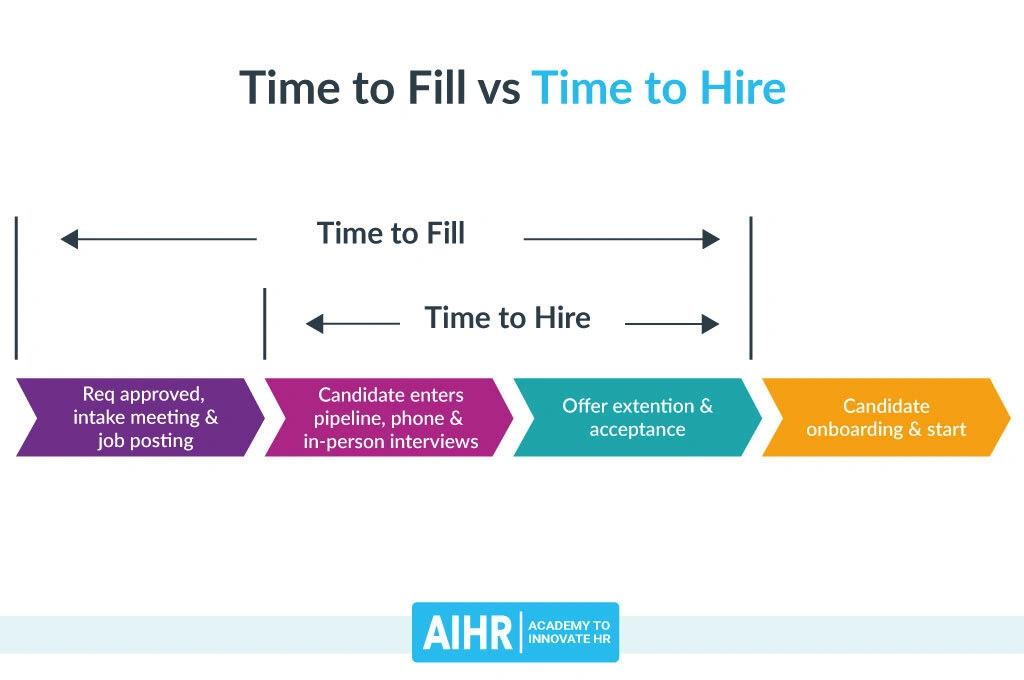
Image Source: AIHR
The difference between these two recruitment metrics helps you optimize your hiring process.
What is time to fill in recruitment?
Time to fill measures your complete recruitment cycle from start to finish. The clock starts when a job requisition is approved or submitted and stops when a candidate accepts the job offer. This metric tracks the total days you need to finish all recruiting tasks - from writing job descriptions to making offers. Some companies start counting from the job's online posting date. Others begin when the hiring manager submits a requisition or gets approval. You need to stay consistent across positions to keep your data accurate.
What does time to hire mean?
Time to hire works differently. It measures the time between a candidate applying for a position and that same candidate accepting a job offer. This metric focuses on how your chosen candidate moves through your recruitment funnel. To name just one example, see a candidate who applied on January 21st and accepted an offer on January 31st - the time to hire would be 10 days. The number is usually lower than time to fill since it starts only when your future hire enters your pipeline.
Why the difference matters in hiring strategy
These metrics look similar but serve different purposes. Time to fill shows how efficient your entire recruitment process is. It helps you plan your business and predict how long positions stay empty. It also warns you when hiring takes too long, which can slow down projects and reduce efficiency.
Time to hire shows how quickly you spot and advance the right candidate. A shorter time to hire proves you have an optimized process that keeps candidates interested. This matters by a lot because top talent usually stays available for only 10 days before they take other offers. When you track both metrics separately, you learn about different parts of your recruitment process. This helps you make targeted improvements that end up getting better talent faster.
Time to Fill vs Time to Hire Formula and Calculation
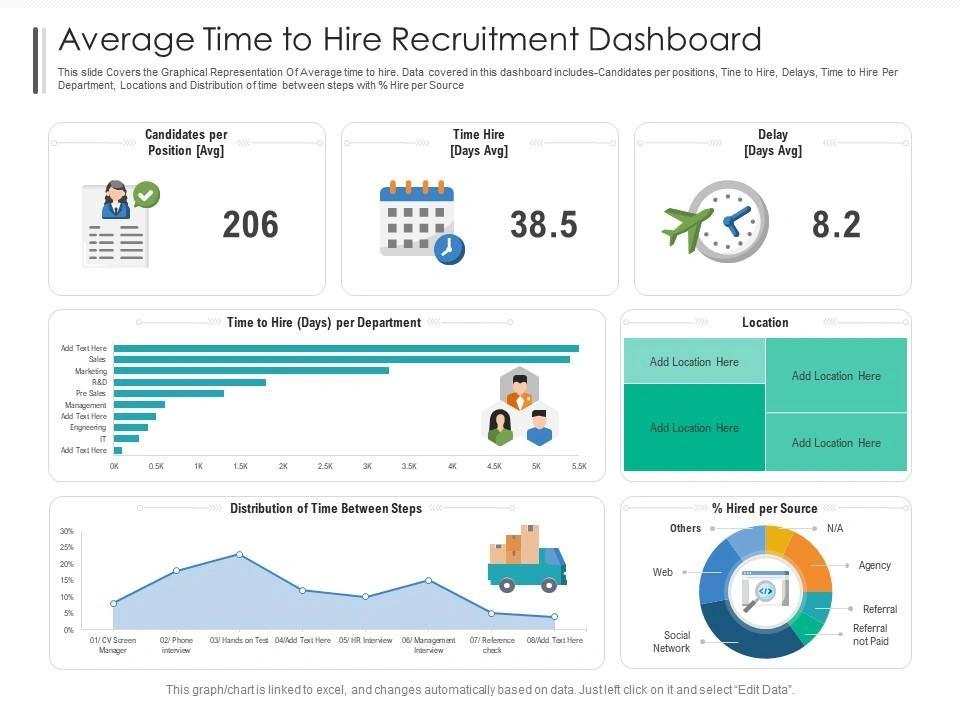
Image Source: SlideTeam
These metrics help you identify specific areas in your recruitment process that need improvement.
Know the Real Cost Behind Your Hiring Speed
Longer time to fill quietly increases recruiter hours, tool costs, and productivity loss. Calculate your actual cost per hire based on your process.
Calculate Cost Per HireTime to fill formula: From job request to offer acceptance
The time to fill formula measures the days between job requisition approval and offer acceptance. Organizations use this simple calculation:
Time to fill = Date candidate accepts offer - Date job requisition approved
Companies often pick different starting points - the job's submission for approval, its approval date, or its first online posting. You retain control by staying consistent with your chosen starting point across positions.
The time to hire formula tracks the candidate's trip through your system:
Time to hire = Date candidate accepts offer - Date candidate entered your pipeline
This shows how quickly you found and moved your ideal candidate through your recruitment process.
Examples to illustrate both calculations
Here's a real-world example: A job requisition gets approval on April 1st. The selected candidate submits their application on May 1st and accepts the offer on May 21st.
- Time to fill: May 21st - April 1st = 50 days
- Time to hire: May 21st - May 1st = 21 days
The average calculation is straightforward. Add individual metrics for multiple positions and divide by the number of new hires. Let's say five positions had time-to-hire values of 15, 12, 16, 8, and 17 days. Your average would be 13.6 days.
Key Differences and Similarities
These recruitment metrics serve distinct purposes in your talent acquisition strategy, despite their similar names.
Start and end points: Where each metric begins
The main difference shows up in the starting point of measurement. Time to fill starts earlier, usually when a job requisition is approved or the position appears online. Time to hire starts only when your future hire enters your pipeline—typically when they submit their application. Both metrics end on the same day: when your chosen candidate accepts the job offer.
Process scope: Full cycle vs candidate journey
Time to fill covers the entire recruitment lifecycle—from job approval through sourcing and selection. This broader metric shows how efficient your overall recruitment process is. Time to hire focuses only on one candidate's path through your process. It measures how quickly you spotted and moved forward with your ideal hire.
Impact on candidate experience and internal planning
Long time to hire suggests problems with candidate engagement—like complex application steps or delayed responses. Time to fill data helps predict how long positions will remain vacant. Teams can then redistribute workloads better during transitions.
Using both metrics together gives you the most detailed view of your recruitment strategy's strengths and areas that need work.
Benchmarks and Optimization Tips
Industry standards give you vital context to evaluate your recruitment metrics. Understanding typical timelines and practical strategies will help you hire more effectively.
Average time to fill by industry
Different sectors show varied hiring timelines. Construction guides with the fastest hiring at just 12.7 days. Healthcare positions need about 49 days to fill. Manufacturing roles take 25-44 days based on seniority. Financial services positions average 44.7 days. Investment banking roles range from 21-60 days. Government positions take 40.9 days. Public sector roles can stretch to 119 days. Tech companies move faster at around 20 days. Engineering positions often take more than 62 days.
Average time to hire benchmarks
Most industries take 41-44 days on average to hire. But this number keeps growing. LinkedIn research shows it now takes about 66 days to make a hire, up from 52 days in 2021. The best candidates stay available for only 10 days before they accept other offers. This makes quick hiring essential.
How to reduce time to fill with internal workflows
Your recruitment pipeline needs clear workflows to open new roles and approve job requests. Pre-approved job description templates cut down on repeated work. This reduces delays from too many edits or approval cycles. A well-laid-out hiring process helps you spot areas to improve. On top of that, it helps to source candidates even when you don't have immediate openings.
How to reduce time to hire with better candidate engagement
Companies that actively involve candidates can cut hiring time by half. Building talent pipelines before you need them prevents last-minute rushes. Employee referrals speed up hiring because these candidates come pre-vetted. A strong employer brand also helps - research shows 75% of job seekers prefer applying to companies with active brand management.
Using HR tech to streamline both metrics
Today's HR technology offers great tools to speed up recruitment:
- Applicant Tracking Systems save time by automating job posts and application sorting
- AI-powered resume screening cuts manual review time by 70-80%
- Interview scheduling automation reduces scheduling time by 80%
- Analytics dashboards spot bottlenecks in your process
These tools make a real difference. Google cut their time-to-hire by half using their internal ATS. Hilton brought down hiring time from six weeks to five days by optimizing their workflows.
Comparison Table
| Aspect | Time to Fill | Time to Hire |
|---|---|---|
| Definition | Complete recruitment cycle from start to finish | Time between a candidate's application and offer acceptance |
| Starting Point | Job requisition approval/submission | Selected candidate enters the pipeline |
| Ending Point | Candidate accepts job offer | Candidate accepts job offer |
| Process Scope | Complete recruitment lifecycle (job approval, sourcing, selection) | Individual candidate's progress through recruitment process |
| Average Duration | 42 days (standard measure) | 41–44 days (general average) |
| Industry Examples |
|
Not specifically mentioned by industry |
| Main Goal | Measures recruitment process efficiency and helps with business planning | Measures speed of identifying and advancing the right candidate |
| Formula | Date candidate accepts offer − Date job requisition approved | Date candidate accepts offer − Date candidate entered pipeline |
Conclusion
The difference between time to fill and time to hire can affect your recruitment strategy by a lot. These metrics are related but they measure different parts of your hiring process. Time to fill looks at the entire recruitment cycle from when a job is approved until someone accepts the offer. This measures how efficient your organization is overall. Time to hire tracks how quickly you can move your chosen candidate through the hiring pipeline.
You should track both these metrics at the same time. This helps you spot exactly where things slow down - whether it's getting jobs approved, finding candidates, or moving people through interviews. When companies take too long to fill positions, they usually have problems getting job approvals or their job posts aren't working well. A longer time to hire usually means there are issues with how you involve candidates or assess them.
These differences matter even more in today's competitive job market. The best candidates are only available for 10 days before they take other offers. Companies need to make their processes more efficient. Tools like applicant tracking systems, AI-powered resume screening, and automated scheduling are economical solutions that can cut down both these times.
Industry measures give you good context to check how well you're doing. Construction companies fill their positions in just 12.7 days, while healthcare organizations need about 49 days. Your industry's typical numbers should help you set realistic goals instead of random targets.
The goal isn't just to hire faster - it's to recruit smarter and balance speed with quality. When you cut down these times through efficient workflows, talent pipelines, and modern HR technology, you can grab top talent before your competitors while still making good hiring decisions. Companies that become skilled at this balance end up with a big advantage in their hiring strategies.
Fast Hiring Is Good — Smart Hiring Is Better
Speed should never reduce hiring effectiveness. Measure how well your hiring decisions translate into performance and long-term success.
Measure Quality of HireKey Takeaways
Understanding the difference between time to fill and time to hire helps you identify specific bottlenecks in your recruitment process and optimize accordingly.
- Time to fill measures your entire recruitment cycle from job requisition approval to offer acceptance, while time to hire tracks only your selected candidate's journey from application to acceptance.
- Industry benchmarks vary dramatically: construction fills roles in 12.7 days, while healthcare takes 49 days and engineering positions often exceed 60 days.
- Top talent remains available for only 10 days before accepting competing offers, making efficient hiring processes critical for securing quality candidates.
- HR technology like AI-powered screening and automated scheduling can reduce hiring time by 50-80%, giving companies significant competitive advantages.
- Track both metrics simultaneously to pinpoint whether delays occur in initial processes (time to fill) or candidate engagement phases (time to hire).
By measuring these distinct metrics, organizations can implement targeted improvements that balance speed with quality, ultimately securing better talent faster than competitors.