


Introduction
Employee turnover costs are by a lot higher than most businesses realize. The financial effect becomes alarmingly clear once you think over that replacing an employee costs between 33% to 200% of their annual salary. This figure could reach up to four times an employee's yearly wages by 2025, based on the role and experience level.
Employee turnover costs extend nowhere near the obvious expenses. Hidden financial drain often remains invisible while organizations focus on direct costs like recruitment and training. These expenses add up faster with voluntary attrition ranging from 12% to 60% annually in companies of all sizes. Your bottom line feels the effect of both visible and invisible factors that accurate cost calculations must include. Organizations lose money not just through separation and recruitment expenses. Productivity losses directly affect profitability in a major way.
This piece will help you understand the true financial effect of employee departures. You'll learn about visible and hidden costs and how to measure their effect on your business accurately. We'll get into cost variations by industry and share practical strategies to minimize their effect on your organization's financial health.
What is employee turnover and why it matters
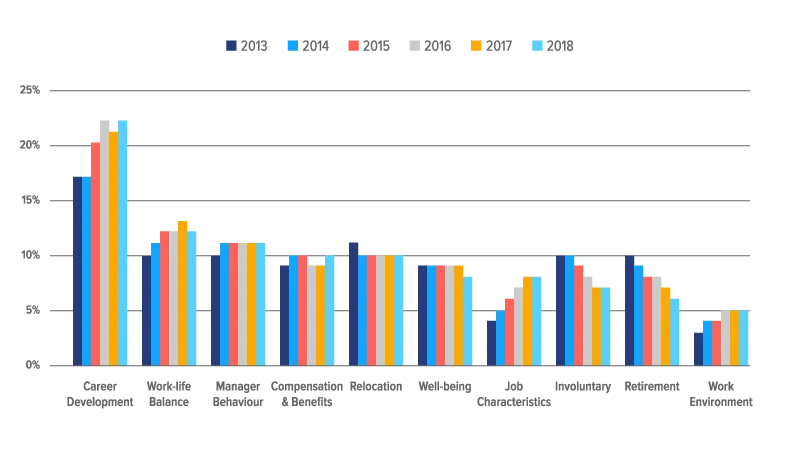
Image Source: factoHR
Employee turnover shows how many workers leave a company in a given time period. Companies need to understand this metric because it affects their health, output, and financial stability. You can calculate the turnover rate as the percentage of your workforce that leaves during a specific period. This rate helps measure how satisfied employees are and how well the organization works.
HR departments can spot hidden workplace problems by looking closely at turnover patterns. All the same, just tracking the rate doesn't tell the whole story. Organizations should ask "What is the cost of our turnover?" instead of "What is our turnover rate?" This makes the effects real and meaningful to business leaders.
Voluntary vs. involuntary turnover
Your organization faces two main types of turnover, each with its own causes and effects. Voluntary turnover happens when employees decide to leave—maybe for a better job offer, work-life balance, or career growth. Since COVID-19 and the Great Resignation, "quick quitting"—where employees leave within their first year—has become more common.
Involuntary turnover occurs when employers end the relationship through firing, layoffs, or restructuring. Both types can affect company operations by a lot, but each needs its own management strategy.
Beyond this simple difference, HR professionals sort turnover into two categories:
- Functional turnover: When underperforming employees leave, which can help team dynamics and productivity
- Dysfunctional turnover: When high performers leave, taking their skills and knowledge with them
Most organizations don't aim to stop all turnover—some people leaving is natural and can be good. The focus should be on reducing dysfunctional turnover while managing functional turnover well.
Why turnover is a growing concern in 2026
Employee turnover remains one of the costliest challenges organizations face in 2026. The financial effects are huge, with replacement costs ranging from 50% to 200% of an employee's yearly salary when you count recruitment, onboarding, lost productivity, and training. High-demand sectors like retail, technology, and healthcare see turnover rates between 20% and 60% each year.
Several factors make turnover a big concern in 2026:
The labor market now includes multiple generations with different expectations and career paths. The rise of hybrid work models has changed what employees expect in terms of flexibility and work-life balance.
Layoffs continue to play a big role in 2026 workforce planning. About 48% of companies say they will "definitely" (17%) or "probably" (31%) have layoffs in the first quarter. Companies point to artificial intelligence implementation (44%), reorganization/restructuring (42%), and budget constraints (39%) as the main reasons.
Experts call it "workforce rebalancing"—companies cut some roles while hiring aggressively for others. They reduce "higher-cost, slower to yield ROI, or misaligned with new operating models" positions but invest in roles that support growth, automation, data management, and customer retention.
These turnover patterns help businesses make smart decisions about keeping employees, planning for succession, and developing talent. This protects both their people and money.
Breaking down the direct costs of turnover
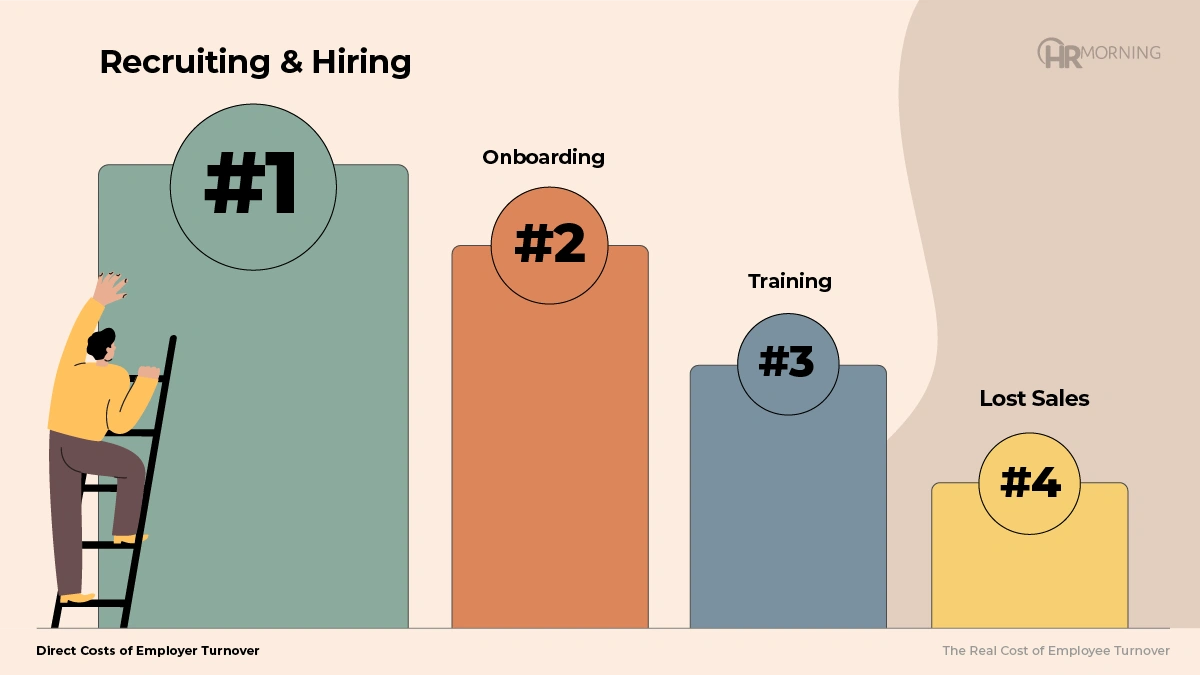
Image Source: HRMorning
Most companies don't realize how much employee turnover actually costs them. The numbers tell an interesting story - replacing an employee costs anywhere from half to double their yearly salary when you factor in all the expenses.
Recruiting and hiring expenses
The expenses pile up quickly when you need to find someone new. Recruitment costs start with job board postings at INR 168,760.90 per position, plus background checks and advertising campaigns. The costs jump way up for specialized roles - companies pay about INR 373,383.49 per hire based on SHRM data.
The time investment can get pricey too. HR teams spend about 10 hours on paperwork for each new hire. Hiring managers put in countless hours screening resumes and interviewing candidates. Executive positions take this to another level - hiring costs alone can hit INR 4,936,256.37.
Onboarding and training costs
New employees need a lot of investment before they're fully productive. The average training cost per employee runs INR 105,644.32, and companies spend about 33 hours on original training. These numbers don't include the extra costs of:
- Equipment and technology setup
- Job-specific training materials
- Mentor time and supervision
- Administrative processing
The productivity timeline presents an even bigger challenge. New hires take 8-26 weeks to reach full productivity. Sales representatives need about nine months to become productive and 15 months to reach top performance.
Lost sales and missed quotas
Revenue takes a big hit during employee transitions. About 91% of companies miss 80% or more of their quota targets during these periods. This happens because new team members need time to match their predecessor's effectiveness.
Sales positions show the real cost - losing a representative sets you back INR 9,703,751.84 when you add up replacement costs and missed opportunities. Companies with high turnover face ongoing revenue challenges even if they fill positions quickly.
Temporary staffing and overtime pay
Empty positions mean either temporary staff or overtime - both hit the budget hard. Temporary staffing includes the worker's hourly wage plus agency fees. Overtime at time-and-a-half rates affects labor budgets significantly.
Temporary staffing offers flexibility but brings extra costs through recruitment fees and training investments. These quick fixes often cost more than good retention strategies would have.
Want to know your company's real turnover costs? Try our free Employee Turnover Calculator. It helps you calculate your actual turnover expenses using industry-specific data.
The hidden costs that most companies overlook
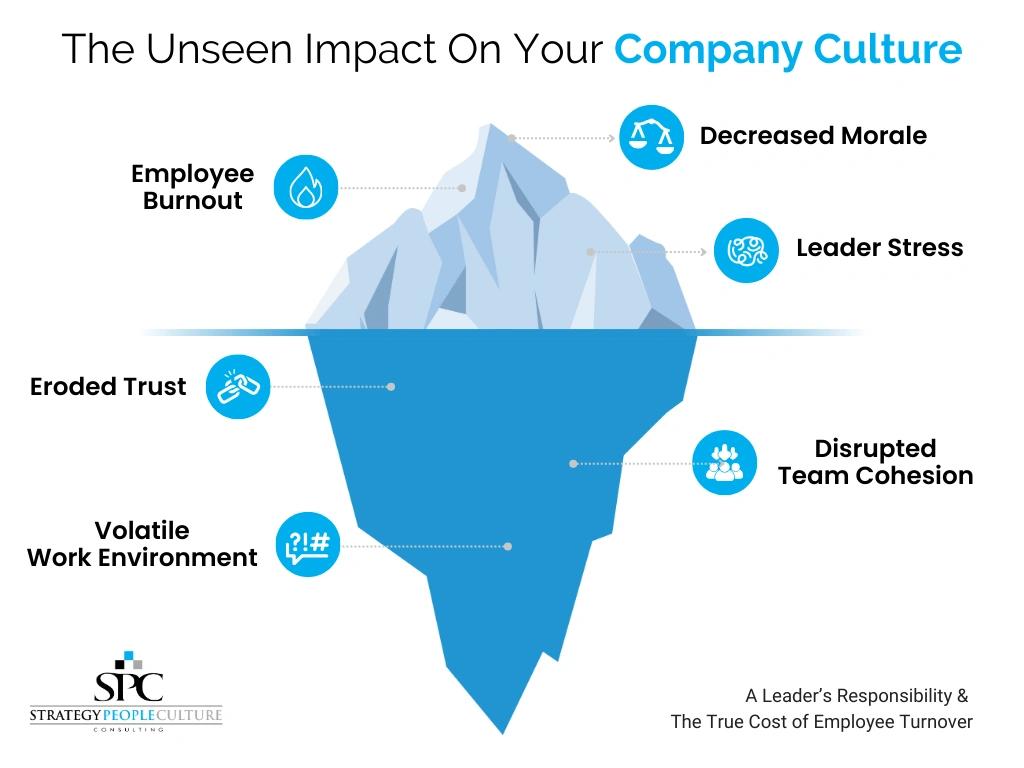
Image Source: Strategy People Culture
Employee turnover costs go far beyond direct expenses. The bottom line takes a hit from hidden factors that companies rarely include in their financial reports. These invisible costs often exceed the visible ones.
Productivity loss during transition
New employees need 3-6 months to reach full productivity, which creates a major performance gap. Companies lose 30-50% of their productive output during this period. The organization continues to face productivity losses even after hiring replacements because new team members need time to build skills and relationships.
Manager and team time spent on replacements
Business leaders must step away from core functions when team members leave. Instead of focusing on strategic initiatives, managers spend their time on hiring activities. Companies that use recruitment services see 15-20% higher management productivity because their leaders can focus on essential operations. This lost management time adds up to a hidden cost that most companies overlook in their turnover calculations.
Burnout and morale decline
A dangerous cycle begins when turnover rates climb high. Team members take on extra work, and burnout becomes common. About 41.1% of burnt-out employees point to staff shortages as the main reason. High turnover creates an unstable environment that leads to disengagement. This snowball effect often triggers more departures - a costly cycle where 46% of HR leaders say employee burnout causes 20-50% of yearly staff turnover.
Loss of institutional knowledge
Valuable expertise walks out the door with departing employees. About 42% of job-related knowledge belongs only to the person in that role. About 60% of employees find it hard to get important information from their colleagues. Organizations struggle to rebuild critical operational insights, which leads to costly mistakes and inefficiencies.
Customer dissatisfaction and churn
Customer relationships suffer directly from employee turnover. Service quality drops and customer trust weakens when experienced employees leave. Research shows that high turnover disrupts service standards, and consistency builds customer trust. Customers notice service quality changes during transition periods, especially in businesses that rely on personal interactions. They might switch to competitors, which makes the financial impact of employee departures even worse.
Companies need to understand these hidden costs to calculate employee turnover expenses correctly and create better retention strategies.
How to calculate employee turnover costs
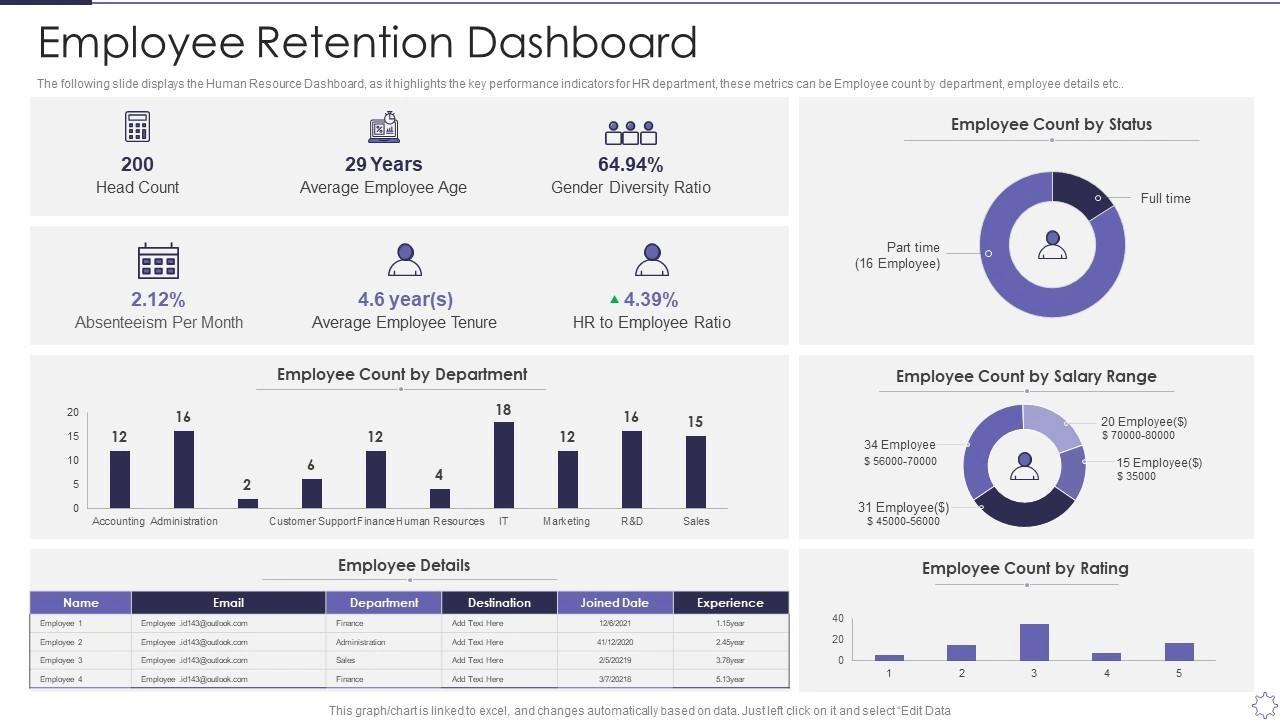
Image Source: SlideTeam
Businesses need accurate measurements to manage employee turnover well. Companies can make evidence-based decisions about retention strategies when they know the exact cost of employee departures. A consistent calculation method helps you learn the true cost of turnover.
Step-by-step turnover cost formula
You can calculate employee turnover costs with this complete approach:
- Find your turnover rate with this simple formula: Turnover rate = (number of employees who left ÷ average number of employees) × 100
- Add these elements to calculate the average cost per departure:
- Pre-departure expenses (exit interviews, knowledge transfer)
- Recruitment costs (advertising, screening, interviewing)
- Onboarding investments (training materials, mentor time)
- Productivity losses during transition periods
- Your total turnover cost equals: Total number of employees × turnover rate × average cost per departure
Let's look at an example. A company with 200 employees, 12.5% turnover rate, and average departure cost of INR 164,541.88 would spend INR 4,113,546.98 annually on turnover.
Using average employee turnover costs by industry
Different sectors show wide variations in turnover costs. Most industries spend between 50% and 200% of a departing employee's annual salary on replacement. Here's how these costs typically break down by position level:
- Entry-level/non-skilled: 30–50% of annual salary
- Technical/supervisory roles: 100–150% of annual salary
- Executive positions: Up to 213% of salary
Healthcare and technology sectors face the highest replacement costs because of licensing requirements and specialized expertise.
Tools and calculators to simplify the process
Systematic data collection helps track turnover costs accurately. Several free tools can make this easier:
The Employee Turnover Calculator makes the process simpler. You can input variables like average salary, hiring manager costs, productivity losses, and training time to get complete cost estimates.
SHRM provides turnover calculation spreadsheets, and Adecco offers online calculators that consider important factors like lost productivity, training time, and screening expenses.
These tools help convert abstract turnover concerns into measurable financial figures. Leaders can then focus their retention efforts based on actual data instead of assumptions.
Why tracking turnover cost improves business decisions
Converting turnover data into financial terms changes HR challenges into business growth opportunities. Companies that calculate attrition costs discover analytical insights that lead to smarter decisions across business functions.
Better hiring and retention strategies
Organizations that grasp the actual cost of turnover—often 150-200% of an employee's annual salary—can put their resources to better use. HR leaders use this data to spot roles or departments with the most expensive departures and create targeted retention programs for these critical areas. Companies with predictive turnover tools have cut attrition by 15%, which saves about INR 122,351 per employee in rehiring costs. This data also helps fix potential diversity and inclusion issues by revealing which demographic groups leave most often.
Stronger ROI on employee development
Employee growth investments show clear returns through lower turnover costs. Effective training programs can reduce employee turnover by 30-50%. Companies with resilient development programs see substantially higher retention rates. More than three-quarters of employees say they stay longer with companies that offer continuous growth opportunities. InnoWave achieved a 7% drop in attrition through on-demand learning programs, which saved about €300,000 in recruitment costs.
Improved workforce planning and budgeting
Complete turnover cost tracking leads to more precise financial forecasts. Turnover patterns help organizations prepare for vacancies in critical positions and build effective succession plans. Companies that use workforce analytics save about 15% on labor costs each year through better scheduling and fewer last-minute staffing emergencies. Leaders can make stronger cases for retention investments that support EBITDA goals by treating attrition as a business problem rather than just an HR issue.
Learn about your organization's true turnover costs with our free Employee Turnover Calculator.
Conclusion
Employee turnover is one of the costliest yet most overlooked financial drains on businesses today. Replacement costs can range from 33% to an astounding 200% of an employee's annual salary. Executive and specialized positions can cost up to four times the yearly wages. Without doubt, these numbers should raise red flags for any organization that cares about its financial health and stability.
Recruitment, onboarding, training, and temporary staffing costs are just the beginning. The hidden costs run much deeper: productivity drops during transitions, lost company knowledge, managers pulled away from core duties, team exhaustion, and customer relationships at stake. These elements create a financial burden that's nowhere near what most companies track in their standard reports.
Knowing how to calculate these costs precisely helps build better strategic decisions. Companies that use accurate turnover data can create targeted retention programs for crucial areas, use resources better, and plan succession effectively. Companies that put reliable development programs in place see much higher retention rates and save substantially on recruitment costs.
Smart businesses see turnover not as an unavoidable expense but as something they can control. You should calculate your real turnover costs before making any decisions about hiring or retention programs. Our Employee Turnover Calculator gives you the quickest way to measure these expenses in your organization. It turns abstract turnover concerns into real financial numbers.
Each departure brings both financial setbacks and a chance for improvement. The costs might be high, but they point to areas where smart investments in company culture, employee growth, and team activities can bring remarkable returns. When you understand turnover's true cost, you can invest in these areas confidently, knowing they help your bottom line and your organization's health directly.
Key Takeaways
Understanding the true cost of employee turnover is crucial for making strategic business decisions that protect your bottom line and organizational health.
- Employee replacement costs range from 33% to 200% of annual salary, with executive positions reaching up to 400% when including all direct and hidden expenses.
- Hidden costs like productivity loss, institutional knowledge drain, and team burnout often exceed visible expenses but rarely appear in financial reports.
- Companies can reduce turnover by 15-50% through targeted retention programs, saving approximately $1,500-$3,000 per retained employee in rehiring costs.
- Tracking turnover costs enables better workforce planning, stronger ROI on employee development, and more effective resource allocation across departments.
- Use systematic calculation methods and tools to transform abstract turnover concerns into concrete financial data that drives strategic decision-making.
The most successful organizations treat turnover as a manageable financial variable rather than an inevitable business cost, using data-driven insights to invest strategically in retention programs that directly support profitability and growth.