
Introduction
A graphic designer with the right skills can revolutionize your business. Your brand identity and user experience will reach new heights.
Finding creative talent goes beyond just ticking boxes on a resume. The skills you need in graphic designers are not just about looking at portfolios. Technical skills definitely matter - you need someone who knows Adobe Creative Suite, typography, and layout composition. But success in graphic design needs more than that. Your ideal candidate should be creative, have vision, and know how to communicate brand messages visually.
Hiring creatives is more of an art than following a simple checklist. Graphic designers need many different skills, and what you want to see on their resume depends on your needs. On top of that, it helps to build a creative team with different points of view that ended up encouraging innovation.
Let's take a closer look at our proven process in this piece. We'll show you how to evaluate graphic designer candidates - from understanding their core skills to making that final hiring decision.
Understand the Role and Skills Needed
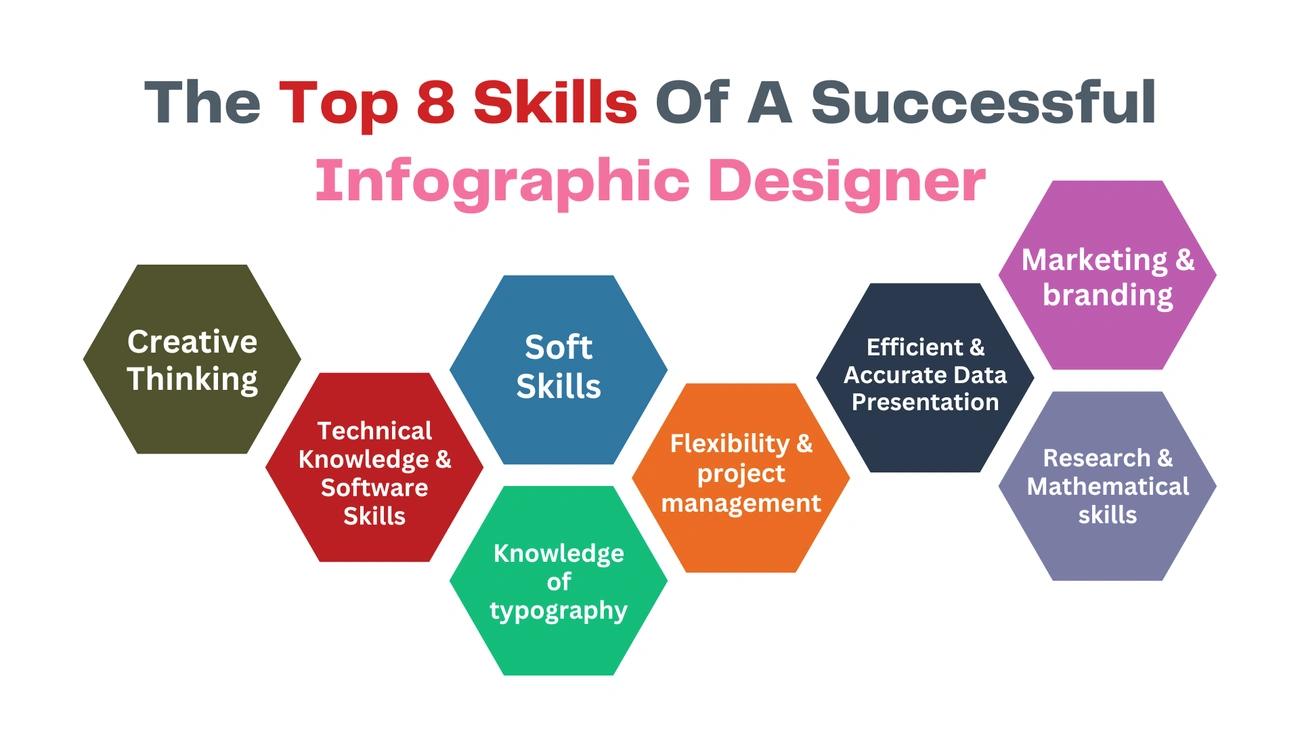
Image Source: Infobrandz
You should have a clear picture of what makes an exceptional graphic designer before starting the review process. The perfect candidate brings together technical expertise and people skills that line up with your project needs.
Key skills for graphic designer roles
The foundations of graphic design expertise come from mastering both basic principles and specialized techniques. Graphic design, like any profession, calls for specific skills from technical abilities to creative and strategic thinking.
Core Graphic Design Skills Framework:
| Skill Category | Description | Importance |
|---|---|---|
| Design Principles | Understanding of alignment, repetition, contrast, hierarchy, and balance | Creates unified, organized, and meaningful designs |
| Visual Communication | Knowing how to translate ideas into compelling visuals | Essential to convey messages effectively |
| Branding Knowledge | Understanding the relationship between visual design and brand identity | Creates consistent and recognizable brand experiences |
| Creative Problem-Solving | Approaching design challenges with innovative solutions | Every client brief is a visual problem that needs solving |
Technical skills for graphic designer to look for
Your focus should be on candidates' proficiency in industry-standard software and their grasp of fundamental design concepts.
Essential Technical Proficiencies:
- Software Mastery: Look for expertise in Adobe Creative Suite, particularly Photoshop, Illustrator, and InDesign – these tools are fundamental to any graphic designer.
- Typography: Check their understanding of font selection, spacing, hierarchy, and readability principles – typography skills range from picking the right font to typesetting, alignment, kerning, and leading.
- Color Theory: Candidates should show knowledge of color psychology, harmony, contrast, and appropriate application in different contexts.
- Layout Design: Look at their skills in organizing visual elements to create balanced, cohesive compositions through principles like proximity and alignment.
- Digital Design: Modern needs require UI/UX capabilities and familiarity with tools like Figma or Sketch.
Soft skills that matter in creative teams
Exceptional designers have people skills that help them thrive in shared environments and deliver outstanding results, beyond their technical abilities.
Critical Soft Skills:
- Creativity: Knowing how to think beyond conventional solutions is fundamental – 73% of hiring managers state communication as the most valuable soft skill.
- Communication: Designers must state concepts clearly to clients and team members while getting a full picture of project requirements.
- Problem-Solving: Each design brief brings unique challenges that need analytical thinking and creative solutions.
- Adaptability: The digital world changes faster; designers must stay current with emerging trends and technologies.
- Time Management: Meeting deadlines while handling multiple projects needs exceptional organization and prioritization skills.
How to line up skills with your project goals
A systematic approach to connecting your project requirements with specific designer capabilities will ensure you find the perfect match.
Alignment Strategy:
- Define Project Scope: Map out deliverables, timeline, and intended outcomes.
- Identify Technical Requirements: Figure out which design software and specialized skills your project needs.
- Consider Cultural Fit: See how a designer's communication style and work approach fits your team dynamics.
- Set Performance Expectations: Create clear, measurable goals that link daily design tasks with broader objectives.
- Evaluate Portfolio Relevance: Previous work should show capabilities that match your specific needs.
Note that successful designers blend technical proficiency with conceptual thinking. They create designs that not only look appealing but also solve problems and achieve business goals.
How to Evaluate a Graphic Designer’s Portfolio
A designer's portfolio is proof of their skills and how well they might fit your projects. You need a systematic approach to review portfolios that goes beyond admiring attractive designs.
What to look for in a portfolio
The best way to assess portfolios uses a well-laid-out framework that shows both technical competence and creative thinking. Great portfolios show clear problem-solving abilities and highlight the skills you need in a graphic designer.
Portfolio Evaluation Framework:
| Evaluation Criteria | What to Assess | Why It Matters |
|---|---|---|
| Visual Consistency | Cohesive style across projects | Shows attention to detail and professionalism |
| Technical Execution | Quality of typography, color usage, layout work | Shows mastery of technical skills for graphic designer work |
| Problem-Solving | How design solutions address client needs | Shows strategic thinking beyond esthetics |
| Presentation | Organization and explanation of work | Shows communication abilities and thought process |
Assessing diversity and depth of work
You should get into the variety of projects to gage a designer's versatility. A portfolio with only one style or project type might show limited experience or specialization.
The range should cover:
- Industries and clients of all types
- Various design formats (print, digital, packaging)
- Complex projects with development stages
- Long-term client relationships that show reliability
The portfolio should include process work—sketches, wireframes, and iterations—because these show critical thinking and methodology. Designers who only show final products might not fully understand design development.
Checking for brand alignment and creativity
The designer's work should line up with your brand esthetic and business objectives. You should see how well they maintain brand consistency while bringing fresh views.
Key alignment factors include:
- Style compatibility with your brand
- Experience in your industry or similar contexts
- Evidence of research-driven design decisions
- Knowing how to communicate brand values visually
Red flags to watch out for
Keep an eye out for warning signs that might point to potential risks:
- Outdated techniques: Designs using obsolete trends might show the designer isn't staying current
- Inconsistent quality: Big differences in execution quality across projects raise concerns
- Overly templated work: Heavy template use shows limited originality
- Vague case descriptions: Poor project goal and process explanations might suggest misrepresentation
- Poor typography: Typography errors reveal a designer's attention to detail and technical skill level
A good portfolio review balances appreciation for esthetic quality with critical assessment of key graphic design skills that match your specific needs.
Using Practical Tests to Assess Skills
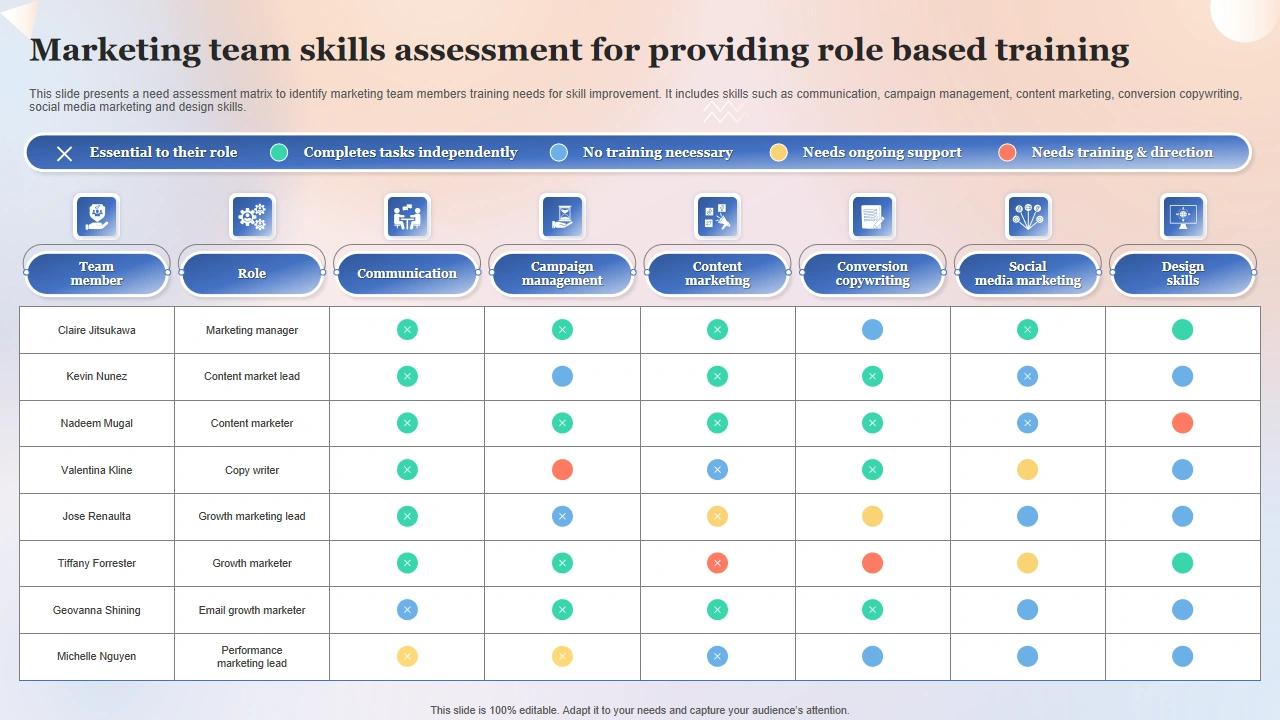
Image Source: SlideTeam
Portfolio reviews are a great way to get insights into a designer's capabilities. Practical tests show direct evidence of skills needed for graphic designer positions. Real-life scenarios and skill assessments show how candidates tackle actual design challenges beyond their previous work samples.
Designing relevant skill tests
Good skill tests mirror actual workplace challenges. Your company's specific design needs should shape the assessments instead of using generic exercises:
| Test Type | Purpose | Example Format |
|---|---|---|
| Work-Sample Tasks | Assess software proficiency | Image editing or preparing print files |
| Design Problems | Review creative problem-solving | Creating social media graphics for a campaign |
| Scenario-Based Questions | Gage analytical thinking | Analyzing design projects to clarify work requirements |
Tests should check layout design, visual hierarchy, and UI/UX principles. These technical skills directly affect user engagement and lead to product success.
Evaluating creativity under pressure
Deadlines can change how people perform creatively. Candidates often show their best creative work when they feel they're on a mission, rather than facing random deadlines. Research backs this up.
The best way to assess creativity:
- Minimize distractions during testing
- Make the challenge meaningful and purpose-driven
- Allow focused individual work rather than group brainstorming
- Provide clear objectives without overwhelming constraints
Incorporating feedback loops
Good skill evaluation lets candidates respond to critique. Designers should adjust their work based on hypothetical client comments during the testing process. This shows how well they adapt and communicate - skills they'll need on the job.
The feedback rounds also show if candidates can separate personal attachment from professional growth. This difference matters in shared creative work.
Balancing time limits with quality expectations
Skill test time limits should match real workplace deadlines without hurting quality standards. Teams should give enough time for thoughtful work while checking efficiency.
Key timing factors to remember:
- Set clear deadlines that challenge without overwhelming
- Adjust time based on task complexity
- Review both speed and quality objectively
- Use scoring matrices for consistent assessment
The best test combines technical evaluation with room for creative thinking. A well-laid-out assessment reveals software skills and shows how candidates solve visual problems. These are the foundations of exceptional graphic design work.
Interviewing for Mindset and Collaboration
A candidate's mindset and team spirit matter just as much as their portfolio and technical skills. Even the most talented graphic designer won't succeed if they can't work well with your creative team.
Behavioral questions to assess soft skills
The way candidates handled past situations reveals their problem-solving approach and people skills.
| Question Type | Example Question | What It Reveals |
|---|---|---|
| Adaptability | "Tell me about a time when scope changed by a lot halfway through a project." | Knowing how to pivot quickly and maintain composure under changing requirements |
| Time Management | "Describe a time when you've had to juggle two projects at once." | Organizational techniques and prioritization skills |
| Feedback Response | "Tell me about a situation where a client gave you bad feedback you didn't agree with." | Professionalism and knowing how to balance competing visions |
| Professional Growth | "How do you keep your design skills updated?" | Continuous learning mindset and industry awareness |
You should ask about their workflow under tight deadlines or how they worked with team members who had different creative visions.
Evaluating communication and teamwork
Communication is the life-blood of successful graphic design. Watch how well candidates express their ideas and answer questions during the interview.
Strong team players typically show:
- A relaxed attitude when discussing group projects
- Knowing how to explain complex design concepts simply
- Examples where they successfully used feedback
- Experience working with non-designers in different departments
Design professionals point out that "A designer who can effectively communicate their ideas and work well with others is more likely to produce successful outcomes".
Involving your team in the interview process
Your team's participation in interviews brings many benefits. Current designers can spot strengths or gaps you might miss from their peer's viewpoint.
This strategy also:
- Brings different viewpoints on each candidate
- Shows how candidates interact with future teammates
- Proves your collaborative culture to prospects
- Helps candidates understand your team dynamics

Hire Better, Faster — With Skills That Actually Matter
Experience AI-powered hiring that finds top designers with precision and zero guesswork.
Cultural fit vs. cultural add
Companies used to focus on "cultural fit" - finding candidates like their existing teams. In spite of that, this approach can make teams too similar and slow down innovation. The better way is hiring for "cultural add" - finding people who share basic values while bringing new ideas.
The key difference is finding someone who lines up with your core values and can improve your culture through diversity of thought and experience. Industry research shows that "hiring for culture add vs. culture fit can help address issues like lack of diversity and creativity".
Questions that show cultural add potential:
- "What viewpoint might you bring that we currently lack?"
- "How have your unique experiences shaped your approach to design?"
Teams that can create truly innovative work need candidates with both complementary design skills and collaborative mindsets.
Making the Final Hiring Decision
The final selection comes down to a systematic evaluation of portfolios, tests, and interviews based on solid criteria. You need a methodical process that's flexible enough to find your perfect match.
Comparing candidates objectively
A well-laid-out assessment approach should focus on measuring what each candidate brings to the table:
| Assessment Area | What to Compare | Weight |
|---|---|---|
| Technical Skills | Software proficiency, design principles application | High |
| Portfolio Quality | Creativity, problem-solving, visual communication | High |
| Test Performance | Execution quality, time management, adaptability | Medium |
| Cultural Contribution | Communication style, teamwork potential | Medium |
Using a scoring matrix for evaluation
A number-based rating system from 1-5 paired with importance weightings works best. This turns gut feelings into actual scores you can compare and helps remove unconscious bias.
Freelance vs full-time: which is better?
Here's what matters most when picking between these two options:
- Full-time benefits: Stability, consistent output, deeper integration with team culture, salaries ranging INR 3.4-5.9 million annually
- Freelance advantages: Flexibility, specialized expertise, potential cost savings with hourly rates of INR 2,100-8,400+
Project complexity and timeline will help you decide what works best.
Negotiating contracts and IP rights
The contract should nail down these crucial points:
- Clear scope definition to avoid "scope creep"
- Specific payment terms with milestones
- Intellectual property rights - licensing versus full ownership
- Revision limitations to protect against endless changes
Conclusion
A good graphic designer needs both technical skills and creative talent. You need a careful approach to evaluate these qualities beyond just looking at their portfolio.
Key Takeaways from Our Hiring Approach:
| Evaluation Area | Critical Components | Strategic Value |
|---|---|---|
| Technical Skills | Software proficiency, typography mastery, color theory | Forms foundation for execution quality |
| Creative Abilities | Problem-solving, visual communication, concept development | Drives innovative solutions and brand differentiation |
| Soft Skills | Communication, adaptability, teamwork | Ensures productive collaboration and project success |
| Testing Methods | Relevant challenges, feedback loops, realistic timelines | Reveals real-life capabilities beyond portfolio claims |
The best way to assess graphic designers combines structured evaluation with gut instinct. Real-world tests show how candidates handle actual design challenges. Behavioral interviews reveal if they have the team spirit needed for successful collaboration.
These factors matter most in your final choice:
- Your project needs should match their technical skills
- Good design isn't enough - look for strategic thinking and problem-solving
- The right personality fit can add value to your team culture
- Balance the benefits of freelance flexibility against full-time commitment
- Get clear agreements on intellectual property and other contract terms
The right graphic designer brings more than just technical expertise. They add a fresh creative view while fitting naturally into your workflow and brand vision. Your evaluation should cover all these aspects.
Looking at portfolios, running practical tests, and checking soft skills through interviews will give you solid data for hiring. This careful approach helps you find designers who create beautiful work and help achieve your business goals.
The time you spend on careful evaluation pays off. You'll get better design work, smoother teamwork, and lasting creative partnerships that lift your brand and user experience.
Ready to Build a High-Performing Creative Team?
Let SkillSauce help you hire graphic designers who bring creativity, precision, and strategic thinking to your brand.
Contact UsKey Takeaways
Successful graphic designer hiring requires evaluating both technical proficiency and collaborative abilities to find candidates who create impactful designs while thriving in team environments.
• Balance technical and soft skills assessment - Look beyond Adobe Creative Suite mastery to evaluate communication, adaptability, and problem-solving abilities that enable effective collaboration.
• Use practical tests alongside portfolio reviews - Design relevant skill assessments that simulate real workplace challenges to reveal how candidates perform under pressure and respond to feedback.
• Implement structured evaluation methods - Create scoring matrices and objective criteria to compare candidates fairly while minimizing unconscious bias in your hiring decisions.
• Prioritize cultural add over cultural fit - Seek designers who share core values while bringing diverse perspectives that can enhance creativity and innovation within your team.
• Align skills with specific project goals - Match technical capabilities and creative approaches to your actual design needs rather than hiring based on generic qualifications.
The most successful graphic design hires combine strong technical foundations with strategic thinking abilities and collaborative mindsets. By systematically evaluating portfolios, conducting practical assessments, and using behavioral interviews, you'll identify designers who not only create visually compelling work but also contribute meaningfully to your brand objectives and team dynamics.