


AI questions now appear in interviews for every type of role — not just technical positions. Whether you're applying for marketing, HR, operations, or finance, there is a strong chance your interviewer will ask how you think about AI.
The business world continues to transform through AI. Google and similar companies have more non-technical positions than most people realize — about half of all interviews are actually for non-tech roles. This explains why AI questions have become standard practice even for non-technical candidates. The job description itself contains 50-70% of potential interview questions.
Our list of 50 crucial AI interview questions targets non-technical roles in 2025. You'll learn to explain AI concepts simply and tackle ethical discussions. This piece helps you speak about AI with confidence without any computer science background. A final tip: send the hiring manager a thank you email within 24 hours.
What inspired your interest in AI?

Image Source: KQED
AI-related interview questions pop up more often these days as companies rush to adopt AI technologies. LinkedIn's 2025 Work Change Report shows that 88% of C-suite leaders see speeding up AI adoption as a priority next year.
What it asks
Your interviewer wants to know your take on artificial intelligence - are you truly interested in it, or just jumping on the bandwagon? They want to see how open you are to new technologies that could shape your role and the company's future.
Why it matters
The way you answer shows how adaptable you are and your approach to learning. Many hiring managers see resistance to AI integration as a warning sign. Your active involvement with tech developments proves you embrace change rather than resist it.
You don't need to be a tech expert - Mission North's chief people officer puts it simply: "it's most important that you're interested in AI, that you have a curiosity about it, and that you're willing to look at it as a powerful complement to talent".
How to answer it
Start with what got you excited about AI - maybe you saw it working in your field or read about what it could do. Keep it real instead of giving rehearsed answers.
You might want to talk about:
- Specific AI tools you've tried out (ChatGPT, Midjourney)
- Ways you keep up with AI news (newsletters, online courses)
- A time when you used AI to improve your work
Many interviewers use this question as a "Rorschach test" to understand your work ethic and values. So, having a thoughtful point of view matters more than giving the "right" answer. You can even share smart doubts about AI, as long as they come from knowledge rather than fear of something new.
How do you stay updated on AI trends?

Image Source: Cubed
The AI field changes so fast that staying current with new developments is vital to ace your interviews. A recent Deloitte survey of 1,874 workers shows an interesting trend - 83% of early career workers use AI in their jobs, while only 68% of tenured workers do. These numbers highlight why AI literacy matters more than ever.
What it asks
Your information consumption habits come under scrutiny with this question. Interviewers want to know if you take initiative to learn and can spot which AI advances might shape your role. They also look at how you structure your ongoing learning journey.
Why it matters
Staying informed about AI goes beyond just making a good impression - it shows you can adapt. The tools you use today might be outdated tomorrow. Employers value candidates who know how to spot real trends amid the tech buzz. They seek professionals who understand that "keeping up with this rapidly evolving landscape is essential".
How to answer it
Start with your go-to information sources and explain how you evaluate them:
- Name specific publications: Point to trusted sources like TechCrunch or industry-specific blogs
- Describe your filtering method: Explain your fact-checking process (like the "rule of three" - a tool mentioned by three different sources deserves a closer look)
- Highlight learning communities: Talk about the AI forums or groups you join
- Mention formal education: Bring up any ongoing courses or certifications
Your answer should focus on real-world application rather than theory. Skip claiming to read every research paper. Instead, you might say: "I subscribe to several AI newsletters that filter developments in my field. When trusted sources repeatedly mention a technology, I look into ways it could improve our work."
Note that 79% of early career workers feel excited about AI opportunities. Show genuine interest in AI alongside your learning strategy to strike a chord with interviewers.
Can you explain AI in simple terms?
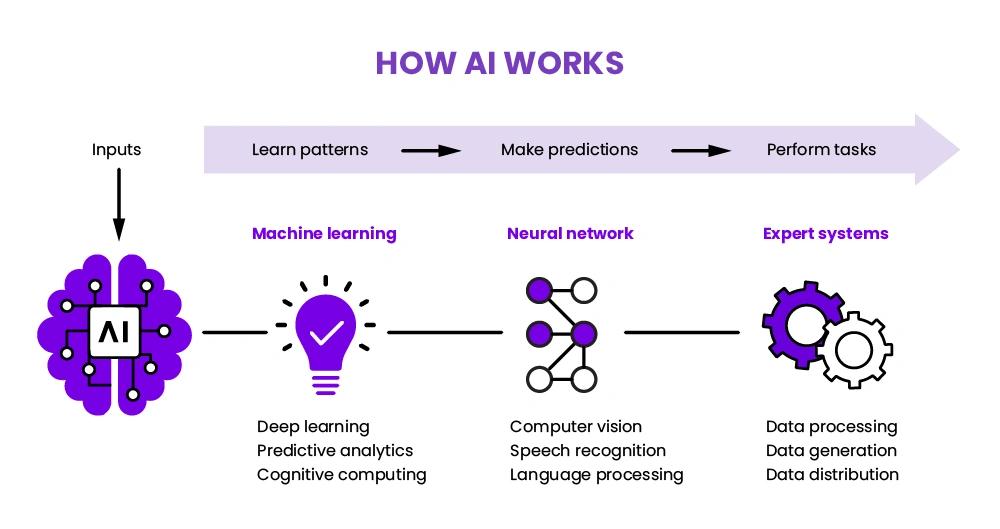
Image Source: WEKA
"The key to artificial intelligence has always been the representation." — Jeff Hawkins, Founder, Numenta; inventor of Palm Pilot, AI theorist
Knowing how to explain complex technology in simple terms shows your understanding and communication skills. Your skill to break down AI concepts becomes especially valuable when you face artificial intelligence interview questions.
What it asks
The question assesses how well you understand basic AI concepts and communicate them. Interviewers want to see if you can translate technical jargon into everyday language that anyone understands. They check if you truly know AI beyond buzzwords and can make it available to stakeholders or team members who lack technical backgrounds.
Why it matters
Your response shows how deeply you understand the subject and your teaching capabilities. Companies value professionals who can connect technical and non-technical teams. The skill to simplify complex ideas proves you know the subject matter well—as Albert Einstein purportedly said, "If you can't explain it simply, you don't understand it well enough."
How to answer it
Start with a clear definition: Artificial intelligence is technology that enables computers to perform tasks that need human intelligence, such as learning from experience, understanding language, and making decisions.
Use a relatable analogy:
- "Think of AI as an apprentice that learns by example rather than following explicit rules"
- "AI works similarly to how humans learn to ride a bike—it gets better with practice and experience"
- "Machine learning is essentially a fancy labeling machine that categorizes things based on examples it's seen"
AI systems have these key features:
- Learn from so big amounts of data
- Identify patterns to make predictions
- Get better over time without needing reprogramming for every scenario
End with everyday examples people might recognize: navigation apps, email spam filters, product recommendations, and virtual assistants like Siri or Alexa.
Note that you should avoid technical terms like "neural networks" or "deep learning" unless specifically asked. Your goal is clarity, not completeness.
What are some real-world applications of AI you've seen?
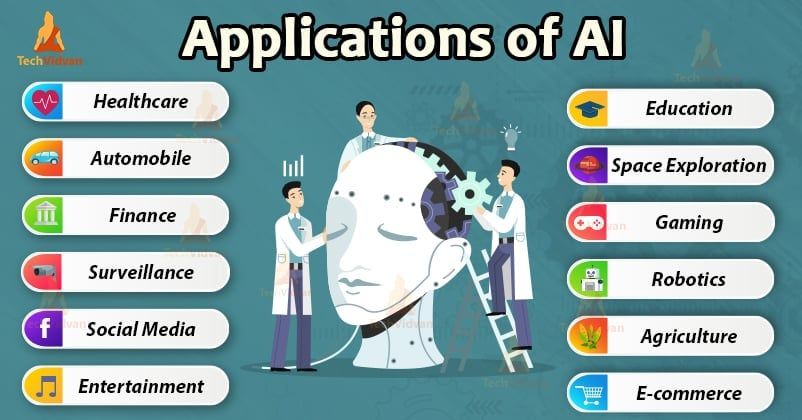
Image Source: TechVidvan
AI pervades our daily lives in ways we might not notice right away. This question helps assess your awareness of AI's ground impact beyond theoretical concepts.
What it asks
Your interviewer wants to gage how well you observe and understand AI systems in various contexts. They will assess your ability to identify AI systems in everyday scenarios and professional settings. The key is to show how these applications create value rather than just spotting where they exist.
Why it matters
Being aware of ground AI applications shows you pay attention to technological development. Young professionals use AI more frequently in their jobs (83% compared to 68% of tenured workers). This shows how employers value candidates who understand AI's practical benefits. Your grasp of these applications helps you express how AI could benefit your potential role. McKinsey estimates AI will add $13 trillion to global economic activity cumulatively — with the majority of that value still ahead as enterprise adoption accelerates into the late 2020s.
How to answer it
Start with AI experiences from daily life:
- Unlocking your phone with facial recognition (systems that analyze 30,000 invisible infrared dots)
- Social media feeds that learn your priorities
- Navigation apps that optimize routes using up-to-the-minute traffic data
Then highlight business applications you've seen:
- Customer relationship management tools that predict priorities
- Healthcare systems that analyze patient data to find disease patterns
- Security systems that spot fraud by analyzing transaction patterns
The final step is to mention industry-specific examples relevant to your target role. Note that AI adoption varies by industry—18% in Information sectors versus just 1% in Agriculture and Construction. Your examples should reflect your industry knowledge.
How would you describe the difference between AI and automation?
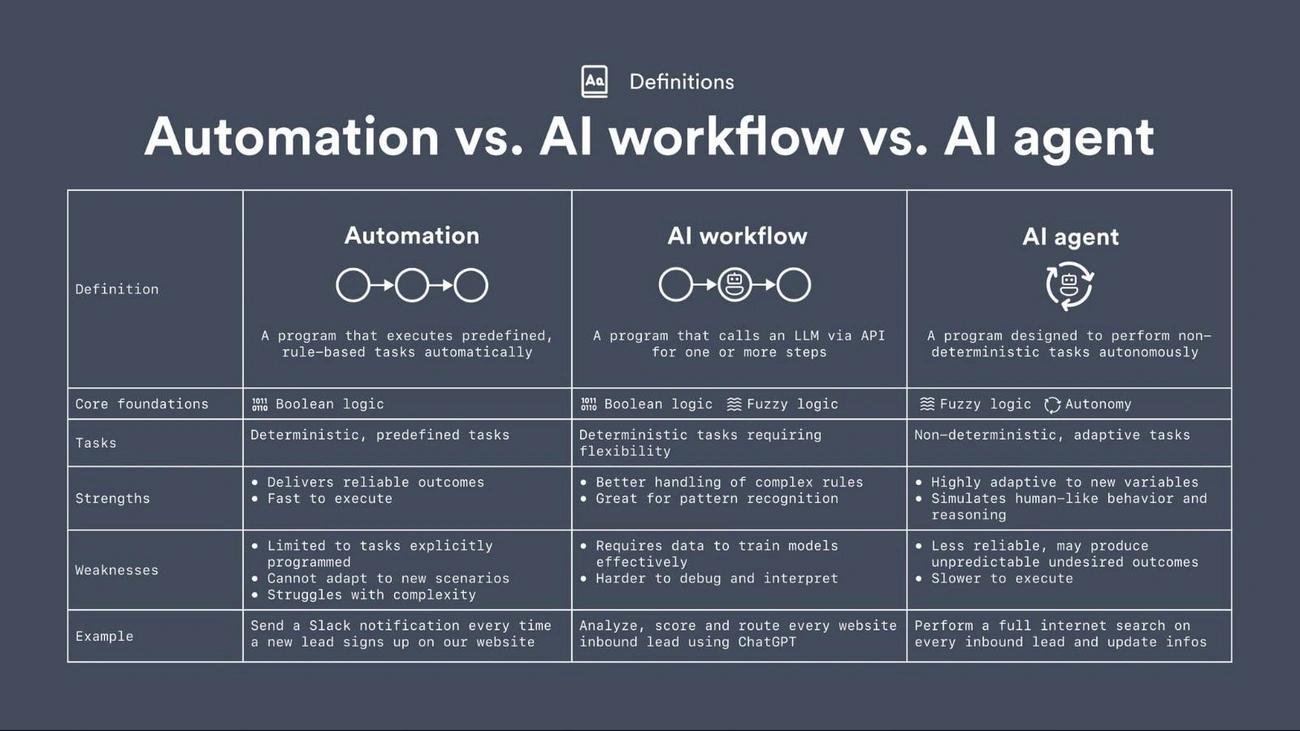
Image Source: Reddit
Job seekers often mix up AI with automation in interviews, though these technologies have key differences. Your knowledge beyond buzzwords shines when you understand this difference.
What it asks
The question checks if you understand how these two technologies differ at their core. Interviewers want to hear you state that automation runs preset tasks without changing, while AI brings in smart capabilities to learn from information and make choices.
Why it matters
Your tech knowledge stands out when you explain this difference. Studies show 84% of executives see AI as vital to growth targets, while 60% value automation technologies. The difference between AI and automation shapes how they impact various jobs and worker groups.
How to answer it
Start with clear definitions of both:
- Automation: Technology that runs repetitive, rule-based tasks without change—like a reliable teammate who follows steps exactly but doesn't adapt.
- AI: Systems that learn, recognize patterns, and decide—similar to a colleague who gets better with time.
Use this simple comparison: "Automation is about doing, while AI is about thinking and improving".
End with this helpful insight: "All AI is automation, but not all automation is AI". This shows how AI exists as an advanced subset of automation tools.
What ethical concerns do you associate with AI?
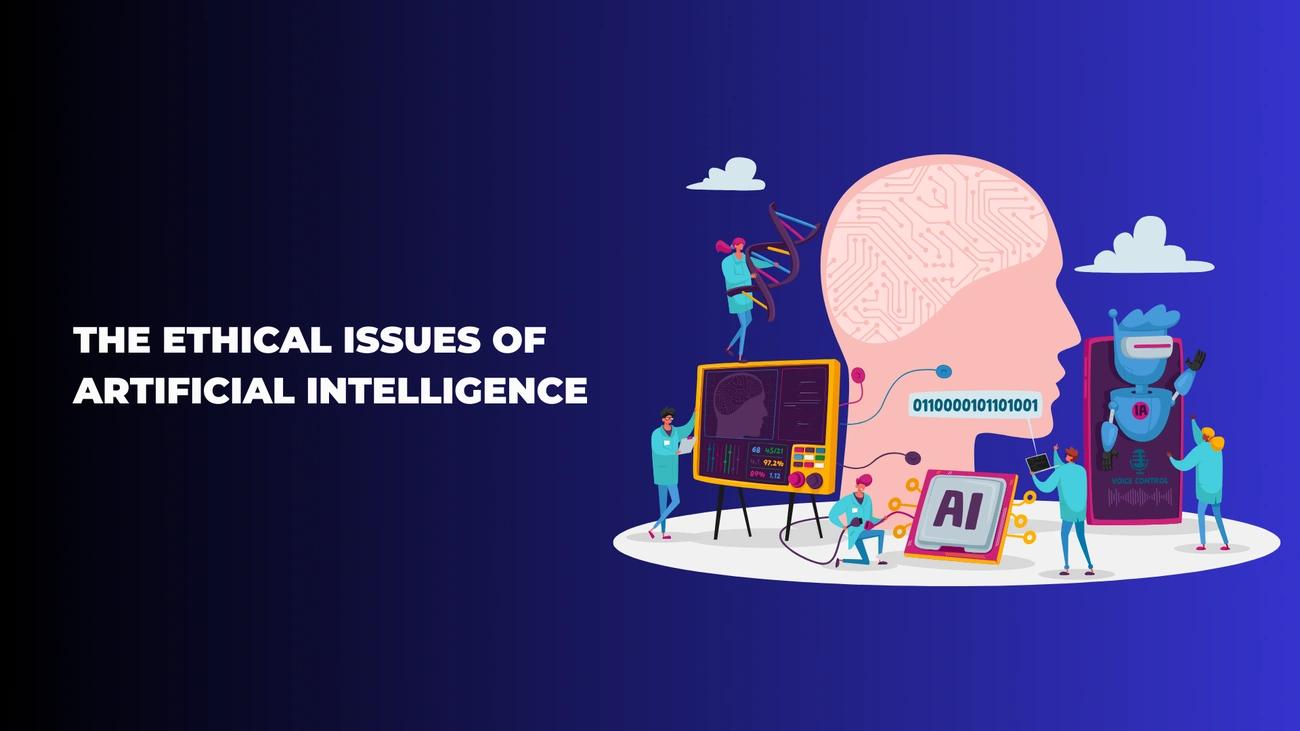
Image Source: Eastgate Software
"The real question is, when will we draft an artificial intelligence bill of rights? What will that consist of? And who will get to decide that?" — Gray Scott, Futurist, Tech Philosopher; recognized AI ethics commentator
AI ethics has become more and more important in interviews as companies face questions about using technology responsibly. What looks like a philosophical question actually tests your grasp of practical implications.
What it asks
The interviewer assesses your grasp of AI's potential downsides and ethical problems. They need to know if you understand problems like algorithmic bias, privacy violations, lack of transparency, and who takes responsibility when AI systems fail.
Why it matters
Companies that roll out AI without ethical safeguards face serious risks. Biased algorithms can treat customers unfairly, which hurts the company's reputation and breaks down trust. Yes, it is true that organizations ignoring ethics might run into legal trouble with data protection regulations. The Amazon case from 2018 shows this clearly - their AI recruiting tool discriminated against women systematically.
How to answer it
Give a well-thought-out response covering these vital points:
- Algorithmic bias - Show how AI can reinforce existing social biases
- Privacy - Talk about the challenges of keeping sensitive data safe
- Transparency - Break down the "black box" issue where decisions lack clear explanations
- Accountability - Talk about who should take responsibility for AI mistakes
Point out that ethical AI gives companies a competitive edge, noting that "firms who use it ethically and responsibly will gain a competitive advantage". Show balanced thinking by highlighting both AI's benefits and ethical challenges.
How do you think AI will impact your current role?
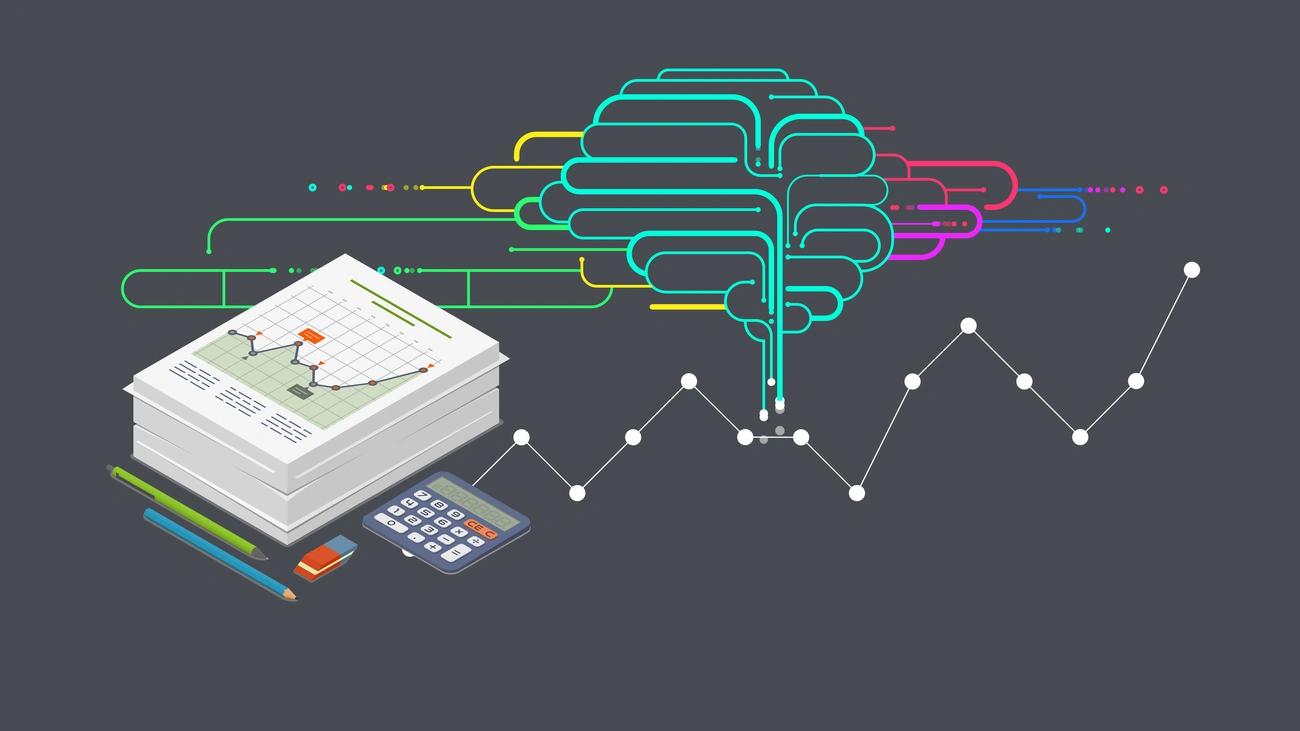
Image Source: J.P. Morgan
Recent studies reveal that AI could affect close to 50 million US jobs in the years ahead. This key interview question helps assess your grasp of how technological shifts might revolutionize your career path.
What it asks
Your interviewer wants to know your understanding of how AI specifically relates to your role. They want to see if you've thought about how automation could eliminate some tasks while boosting others. Notwithstanding that, they also want to know if you see the difference between jobs changing and jobs disappearing completely.
Why it matters
Your response shows how well you can anticipate and adapt to change. Latest data shows 40% of employers plan to cut their workforce where AI can handle tasks automatically. Technology should create 11 million jobs while displacing 9 million others. Candidates who show they've thought about these changes appear better equipped for tomorrow's workplace.
How to answer it
Give a well-rounded response by:
- Pointing out specific tasks in your role that AI might automate (data analysis, scheduling, routine communications)
- Showcasing skills AI will boost rather than replace (critical thinking, creativity, interpersonal communication)
- Showing how you actively update your skills, since technical expertise becomes outdated in under five years
- Sharing examples of how you use AI tools like ChatGPT to improve your work
Note that jobs requiring non-routine thinking face new challenges, and their unemployment risks now exceed those of non-routine manual work. Your response should highlight your steadfast dedication to continuous learning as AI alters job responsibilities.
What is your understanding of machine learning?
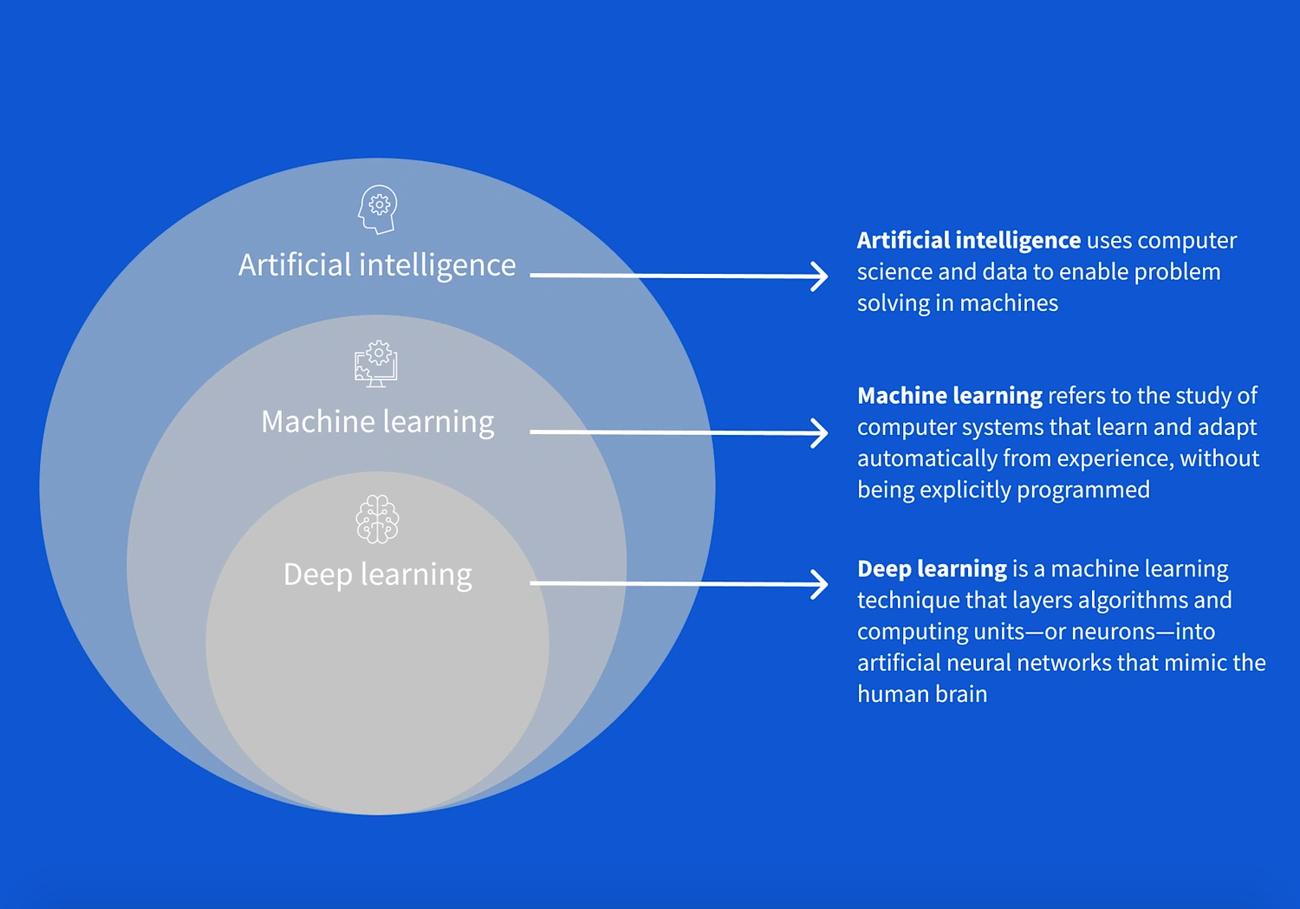
Image Source: Coursera
Machine learning shows up often in artificial intelligence interview questions. You don't need technical expertise to learn this concept. The global machine learning (ML) industry is worth USD 21 billion and experts predict it will reach USD 209 billion by 2029.
What it asks
Interviewers want to see if you know how ML works as a key AI component. They need to know if you understand that computers can learn without explicit programming. These systems learn from datasets and past experiences to spot patterns and make predictions.
Why it matters
Knowledge of ML shows you understand the technology that revolutionizes business. Marketing and sales teams now focus on AI and ML more than other enterprise departments. This knowledge helps you add value to discussions about ML solutions like recommendation engines, customer service chatbots, and fraud detection systems.
How to answer it
Start by explaining ML as an AI subfield where computers get better through experience instead of programming. Then talk about its types:
- Supervised learning: Systems trained on labeled data
- Unsupervised learning: Algorithms finding patterns in unlabeled data
- Reinforcement learning: Programs learning through trial and error
Wrap up with examples from daily life: email spam filters, facial recognition, voice assistants, or customized recommendations. Remember to highlight how ML helps businesses make analytical decisions.
How would you explain generative AI to a client?
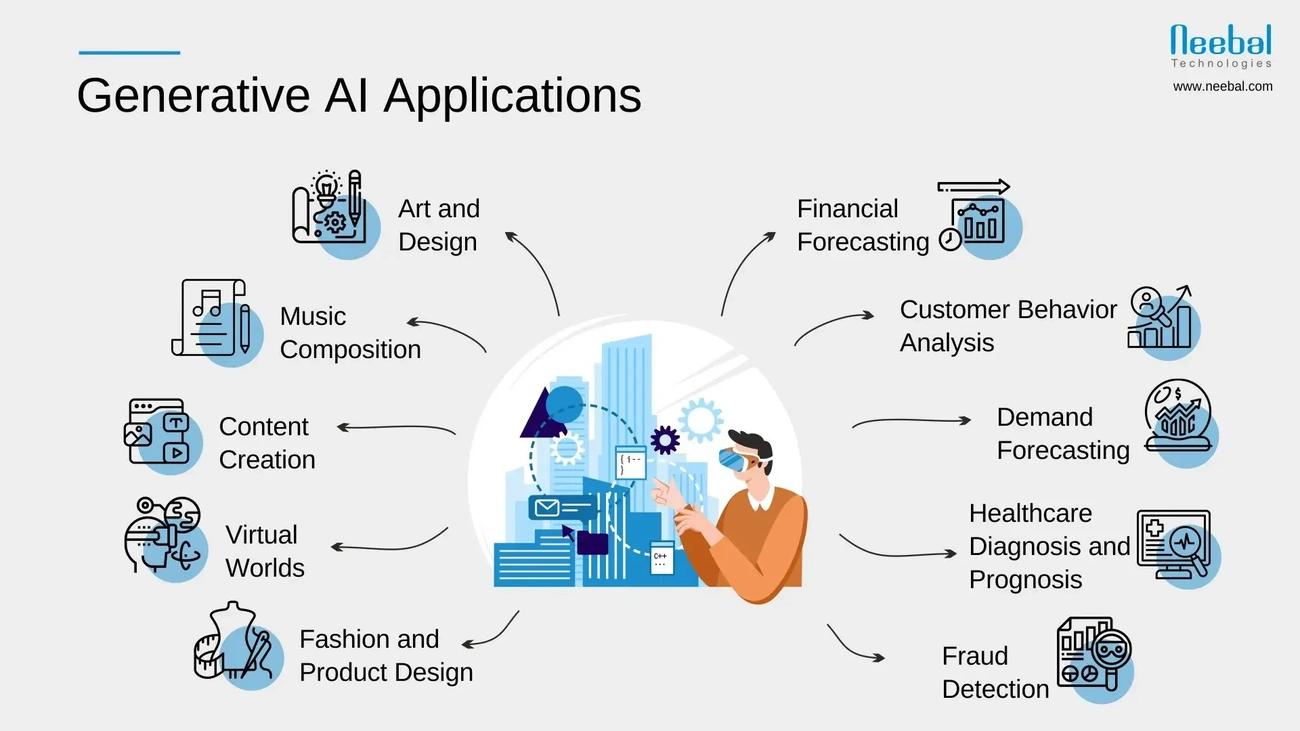
Image Source: BotPenguin
Job interviews now include questions about explaining AI. Your skill in communicating with non-technical stakeholders can make you stand out. A simple explanation of generative AI shows you can connect complex technology to business needs.
What it asks
The interviewer wants to see how well you can make complex technology clear to clients or stakeholders who lack technical knowledge. They'll check if you can explain what generative AI does, how it works, and its practical applications without technical jargon.
Why it matters
The way you explain AI solutions directly shapes how clients adopt them. Companies blend generative AI tools into their departments. Knowing how to explain these technologies clearly has become valuable. Stakeholders must grasp both what these tools can and cannot do to build trust.
How to answer it
Begin with a basic definition: "Generative AI creates new content—like text, images, or code—based on patterns it learns from existing data". Add examples people can relate to:
"Think of it like a tool that can write emails, summarize documents, create presentations, or draft policies based on instructions you give it".
These points stand out:
- Creates original content much faster
- Learns from patterns in existing data
- Responds to prompts with human-like output
Be honest about its limits:
- "Most generative AI tools don't verify facts on their own unless connected to the web"
- May produce biased content or misinformation
End with practical value: "It helps save time on repetitive tasks while allowing humans to focus on creative and strategic work."
What role do you think data plays in AI?

Image Source: Forbes
Data forms the bedrock of every artificial intelligence system. This question tests what you learn about how data and AI work together in today's digital world.
What it asks
Your interviewer wants to know if you understand data's core role in AI systems. They'll check if you know that data acts as the essential ingredient that powers AI. They also want to see if you understand how data quality affects AI performance and if you're familiar with data management challenges.
Why it matters
A solid grasp of data's relationship with AI shows your business insight. Research shows that generative AI could add between $2.60 trillion to $4.40 trillion annually to businesses of all sizes. Data management remains the biggest hurdle for 72% of top organizations trying to scale their AI. Your response needs to show that businesses can't get value from AI without quality data.
How to answer it
Start by explaining that data is AI's core building block—the raw material that lets systems learn, reason and predict. Make these key points:
- Quality data matters more than quantity for AI success
- AI capabilities run on both structured (databases) and unstructured data (text, images)
- AI fairness depends on ethical data collection practices
Use this simple comparison: "Data is to AI what premium fuel is to a high-performance vehicle—the engine's effectiveness depends entirely on what powers it."
How do you handle AI-related decisions without technical expertise?

Image Source: EDUCAUSE Review
Many professionals now lead AI projects without technical expertise. This question tests your ability to navigate AI-driven environments without writing a line of code.
What it asks
Your interviewer wants to know how you make AI-based decisions without technical knowledge. Interviewers are specifically looking for your ability to collaborate with technical teams and apply sound judgment to AI outputs. You should know how to use AI tools built for non-technical users and oversee AI solution rollouts.
Why it matters
Companies need leaders who can connect business with technology. Studies show that non-technical professionals can lead successful AI projects by excelling at planning, setting goals, and solving problems. Hiring managers look for candidates who understand AI concepts without coding expertise.
How to answer it
Here's a smart way to approach this:
- Show critical thinking skills about AI outputs and recommendations
- Share how you'd work together with different teams and ask data scientists to explain progress simply
- Talk about increasing human judgment instead of replacing it
- Describe your experience with user-friendly AI tools built for business users
- Show how you assess AI projects based on business results rather than technical details
Start by showing that you understand AI's strengths and limits. This knowledge helps you decide when to trust AI outputs and when human judgment works better.
What are your thoughts on AI replacing jobs?
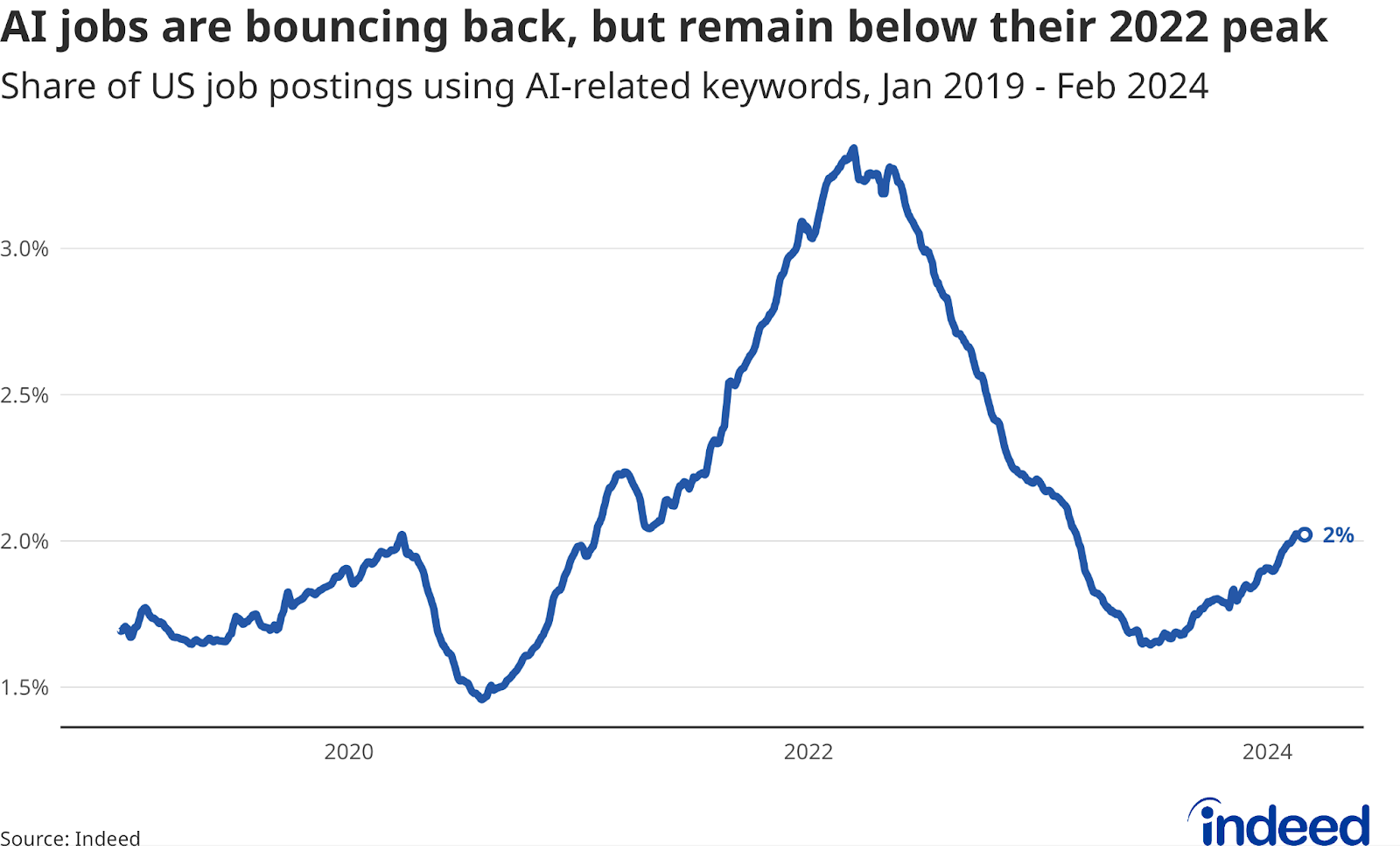
Image Source: Indeed Hiring Lab
The debate about AI replacing jobs touches on deep-seated fears about workplace transformation. Research shows a more nuanced picture than the common "job killer" narrative.
What it asks
This question aims to understand your view on technological displacement. Interviewers want to know if you see AI as a threat or a chance, and how well you grasp its effect on the workforce.
Why it matters
Your answer shows how well you adapt and think ahead. Studies prove that AI usually changes specific tasks within jobs instead of wiping out entire roles. Jobs with high exposure to AI actually grew by about 3% over five years. Research suggests AI could shake up around 30% of all workers who might see changes in half their daily tasks.
How to answer it
Give a balanced answer:
- Accept that AI will change work—it might replace routine tasks while making creative work better
- Point out that new technology has always created more jobs than it removed (60% of today's US jobs didn't exist in 1940)
- Show your dedication to upskilling, since AI tends to make human work better rather than replace it
Stay optimistic but realistic: "I believe AI will reshape roles toward more valuable work that needs human skills like creativity and people skills—areas where AI can help but not take over."
How would you evaluate the success of an AI project?
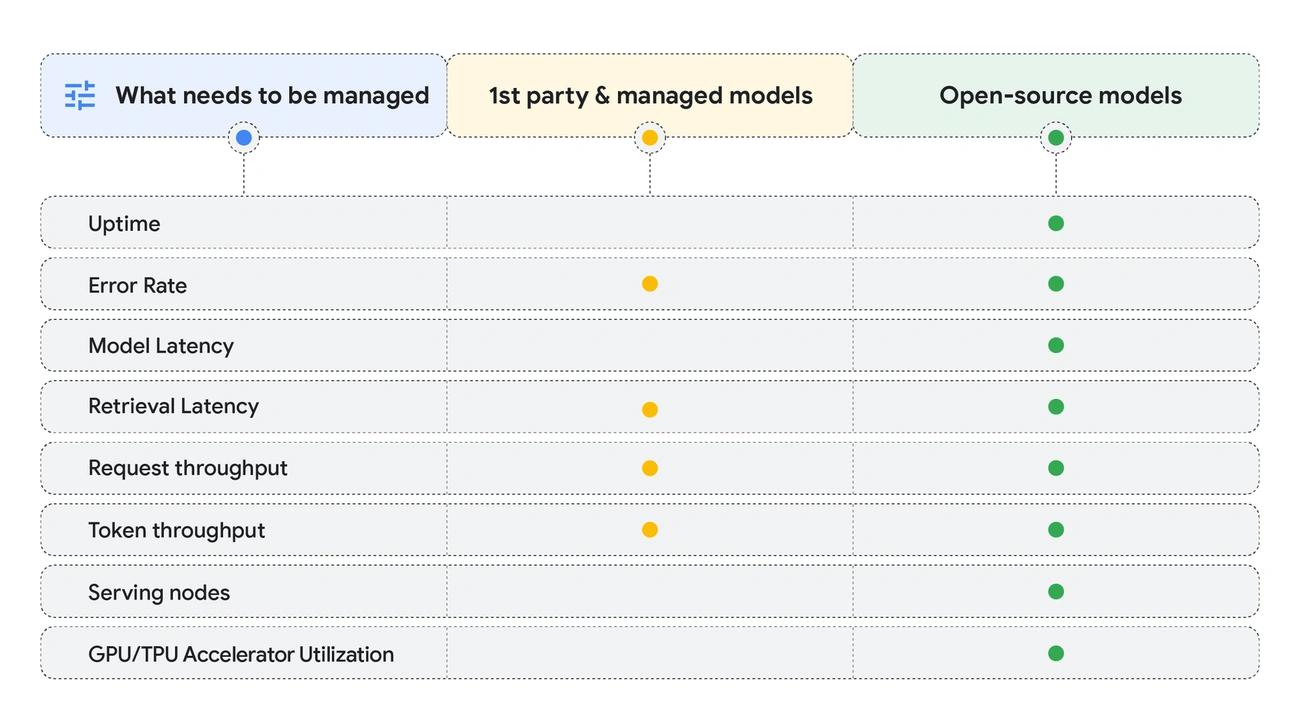
Image Source: Google Cloud
AI project success needs metrics that go beyond standard ROI calculations. This question gets into how you measure AI's effectiveness in business settings.
What it asks
Interviewers want to know your approach to determining an AI initiative's success. They check if you understand both technical performance and business effect measurements. This is vital since 49% of CIOs say showing AI's value is their biggest challenge.
Why it matters
The right evaluation methods help AI changes succeed. Success in AI projects hinges on leadership alignment, change management, and selecting initiatives with clear business value — not just technical performance. Companies need these skills badly - 85% of large enterprises don't have good tools to track AI ROI.
How to answer it
Start by highlighting two significant types of measurements:
- Trending ROI: Early signs that show value delivery (boosted productivity, faster time-to-value)
- Realized ROI: Clear financial results (lower costs, more revenue)
A good evaluation should include:
- Clear KPIs set before you start
- Baseline measurements taken before the project
- Both hard ROI (actual financial results) and soft ROI (happier employees, better decisions)
- Regular reviews to adjust expectations
Remember to link AI success directly to business goals instead of just technical specs.
Have you worked with AI tools like ChatGPT or Midjourney?
Image Source: Udemy
AI tool expertise sets candidates apart in today's job market. A Deloitte survey shows that 83% of early career workers use AI in their jobs compared to 68% of tenured workers.
What it asks
The question explores your practical experience with generative AI tools. Interviewers want to learn about how you blend tools like ChatGPT for text generation or Midjourney for image creation into your work. They also want to know how well you write prompts.
Why it matters
Your answer shows how well you adapt to new technologies. Many employers now see resistance to AI tools as a potential red flag during hiring. Your response also reveals your "intelligent interrogation" skills—knowing how to work with AI systems to get valuable results.
How to answer it
Share specific examples of how you work with these tools:
- Talk about how ChatGPT helps you generate ideas, review documents, or write messages
- If you've used it, explain how Midjourney helps with visual concepts or creative work
- Talk about both the good parts ("It helps me work better") and limits ("I make sure to keep my critical thinking sharp")
Remember to highlight that you see AI as a tool that increases human capabilities rather than replacing human judgment.
How do you ensure fairness in AI-driven decisions?
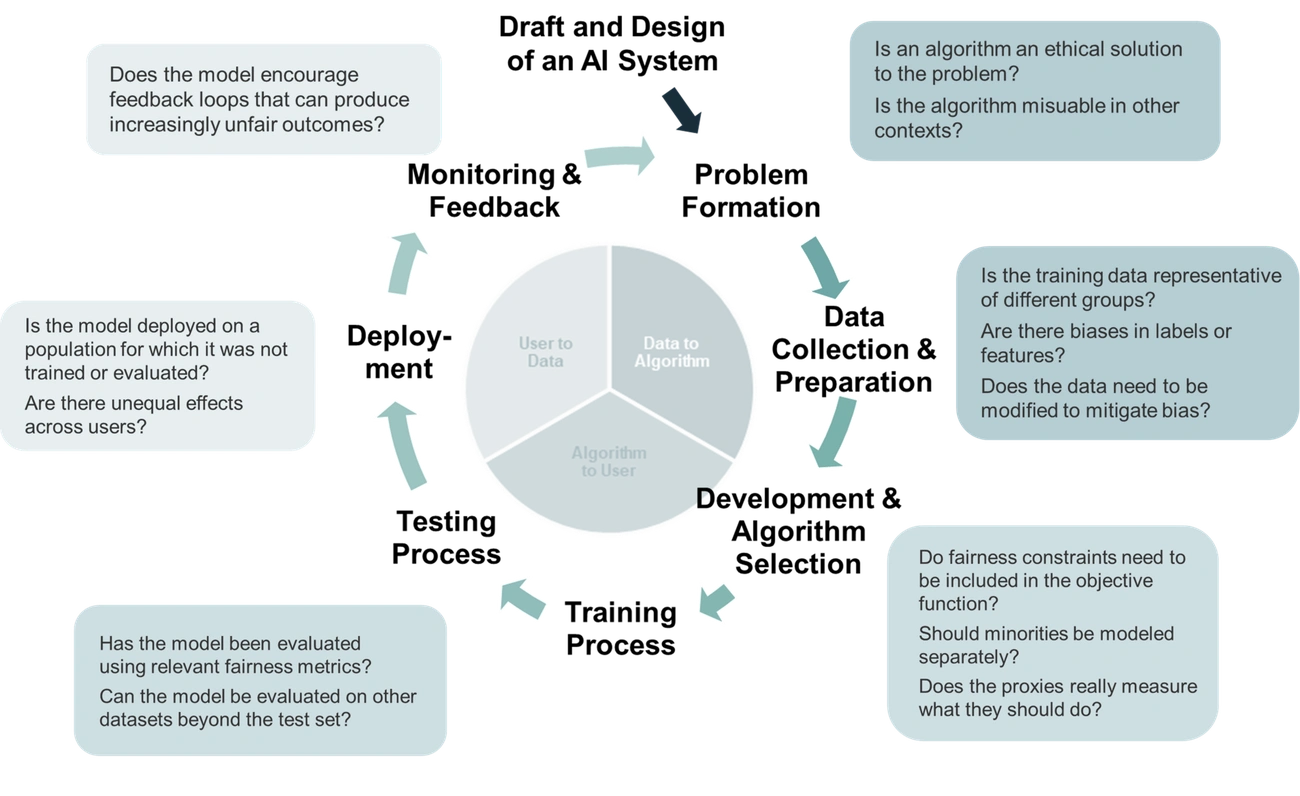
Image Source: bias-and-fairness-in-ai-systems.de
AI systems make decisions that affect people's lives, and fairness stands out as a key concern. This question examines your grasp of practical ways to reduce algorithmic bias.
What it asks
Your interviewer needs to know if you grasp both technical and organizational methods that ensure AI systems treat everyone fairly. They want to see that you understand fairness needs systematic approaches, not just good intentions.
Why it matters
AI bias can erode brand trust and create legal risks. Research shows facial recognition technology has higher error rates with minority groups. The US National Institute of Standards and Technology's findings reveal by a lot higher false-positive rates for Asian and African American faces. Organizations need resilient AI governance frameworks to tackle these problems.
How to answer it
Here are practical strategies to consider:
- Diverse training data: "I'd ensure datasets include wide demographic representation to minimize bias"
- Algorithmic transparency: "Making AI decision processes understandable helps identify potential biases"
- Regular auditing: "I'd implement continuous monitoring to catch unexpected bias"
- Human oversight: "Human review remains essential in AI workflows"
- Accountability structures: "Clear roles for overseeing AI ethics ensure responsibility"
Let SkillSauce Assess AI Readiness in Your Team before you implement these fairness measures in your organization's AI systems.
What challenges do you foresee in AI adoption?
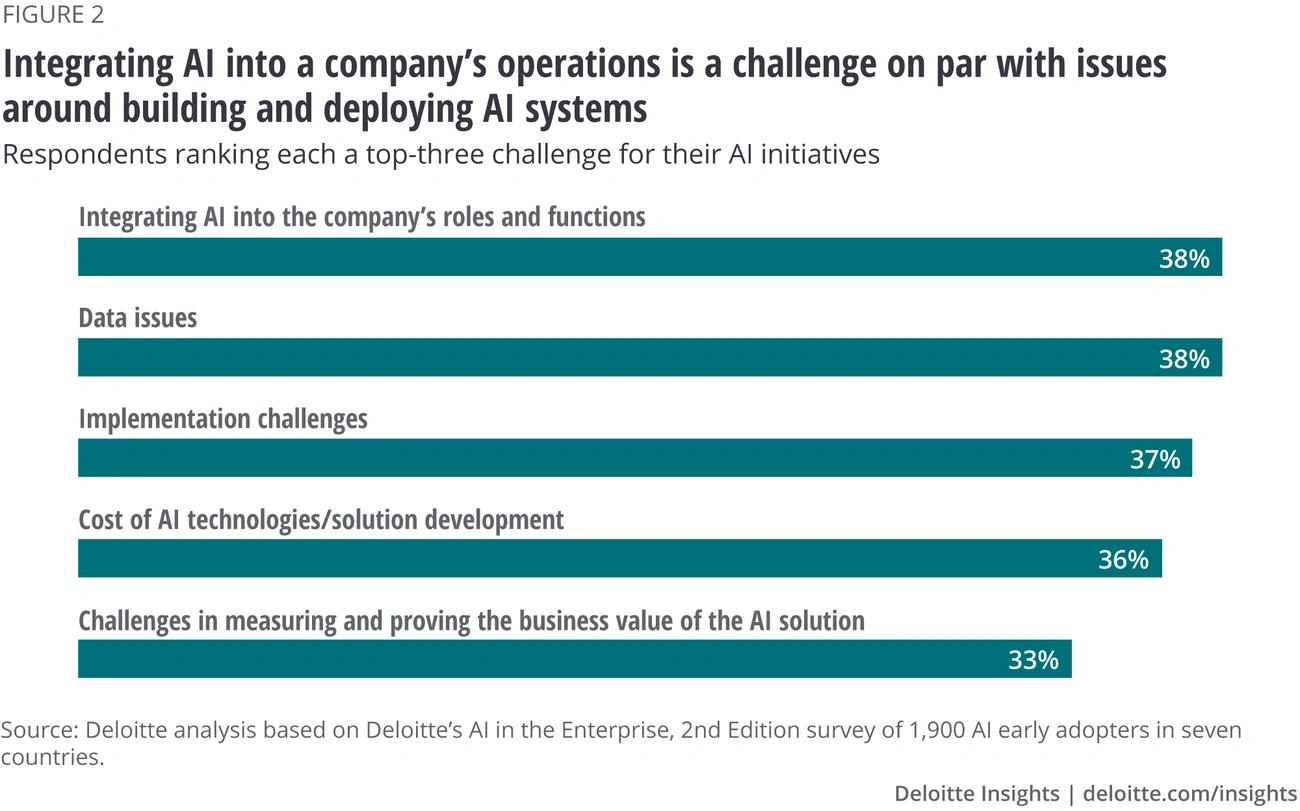
Image Source: Deloitte
Companies of all types struggle with AI technology implementation. This question tests what you know about these real-life adoption challenges.
What it asks
The interviewer wants to see if you understand the practical barriers to AI implementation. They need to know if you can identify both technical hurdles and human elements that often cause AI projects to fail.
Why it matters
Understanding AI adoption challenges shows your business insight. Studies reveal that 70% of AI pilots fail to deliver long-term ROI. About 45% of people have concerns about AI's legal compliance, and 41% worry about biased recommendations. Your knowledge of these challenges shows you can help others succeed in the complex world of AI implementation.
How to answer it
Build your response around these main challenge areas:
Data challenges: "Poor data quality undermines AI effectiveness—inconsistent formatting and incomplete records lead to unreliable results"
Organizational resistance: "Many employees fear job displacement rather than seeing AI as a productivity tool"
Skills gap: "47% of C-suite leaders cite talent skill gaps as the main reason they delay AI adoption"
Implementation costs: "Organizations don't connect AI efforts directly to business value easily"
End with solutions: "Regular 'AI in the workplace' sessions like Q&A forums can help teams learn new skills and address their concerns".
Let SkillSauce Assess AI Readiness in Your Team before you start major AI initiatives to identify and address these adoption challenges early.
How would you explain AI bias to a stakeholder?
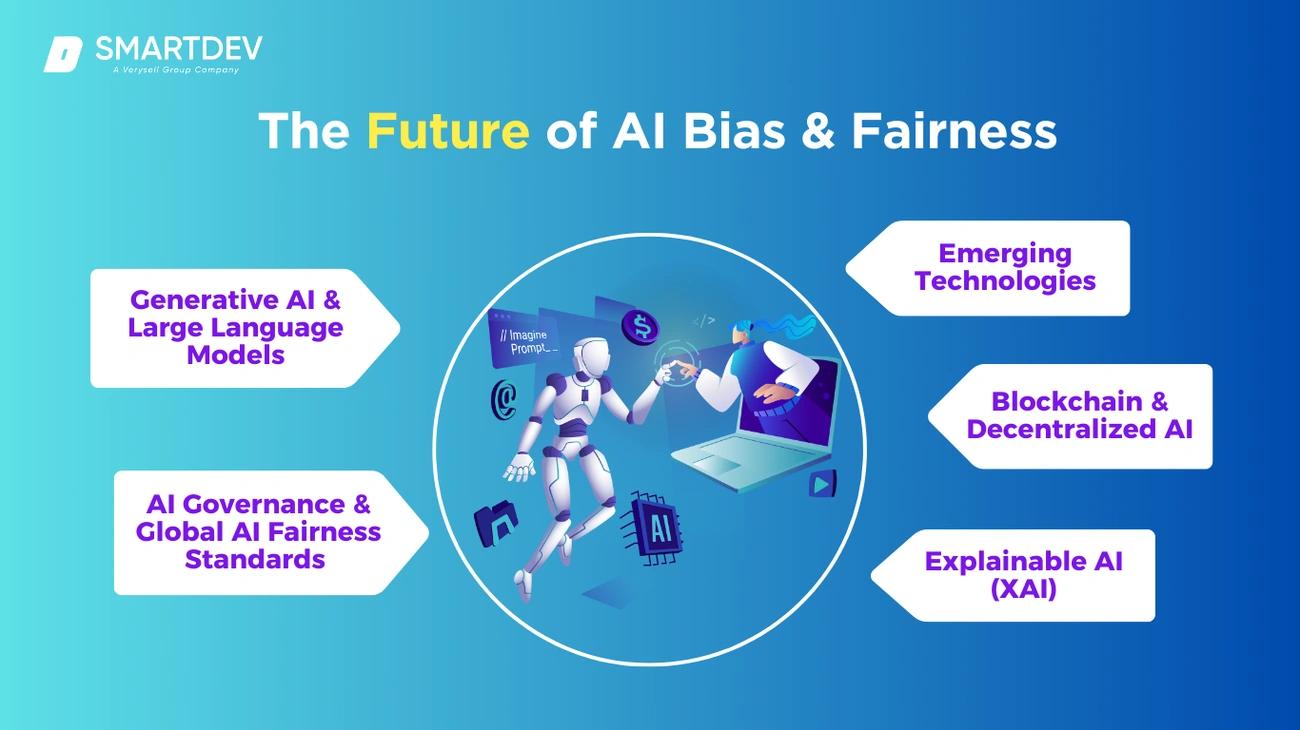
Image Source: SmartDev
AI bias has become a crucial challenge as these systems make life-changing decisions. Many interviewers now ask candidates to explain technical concepts to non-technical audiences through this question.
What it asks
Interviewers want to assess how well you can explain AI bias—systematic discrimination that exists within AI systems that reinforces existing biases and magnifies discrimination. We focused on testing if you can express both technical and ethical aspects of bias in simple terms.
Why it matters
AI systems with bias destroy brand trust and create legal risks. Research shows facial recognition systems fail more often with darker-skinned individuals. The error rates reach 34.7% for dark-skinned women compared to just 0.8% for light-skinned men. Your skill to communicate these problems helps stakeholders make better decisions about AI implementation.
How to answer it
Start with a simple definition: "AI bias occurs when systems make unfair decisions that systematically disadvantage certain groups." The key sources include:
- Training data that reflects historical inequities
- Algorithms that optimize for wrong metrics
- Human assumptions in model design
Real examples work best: "A healthcare algorithm incorrectly flagged white patients as higher priority than equally sick Black patients because it used healthcare costs to measure needs."
The solution involves diverse development teams, representative data, continuous monitoring, and human oversight in critical decisions.
What excites you most about AI in the workplace?
AI tools are becoming more popular in workplaces, with 75% of global knowledge workers now using them. This question explores your views about how AI can change work as we know it.
What it asks
Your interviewer wants to know if you're genuinely excited about using AI at work. They need to understand if you see AI as a chance to grow rather than a threat, and which AI features you think can make work better.
Why it matters
Your response shows how open you are to new ideas and change. Research proves that 90% of AI users say it helps them save time, while 85% report better focus on important tasks. On top of that, 84% of desk workers are ready to welcome AI in their daily work. Companies value candidates who share this positive outlook.
How to answer it
Start by pointing out real AI benefits:
- Show how AI takes care of routine tasks so you can focus on work that matters
- Talk about AI's role in improving productivity through customized learning
- Highlight "superagency" - how AI equips us to boost our creativity and output
The key is to present AI as a helpful partner that increases human capabilities instead of replacing them. This shows you understand AI's role in creating a better and more productive workplace.
Comparison Table
| Interview Question | Question Focus | Key Purpose | Business Impact | Recommended Response Elements |
|---|---|---|---|---|
| What inspired your interest in AI? | Personal motivation | Assess genuine curiosity and adaptability | 88% of C-suite leaders prioritize AI adoption |
- Tell us what sparked your interest - List AI tools you've used - Share your learning path |
| How do you stay updated on AI trends? | Information consumption habits | Check how you learn proactively | 83% of early career workers use AI vs 68% of tenured workers |
- List your go-to publications - Show how you filter information - Name your learning communities |
| Can you explain AI in simple terms? | Communication ability | See how well you explain complex ideas | Not mentioned |
- Begin with a basic definition - Use examples people know - Point to daily AI uses |
| What are some ground applications of AI? | Practical awareness | See how well you know AI uses | $13 trillion additional global economic activity by 2023 |
- Talk about daily AI encounters - Show business uses - Include your industry examples |
| How would you describe the difference between AI and automation? | Technical understanding | Check if you know the basics | 84% of executives see AI as vital to growth |
- Explain both clearly - Use simple comparisons - Show how they work together |
| What ethical concerns do you associate with AI? | Ethical awareness | Check if you know AI risks | Major bias cases reported (e.g., Amazon's recruiting tool) |
- Talk about algorithmic bias - Discuss privacy issues - Address who's responsible |
| How do you think AI will affect your current role? | Future readiness | See if you understand workplace changes | AI could affect 50 million US jobs |
- List tasks AI can do - Show your improved skills - Talk about your growth plan |
| What is your understanding of machine learning? | Technical literacy | Check if you know AI basics | $21 billion global industry, projected to reach $209 billion by 2029 |
- Define ML clearly - List learning types - Give daily examples |
| How would you explain generative AI to a client? | Client communication | Check how you explain tech ideas | Not mentioned |
- Give a clear definition - Use examples they know - Be honest about limits |
| What role do you think data plays in AI? | Data understanding | See if you know AI foundations | $2.60–4.40 trillion potential annual value |
- Show why data matters - Talk about quality needs - Address ethics |
Conclusion
AI literacy is now a baseline expectation for professionals in non-technical roles — not a differentiator, but a requirement. This piece explores 50 key questions that test your AI literacy. These questions range from simple concept explanations to discussions about ethical implications.
Your technical background doesn't matter anymore when it comes to AI literacy. In spite of that, you don't need coding skills or deep technical knowledge to ace these interviews. Employers look for candidates who show thoughtful awareness about AI's effects, ethical considerations, and real-world applications.
The questions in this guide help you demonstrate genuine AI awareness — covering workplace transformation, ethical considerations, and real-world application — without requiring a technical background. Your thoughtful responses about AI bias, data quality, and the difference between automation and intelligence show you're ready for an AI-boosted workplace.
The best strategy combines honest self-assessment with genuine curiosity. SkillSauce can assess your team's AI readiness before your next interviews to find knowledge gaps and improve your responses. Technology changes faster every day, but candidates who show balanced optimism, ethical awareness, and steadfast dedication to learning will shine in any interview.
For Hiring Teams: Assess AI Readiness Before the Interview
These 50 questions reveal how candidates think about AI. But knowing the right questions is only half the process — evaluating whether candidates' answers reflect genuine AI fluency requires structured assessment, not just conversation.
SkillSauce's assessment library includes AI literacy evaluations for non-technical roles — measuring practical AI awareness, ethical reasoning, and tool familiarity against validated benchmarks rather than interviewer intuition.
Key Takeaways
Master these essential insights to confidently navigate AI interview questions in non-technical roles and demonstrate your readiness for the AI-enhanced workplace of 2025.
• AI literacy trumps technical expertise: 88% of C-suite leaders prioritize AI adoption, making your understanding of AI concepts and applications more valuable than coding skills.
• Focus on practical communication over jargon: Employers value candidates who can explain AI concepts simply to stakeholders and bridge the gap between technical and business teams.
• Embrace AI as augmentation, not replacement: Position yourself as someone who views AI tools as productivity enhancers rather than job threats, showing adaptability and forward-thinking.
• Demonstrate ethical awareness and bias recognition: Understanding AI's limitations, bias issues, and ethical implications shows you're prepared for responsible AI implementation in business settings.
• Show hands-on experience with AI tools: 83% of early career workers use AI tools like ChatGPT—practical experience with these platforms differentiates you from other candidates.
The key to success lies in balancing genuine enthusiasm for AI's potential with thoughtful awareness of its challenges, positioning yourself as someone ready to thrive in an AI-enhanced workplace while maintaining critical thinking skills.
My interest in AI comes from its ability to solve complex problems, automate repetitive work, and improve decision-making through data-driven insights. AI is transforming industries by making processes faster, smarter, and more efficient, which makes it an exciting field to explore and work in.
Artificial intelligence is technology that enables computers to perform tasks that normally require human intelligence. This includes understanding language, recognizing patterns, solving problems, learning from data, and making decisions.
Automation focuses on performing repetitive, rule-based tasks without variation, while AI can learn from data, adapt to new situations, and make intelligent decisions. Automation follows fixed instructions, whereas AI